What Accessories to Wear With a Tuxedo? Gentlemen’s Guide
In New York, tuxedo accessories for black tie events show respect for the room. At an Upper East Side gala or a black-tie wedding in Midtown, people notice the details before they say a word about them. The jacket gets the attention first. The accessories decide if the look feels correct.
A tuxedo has rules. Good taste lives inside those rules, not outside them. The right bow tie, shirt, studs, shoes, and waist covering create a clean line from collar to cuff. The wrong choices break it fast.
After more than a century of dressing New York men in custom tuxedos, our fitters know that no detail is too small. A formal look works as one whole. That includes the jacket, the shirt under it, and every finishing piece around it.
Here is what to wear with a tuxedo, how each accessory should work, and where men often get it wrong.
Tuxedo Accessories: The Difference Between Good and Exceptional
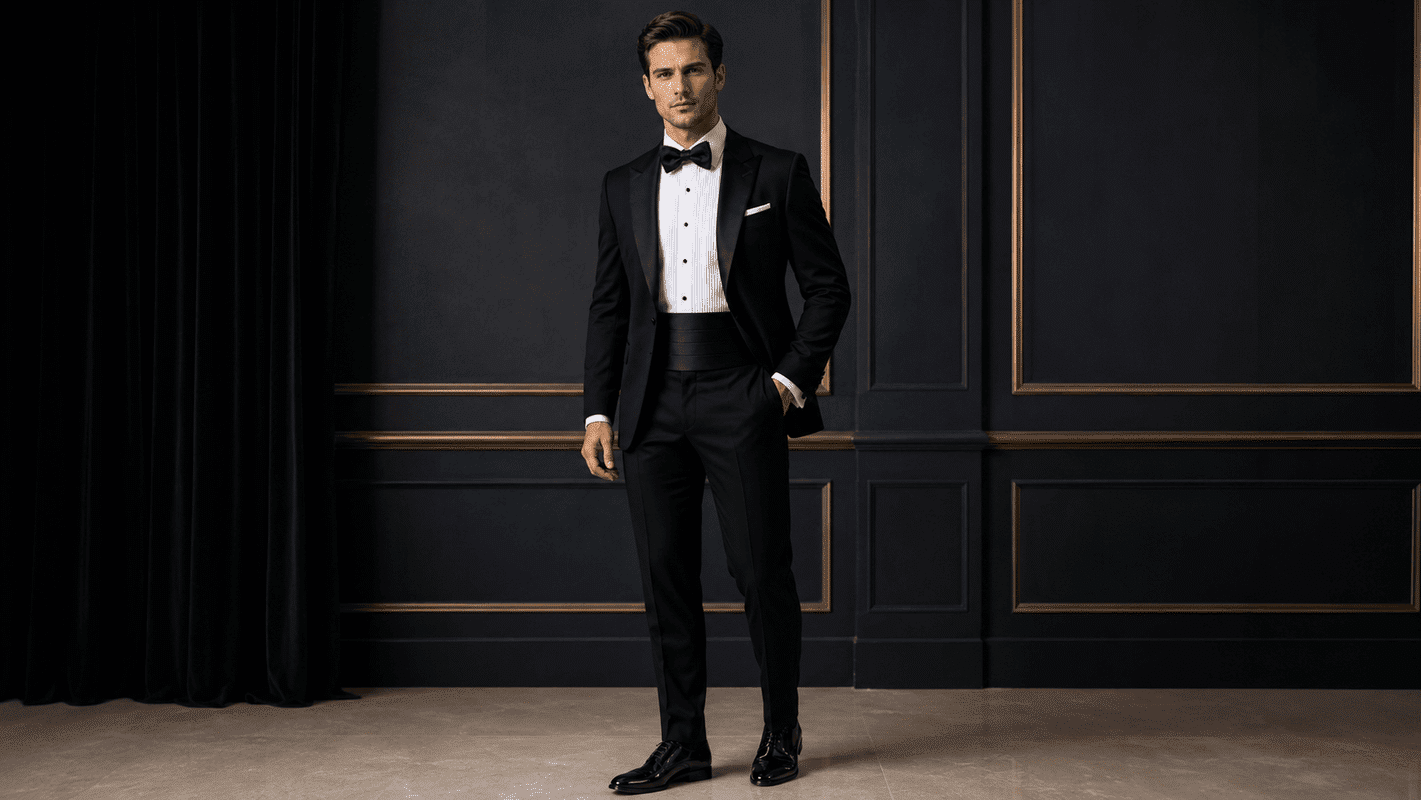
A tuxedo is not a dark suit with shinier lapels. It is a formal system. Each part has a job:
- The jacket sets the structure.
- The shirt frames the face.
- The bow tie draws the eye upward.
- The waist covering keeps the line clean.
- The shoes finish the shape at ground level.
That is why black tie accessories matter so much. A well-cut custom tuxedo without the proper finishing pieces feels incomplete, like a fine frame with no portrait inside. The rest of your tux may suggest ease and control. Your accessories tell people who you are, and how well you understand the black-tie dress code.
In New York, that distinction matters. At the opera, at a charity dinner, or in a formal ballroom, dress codes still carry weight. Men who know what to wear with a tuxedo usually look calm in those rooms. Men who guess often look slightly off.
The Bow Tie: Your Most Important Tuxedo Accessory
The traditional tuxedo neckwear is a hand-tied bowtie. A necktie belongs at a black-tie optional event, not at strict black tie. If the invitation says black tie, wear a bow tie.
Self-Tie vs. Pre-Tied
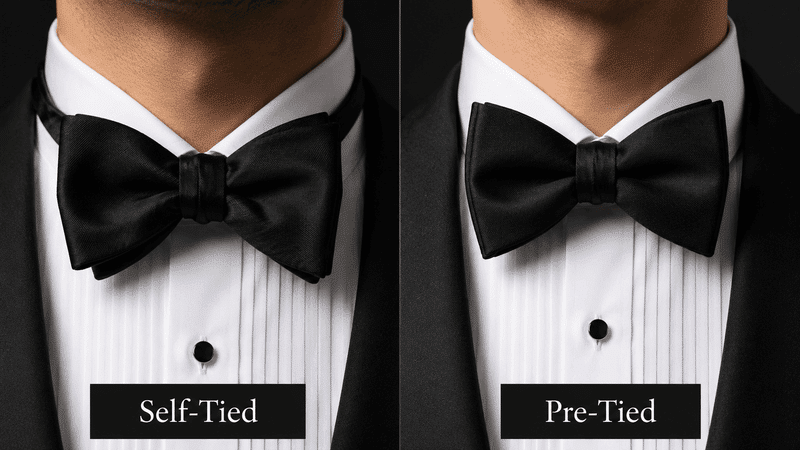
A self-tie bow tie is the proper choice. It has life to it. That slight irregularity and small imperfection give the look character. Formal dress should feel disciplined, though it should never look machine-made.
A pre-tied bow tie can pass at a distance. Up close, it usually looks too exact. The shape stays frozen. The finish looks flat.
If you do not know how to tie one, learn before the event. It takes practice, but it is worth it.
Choosing the Right Bow Tie Fabric and Width
Black silk remains the standard for a black bow tie tuxedo. Grosgrain and satin both work, as long as the finish relates to the facing on the lapels. Midnight blue can work at modern city events. Deep velvet can also work for evening dinners in colder months. Use restraint. Strict black tie still favors black.
The width of the bow should be in balance with the face and lapels. A broader shawl lapel often wants a slightly fuller bow. A narrow-peak lapel usually requires a trimmer one.
One last rule. Black tie means a black bow tie. White tie means a white one. Colored bows are appropriate for looser dress codes.
The Right Foundation With a Tuxedo Dress Shirt
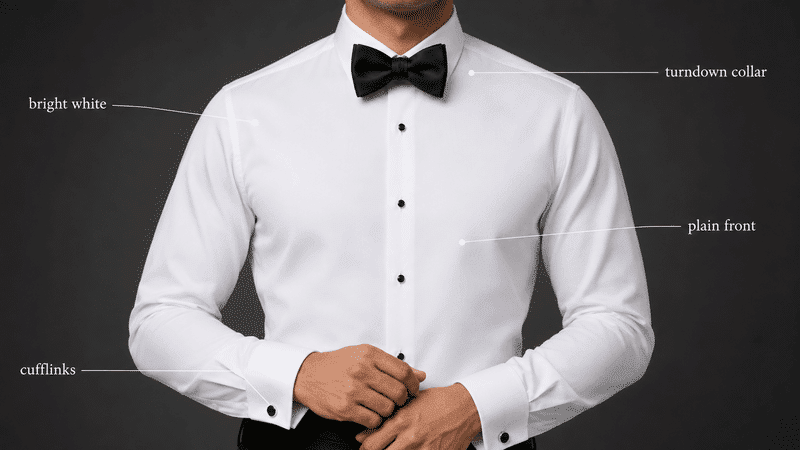
Accessories only work when the shirt under them is correct. A proper tuxedo dress shirt should be bright white, not cream or ivory. Formal evening dress depends on that sharp black-and-white contrast.
A French cuff tuxedo shirt is the standard because cufflinks replace the buttons at the wrist. If the cuffs are wrong, the cufflinks have nowhere to go.
A turndown collar is right for black tie. A wing collar is very formal and is best kept for white tie or a highly traditional event.
The front can take two paths:
- A pleated front or bib front follows the old rule.
- A plain front feels cleaner and slightly more current.
Both can work under a tuxedo if the shirt fits well and keeps the chest neat.
Fit matters as much as formality. A shirt that balloons at the waist or strains at the neck spoils the line of the coat. We see this often with ready-made shirts. That is one reason many men pair a custom tuxedo with custom dress shirts.
Cufflinks and Shirt Studs
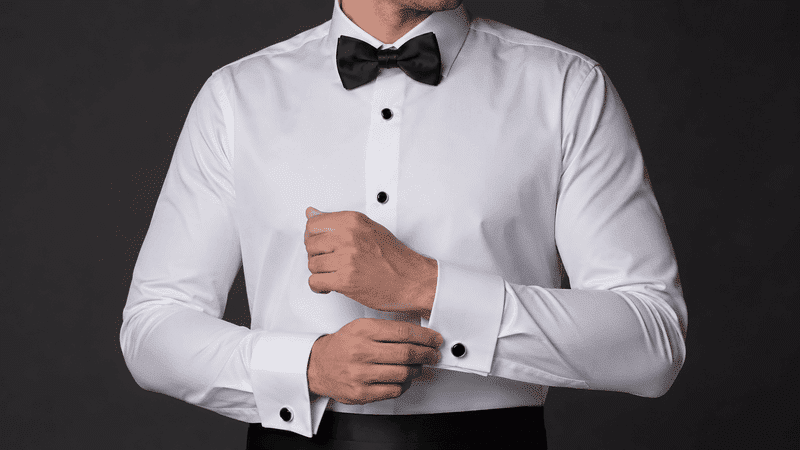
The smallest metal pieces on a tuxedo often say the most. Cufflinks close the French cuffs. Shirt studs replace the buttons on a formal shirt front. Both pieces sit in quiet view all evening.
The important rule: match the metals. Gold cufflinks go with gold studs. Silver cufflinks go with silver studs. Do not mix them. Experienced observers catch the mismatch fast.
Black onyx set in silver or gold remains one of the best cufflinks for a tuxedo. It is formal and calm. Mother-of-pearl is also right for evening wear. Both choices support the tuxedo’s look.
Choosing the Right Cufflink Style
Keep the size modest. A tuxedo is not the place for oversized jewelry. Around 16mm suits most formal settings and keeps the wrist clean. The finish should be polished, though it should not glare.
Novelty cufflinks look good, though strict black tie is not the place. Enamel pieces or engraved initials can work at a black-tie optional event. The more formal the invitation, the quieter the link should be.
Our clients often ask what cufflinks to wear with a tuxedo during fittings. We give the same advice each time. Choose pieces that support the quality of the garment’s construction. They should never compete with it.
Pocket Square: The Finishing Touch Above the Lapel
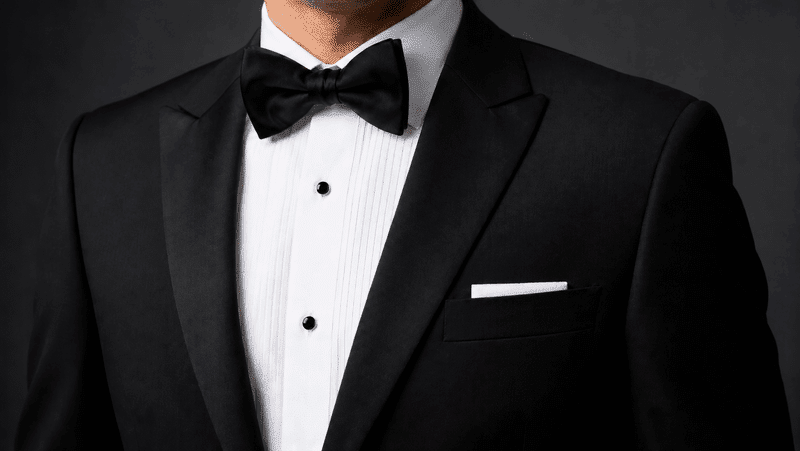
A tuxedo pocket square should be white. That is the rule, and it is a sound one. White echoes the shirt and keeps the whole look disciplined. It also places the attention where it belongs, on the face.
The safest cloth is white linen. A hand-rolled hem is ideal. Cotton works well too. Silk can work, though it should stay matte rather than glossy.
As for the fold, the square fold is the most formal. Many men know it as the TV fold. It creates a crisp horizontal line and suits strict black tie well. A soft puff fold can work at a modern city event if the rest of the outfit stays classic.
Do not copy the pocket displays you see on store mannequins. Sharp peaks and sculpted silk points look contrived. The tuxedo pocket square should look neat, not theatrical.
In our experience, a white pocket square with a simple fold remains one of the most elegant choices a man can make. If you have ever wondered about the right approach to tuxedo pocket square folds, start there and stop there.
Cummerbund or Vest? How to Choose the Right Waist Covering
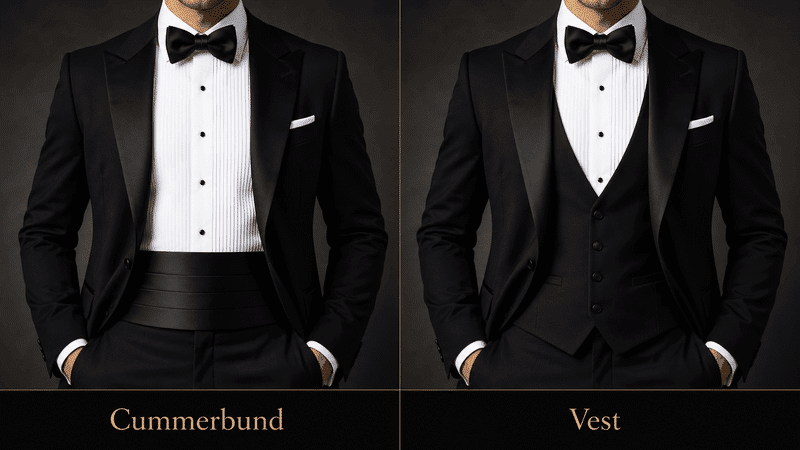
The waist needs to stay covered in black tie. If the jacket opens and exposes the shirt’s waistband, the whole silhouette breaks. A cummerbund or a vest solves that problem.
A cummerbund is the old standard for a single-breasted tuxedo. It wraps the waist in black silk and hides the seam between the shirt and trousers. The pleats face up. The old story says those pleats once held opera ticket stubs, which is one reason the detail has lasted in evening dress lore.
A waistcoat or vest gives a more structured effect. It can feel slightly more current, though it still works well within black tie. With a shawl-lapel jacket, a matching shawl-lapel waistcoat can create a pleasing line through the chest.
Neither choice is better in every case. Follow these two rules:
- Never wear both together.
- Never wear a belt with a tuxedo.
Suspenders for a Tuxedo
If a tuxedo needs support at the waist, suspenders are the correct choice. Belts do not belong with formal trousers. They cut across the clean front of the waistband and interrupt the line.
Choose solid black or white suspenders. Button attachments are better than clips. Clips can damage the waistband, and they always look cheaper than they are. A Y-back shape is the usual formal choice. The width should feel moderate, usually around 1.25 to 1.5 inches.
Many custom tuxedo trousers fit well enough through the waist that side adjusters do the job on their own. That is often the cleanest setup. Tuxedo suspenders help the front hang neatly and support a graceful drape down the leg. If you wear them, keep them hidden.
Completing the Silhouette With The Right Shoes
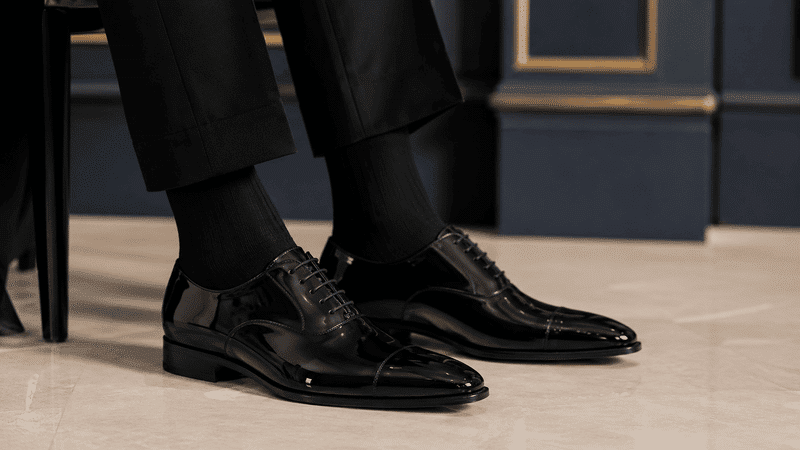
Men often spend hours on jackets and almost none on footwear. That is a mistake. Shoes finish the overall tuxedo look. If the shoes are wrong, the eye catches the break in formality at once.
The classic answer is a black patent leather Oxford. Patent leather reflects light in a way that suits the satin or grosgrain details of the tuxedo. Opera pumps are more formal and remain one of the classic black-tie choices, though few men wear them now.
Modern city events allow some freedom. High-shine black loafers can work. Velvet slippers can also work, especially at a dinner or a private evening event in New York. A discreet monogram can be tasteful.
You should avoid:
- matte black shoes
- brown shoes
- thick rubber soles
Those choices pull the outfit back into daywear and weaken the whole effect. The shape should stay slim. Bulky shoes look clumsy under formal trousers.
The socks matter too. Wear black over-the-calf socks in silk or fine merino. They need to stay up all evening. A bare leg between a sock and trousers is one of the most common black-tie mistakes. That balance gets checked during a fitting.
Accessories Beyond the Basics
Once the main parts are right, a few smaller pieces can add personality to your final look. Each item must be carefully chosen.
A boutonnière remains one of the most elegant touches in formal dress. A white gardenia or white rose sits beautifully in a lapel buttonhole. A red carnation has history behind it and can work well too. Keep it fresh and restrained.
A small lapel pin can work at a less rigid event. Not recommended for strict black-tie. The same goes for a watch. Wear a slim dress watch to fit the mood.
Cold weather opens the door to an evening scarf. Black silk or white silk can look refined on arrival, especially outside a New York gala venue. Dress gloves belong more to white tie than black tie, though a grand evening can still suit them.
These men’s formal accessories are optional but intentional. Use one or two. Let the tuxedo remain the focus.
Final Words
Mastering tuxedo accessories starts with respect for the rules. After that, it becomes a matter of judgment. The best-dressed men at black-tie events do not wear more. They wear the right things, and they wear them in the right way.
That is where Alan David Custom stands apart in New York. For more than 100 years, our family has helped men shape their formal look down to the last visible inch, from lapel width to cufflinks.
If you are planning a wedding, a gala, or any event that calls for black tie, visit us at 515 Madison Avenue, Suite 301, New York, NY. You can also book your consultation online to begin. We also offer 10-day rush service for men on a tight schedule.