What Is a Covered Placket Tuxedo Shirt?
Formalwear is all about the details and how they match the dress code. Beyond that, a tuxedo gives you very few decisions to make. But the few choices you do make matter more than you’d think.
The shirt front is one of those decisions. There are different types of shirt fronts, but a covered placket is the best choice for a modern black-tie. Pick the right tuxedo shirt front, and the jacket looks sharper.
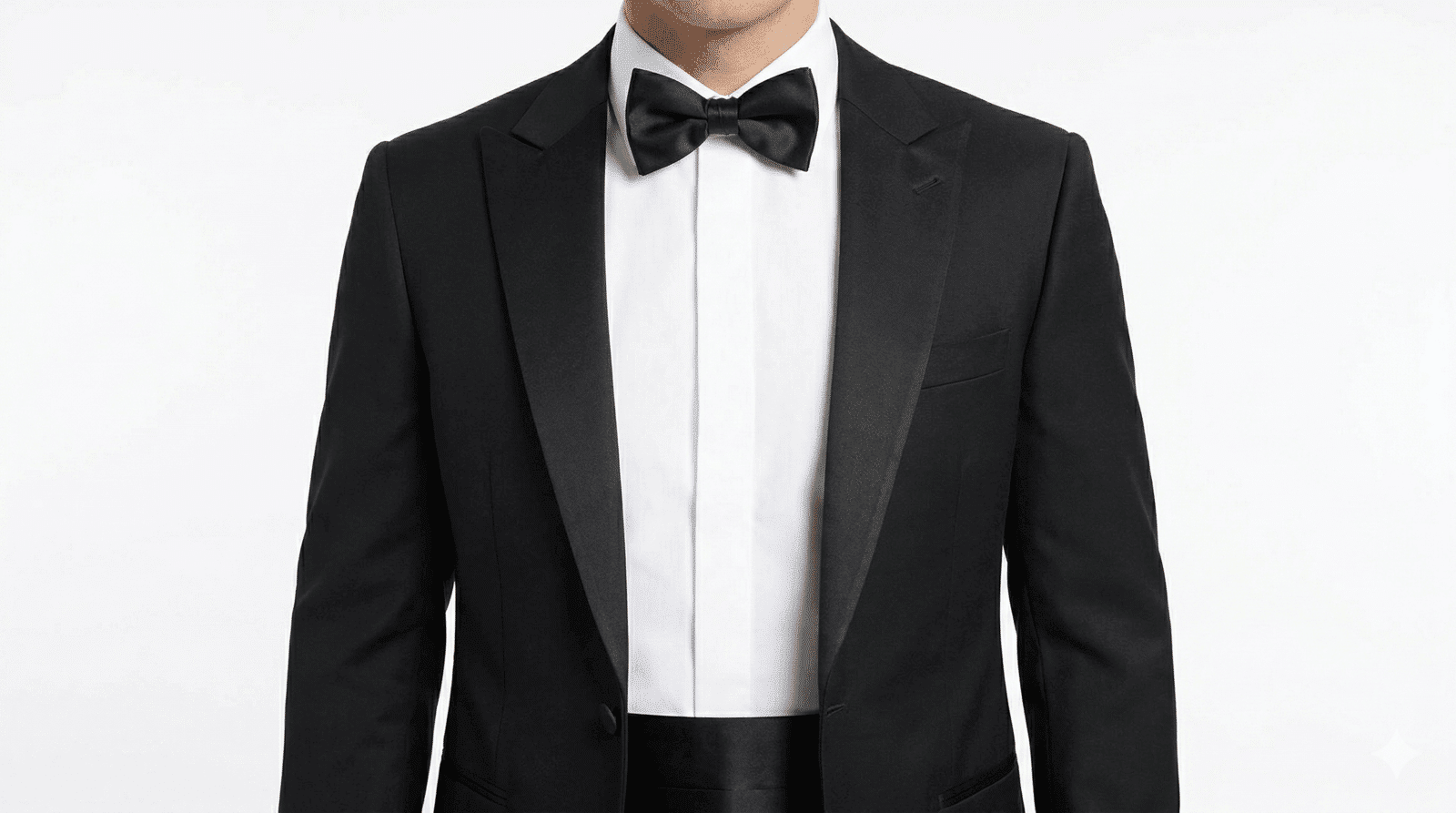
A covered-placket tuxedo shirt is a dress shirt with a front panel that conceals the buttons, creating a clean and uninterrupted line from collar to hem. That smooth front lets the rest of the outfit stand out. Your eye stays on the lapels, the V of the jacket, and the bow tie.
In this guide, we will walk you through everything you need to know about covered placket tuxedo shirts and how to style it.
Why a Covered Placket Works So Well for Formalwear
With formalwear, simple always wins. Nothing pulls focus, and your tux stands out. A covered placket looks clean. It hides the buttons, so the front stays neat. There is no sparkle on the shirt front to conflict with satin lapels, studs, or a cummerbund. You get an unbroken line of white that frames the bow tie and centers the face.
A standard button front breaks that line. Each button is a dot that pulls the eye down the torso. On a tuxedo, that is not ideal. The covered placket keeps the focus where it belongs: the jacket’s shape, the shoulder line, and the tie.
When to wear a covered placket tuxedo shirt:
- Black-tie galas and dinners are a natural fit. The hidden placket sits right under a black or midnight tuxedo and looks great in photos.
- Evening weddings also suit this style, especially when the invitation calls for a tuxedo. It reads respectful and current without looking trendy.
- Award ceremonies, charity events, and formal theatre or opera benefit from that same quiet polish. The shirt supports the tuxedo and never fights the room or the lighting.
When not to wear a covered placket tuxedo shirt:
- For casual weddings, a covered placket can feel too strict. A standard dress shirt with a suit may be a better match for the mood.
- For outdoor daytime events, the formality of black tie often looks out of place. Save the covered placket and tuxedo for the evening.
- For creative black tie, where some personality is welcome, a pleated front or a textured bib can carry more character. The covered placket still works, but you may want to introduce interest through fabric or accessories instead.
Choose a formal shirt front designed for evening wear. Your look will stay intentional without overdoing it. That is the right kind of confidence.
Collar and Cuff Options That Work With It
Collar choice sets the tone. A wing collar is traditional and frames a bow tie. It is sharp and a little formal-aggressive. A turn-down spread collar is more modern and versatile. It sits well under a shawl or peak lapel and works with both a bow tie and a long tie, though the bow is still the right choice for black tie.
Cuffs should match the event. French cuffs are the standard for evening wear. They take cufflinks and match the formality of a tuxedo. Barrel cuffs are simpler but still acceptable.
The more formal the event, the more sense a wing collar and French cuffs make. For most modern black-tie occasions, a spread collar with French cuffs strikes the right balance.
Fabric and Fit: Getting Both Right
Choose crisp cotton or a cotton blend and skip heavy synthetics. They can ripple under the placket and make the front look uneven.
Keep the fit slim but never tight. The front should lie flat through the chest and torso. If you see pulling across the buttons or rippling near the placket, the shirt is too small. If it billows under the jacket, it is too big. Heavy textures fight the clean line here. Save Marcella for a bib-front shirt.
Ignoring fit is the fastest way to ruin it. A poorly fitted covered placket shirt is a very visible mistake. The flat front draws the eye to any pulling or bunching.
The fabric and fit are doing half the work. Get them wrong, and the placket tuxedo shirt does not look its best.
Covered Placket vs. Pleated Front vs. Bib Front
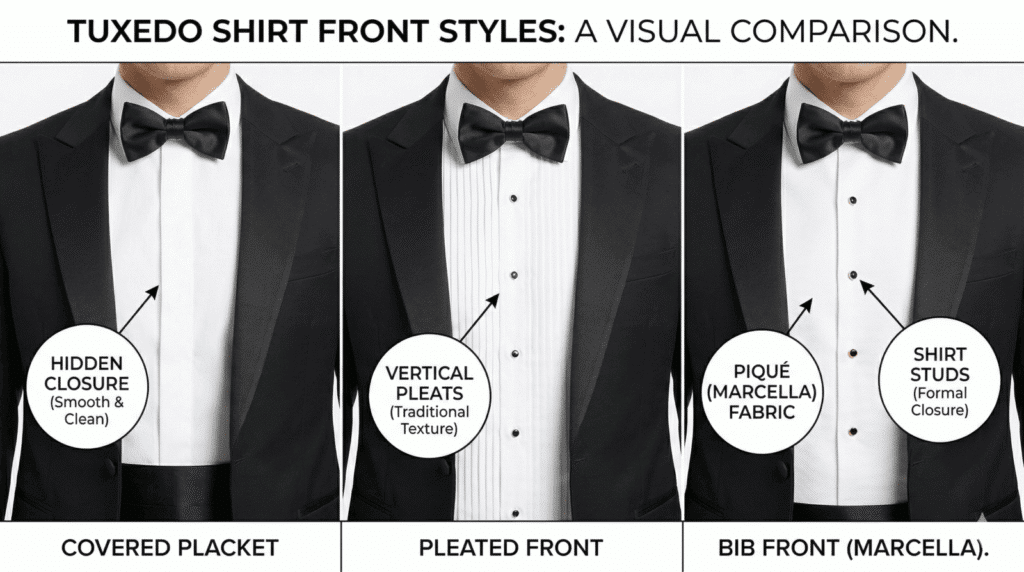
Tuxedo shirt styles come in three main fronts. Each carries a slightly different message.
Covered placket feels sleek and minimal. It pairs well with a contemporary or slim-cut tuxedo. If your jacket has a trim waist, narrow lapels, or a shawl collar, this shirt front matches that look. The lack of texture is the point. It lets the tuxedo lead.
Pleated front is classic and a touch softer. Narrow vertical pleats add rhythm to the look. It works with traditional single-breasted tuxedos and under a peak lapel or a wider shawl. It is still formal, but it reads a little more relaxed than a bib.
Marcella, also called a bib front, is the most traditional of the three. The textured panel is crisp and structured. It shines in very formal settings and pairs with a wing collar and studs. It leans toward white tie and ultra-formal evening events. If the dress code is strict and old-school, a bib front is the safe call.
If you are dressing for a modern black-tie event and want to keep things sharp, the covered placket is the default choice.
How to Style a Covered Placket Tuxedo Shirt
When wearing a placket tuxedo shirt, it’s important not to overthink it or ruin it with a novelty tie.
Neckwear sets the mood. A bow tie is correct with a tuxedo. Choose a self-tie bow. It looks better and sits with a natural shape that a pre-tied version rarely matches.
Wearing a placket tuxedo shirt with a regular tie sends mixed signals. A long tie can work in some cases, but it undermines the dress code and goes against the intent of the covered placket. Use a bow tie unless you know exactly what you are doing.
Shirt fasteners matter even with a hidden front. If your shirt accepts studs, use them. They pair well with the clean front and keep the look consistent. Black onyx or simple mother-of-pearl studs are perfect. Make sure the buttons are fastened properly, and the front lies flat.
Pair a placket tuxedo shirt with the right tuxedo jacket. A baggy or dated jacket will ruin the whole look. Update the tuxedo before you update the shirt.
Finish the outfit with black patent Oxfords, a well-fitted cummerbund or a low-cut waistcoat, and a folded white pocket square. Do not wear a cummerbund and a waistcoat together. Pick one. Keep the jewelry minimal. A tuxedo does not need extra accessories.
Is a Covered Placket Tuxedo Shirt Right for You?
Choose this option if you want a modern look that lets the tuxedo lead. It suits a slim-cut or contemporary jacket and a wearer who prefers sharp lines over texture. If you want your suit to stand out while keeping your shirt simple, this is the one.
Consider alternatives if you want texture and visible detail on the shirt. A pleated front brings movement. A Marcella bib reads very traditional and can match strict dress codes. If you prefer a classic aesthetic with historical roots, those styles may fit your taste.
How We Handle Fit at Alan David
A covered-placket tuxedo shirt gives you a smooth, button-free front that complements the tuxedo and keeps the look sharp. It is the most preferred choice for black-tie events.
For a high-quality custom tuxedo shirt, explore our bespoke services. A master fitter takes measurements, then we cut a unique pattern for your body, and check the drape and balance over fittings. That is how a covered placket lies flat under a jacket and keeps everything looking smooth from top to bottom.
If you need a shirt designed for your tuxedo and tailored to your body, visit our New York showroom for an authentic bespoke experience and book a fitting with a master fitter. We offer a Perfect Fit Guarantee and Free Lifetime Alterations.