How Long Does It Take to Make a Custom Suit?
A lot of people only start thinking about a custom suit when the date is already approaching. It happens. But if you want to avoid that last-minute rush, it helps to understand how long that process takes. And the timeline mainly depends on what kind of suit you are ordering.
The term custom suit is used broadly, though it usually refers to one of these two types: bespoke or made-to-measure. Made-to-measure works from an existing pattern that’s adjusted to your measurements. This means you’ll get your suit sooner.
Bespoke is slower, and deliberately so. The suit is made from scratch, then refined over a series of fittings until it sits right.
Below, we will break down both so you know what kind of lead time makes sense before you book your appointment.
How Long Does a Bespoke Suit Take?
A bespoke suit usually takes 4 to 8 weeks. Some houses take longer, especially when the work is done in the traditional way, and the fitting calendar is full.
Bespoke doesn’t rely on a pre-existing template that’s tweaked to fit. It begins with drafting a pattern specifically for your body. From there, the suit evolves gradually, shaped through a sequence of fittings rather than rushed to a finish line. Typically, that means a baste fitting first, then a forward fitting, and finally the last adjustments before completion.
In practice, it’s rarely that neat. Some clients need another fitting between those stages. A prominent shoulder blade, a lowered shoulder, a forward stance, or a more sculpted coat can all add time.
That extra time is not wasted. It is where the real work happens. When bespoke is done well, the suit does not look adjusted. It looks natural, as if it belongs to the wearer.
A typical bespoke timeline looks like this:
Day 1: Consultation and Measurements
It takes about 45 to 60 minutes. You choose the cloth, lining, buttons, lapel shape, pocket style, trouser finish, and other details. A master fitter studies your posture, shoulder slope, stance, and balance. Then, they take your measurements. You may also try on a sample coat and trousers so the house can see how standard proportions sit on your frame before the pattern is drafted.
Week 1 to 2: Pattern Drafting and Cloth Cutting
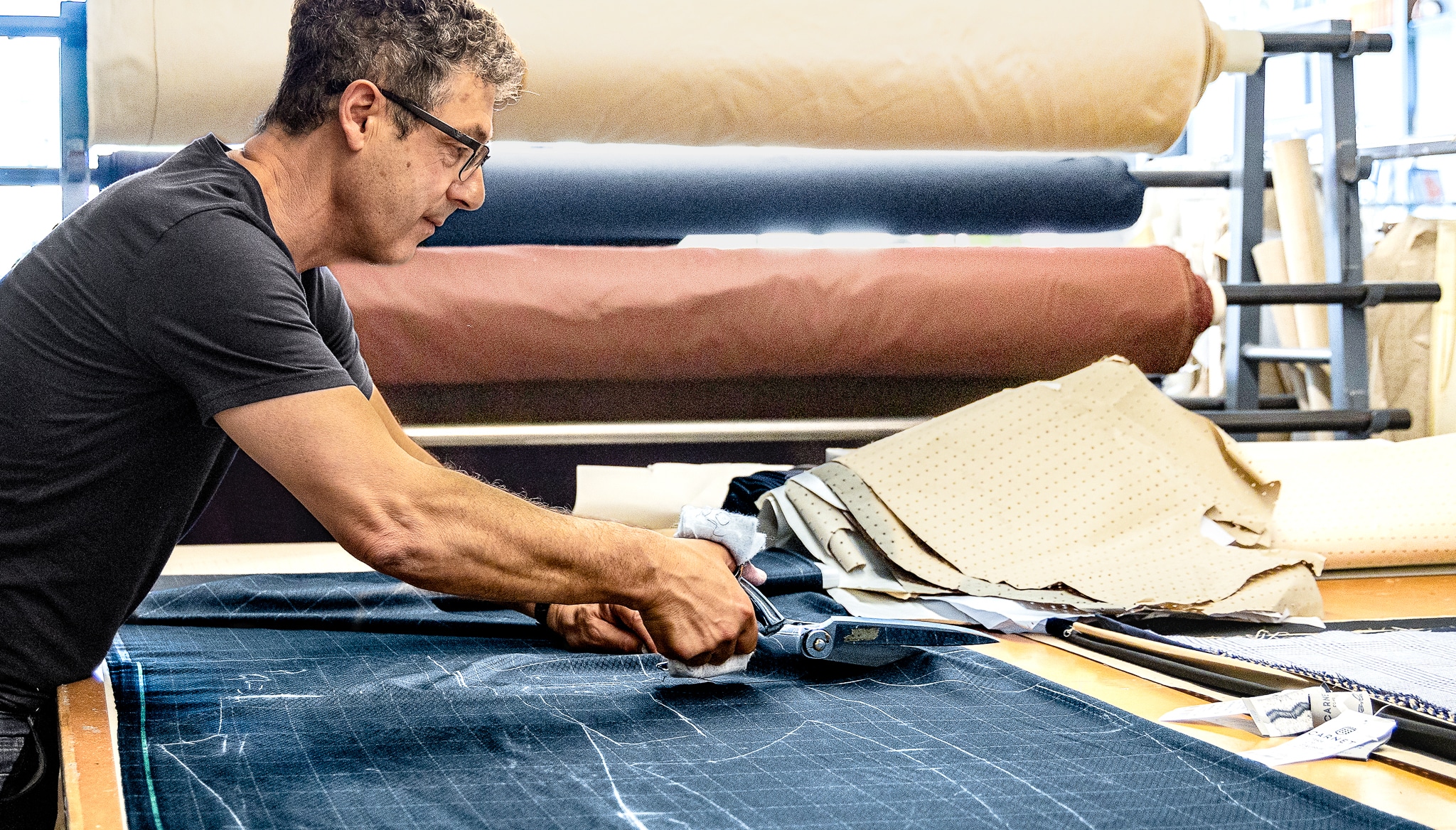
After making the paper pattern, the cloth is cut to that pattern, then the first version of the garment is prepared. At this stage, many bespoke houses build a basted fitting. It is held together loosely so changes can be made with room to work.
Week 2 to 4: Baste Fitting
This is where bespoke starts to show its value. You try on the unfinished suit and the fitter studies the line from every angle. They check every detail:
- The shoulder must sit evenly.
- The collar must stay close to the neck.
- The coat front must balance around the button stance.
- The top button closes at the fullest part of your stomach.
- The sleeves should be set symmetrically to get a clean drape from the shoulder to the wrist.
Week 4 to 6: Forward Fitting
By this stage, the suit has begun to take its proper form. This fitting is usually about refinement rather than broad correction.
The waist might be nudged in or let out slightly to restore balance. The trouser length is checked properly on the shoes you’ll wear. If the arm isn’t falling cleanly, it gets corrected too.
Sometimes, even at this point, it might be clear that the coat needs a bit more work. When that happens, the process pauses for another forward fitting before moving on. It’s better than forcing a finish too early.
Week 6 to 8(+): Final Fitting and Finishing the Suit
By the final appointment, the suit is essentially there. Sometimes finished, sometimes just a touch short of it. What’s left is careful inspection. Final checks are made on coat length, sleeve length, trouser hem, button stance, seat, and overall balance. Small changes may still be needed.
Occasionally, something still needs refining. That’s normal. Delicate cloths can be less forgiving, and they take a steadier hand. And then there’s timing. If fittings are spaced out or your schedule stretches the process, the finish date can drift beyond eight weeks without anyone rushing to force it through.
It’s better that way. The last stage isn’t about ticking boxes, it’s about stepping back and making sure the suit feels settled, not just finished.
Bespoke takes patience and time, but that is the nature of work done properly. Begin early and give the process enough time for better results.
How Long Does a Made-to-Measure Suit Take?
Made-to-measure moves at a quicker pace. In most cases, you’re looking at something in the range of two to four weeks. It moves faster because the process begins with an existing pattern. The tailor works from an existing paper pattern and adjusts it to your proportions. That alone saves a fair amount of time. From there, the coat and trousers are cut, assembled, and brought together with less handwork than you’d see in a fully bespoke process.
There’s usually just one fitting along the way. Minor adjustments are noted and corrected, then it’s on to the finished garment. Made-to-measure can be a practical option. It also suits many first-time buyers who want a better fit than off-the-rack can offer.
A standard made-to-measure timeline often looks like this:
Day 1: Consultation and Measurements
You’ll start by making the key decisions: fabric lining, buttons, lapel shape, vents, and the cut of the trousers. All the elements that give the suit its character.
Measurements come next. Often, you’ll also try on a sample garment, because it shows the fitter where the standard pattern falls short and where it needs adjusting. This process usually takes 30 to 60 minutes.
Days 2 to 14: Production
Your measurements are applied to an existing pattern. The suit is machine-cut and assembled. Handwork is limited when compared with bespoke, which is one reason the garment can be finished sooner.
Week 2 to 4: Delivery and First Fitting
You try on the finished suit. At this stage, most changes are minor. Hem length, sleeve length, trouser waist, and jacket waist are checked and corrected if needed.
Another 3 to 7 days: Final Alterations
Small corrections are made locally. Just the sort of adjustments that bring everything into line. After that, the suit is ready to be worn.
All in, you’re usually looking at 2 to 4 weeks from start to finish. Sometimes a little quicker, sometimes not.
Lead times aren’t fixed. A busy season can add a few extra days. Either way, a bit of flexibility goes a long way. You end up with something that feels properly finished, rather than something that was hurried out the door just to meet a date.
What About Rush Orders?
Some houses offer rush services. A custom suit can sometimes be finished in 1 to 2 weeks if the fabric is in stock and the schedule allows. That can be useful if an event appears late or travel plans change.
Rush service usually comes with trade-offs. There may be a fee. Your cloth options may be narrower. You may get fewer fitting appointments, which leaves less room for careful correction. That matters more with a bespoke order, where the fitting process leaves less room to compress the schedule. However, made-to-measure can be affected as well. Ask the house whether your order can be rushed and what the changes would be if it is.
When Should You Start the Process?
If you want a bespoke suit, start at least 6 to 8 weeks before your event. More time is better. If you want made-to-measure, aim for 4 to 6 weeks.
Say your wedding is in October. August is the latest point to begin a bespoke order if you want more time for proper fittings and final adjustments. September is more realistic for made-to-measure, though earlier is still wiser. Fittings do not always fall exactly when you want them to. Workroom calendars fill up. A final alteration after the last fitting is common.
Starting early is what an experienced suit buyer does. It gives the house time to do the work properly. And it gives you time to wear the finished suit once before the event.
Factors That Can Affect the Timeline
The house’s current schedule is one of the first things to discuss. A busy season can add days or weeks before your first fitting even happens. Wedding months and holiday periods are often tighter.
The design of the suit matters too. A plain navy business suit is faster than a dinner jacket with special lapels, hand-finished buttonholes, or unusual trouser details. More involved styling usually means more bench time.
Fit can add time as well. If your shoulders are uneven, your posture is forward, or your trouser balance is tricky, more fitting work may be needed. That is normal. It is not a problem, but it should be expected.
Cloth sourcing can slow an order. If the fabric is in the house, the timeline is shorter. If it has to come from an English or Italian mill, shipping and mill stock can affect the date.
Your own schedule matters too. A suit cannot move to the next stage until you come in and put it on. If your calendar is tight, say so at the first appointment.
The time frame is fairly clear once you know what you are ordering. The safest approach is to begin early and leave some time for fittings.
Summing Up
If there’s one piece of advice worth holding onto, it’s this: don’t leave it until it’s too late. A good fit isn’t something that happens in a hurry. It’s built up, step by step, with small corrections that only reveal themselves once the garment is on the body. That takes time.
Give yourself a margin. Not just for the making, but for the thinking as well. You’ll make better choices when you’re not watching the clock. In the end, that’s what you’re really paying for. Not speed, but a suit that sits naturally and doesn’t need explaining the moment you put it on.
See us in New York for an authentic, bespoke experience done the right way and on time. Book a consultation at Alan David Custom or visit our showroom. We will tell you what can be done, how long it will take, and what standard your suit should meet.