How to Wear a Tuxedo: A Practical Guide to Tuxedo Etiquette
Most men rent an ill‑fitting tuxedo and call it good. It’s a common mistake. A tuxedo should make you look sharp, not uncomfortable. When your garments fit properly, it changes how you move and how confident you feel throughout the evening.
The difference between average and impressive is simple. To get it right, wear the correct components and follow a few clear rules.
In this guide, you will learn the tuxedo dress code, the proper components, tuxedo accessories that matter, and common errors that ruin the look. Read it once and dress with confidence.
What “Black Tie” Means
Black tie is a formal dress code with clear rules and etiquette. If your invitation says “Black tie,” it means you should wear a tuxedo, not a simple dark suit. A proper black tie outfit includes a dinner jacket with silk or satin facings, matching trousers with a stripe, a formal white shirt, a black bow tie, and formal shoes. That’s the standard.
Wear a tuxedo to galas and weddings after 6 p.m. It’s also suitable for award ceremonies and charity dinners. When in doubt, check the invitation. If it says black tie, dress accordingly.
If the invitation says “Black tie optional,” you can wear a tuxedo or a conservative suit. For a “Creative Black Tie,” you still wear a tuxedo, but you can personalize it with a velvet jacket or accessories.
A black tie is less formal than a white tie. White tie requires a tailcoat and a wing‑collar shirt. It is reserved for state banquets or royal ceremonies. It’s extremely rare these days.
How to Get the Fit Right
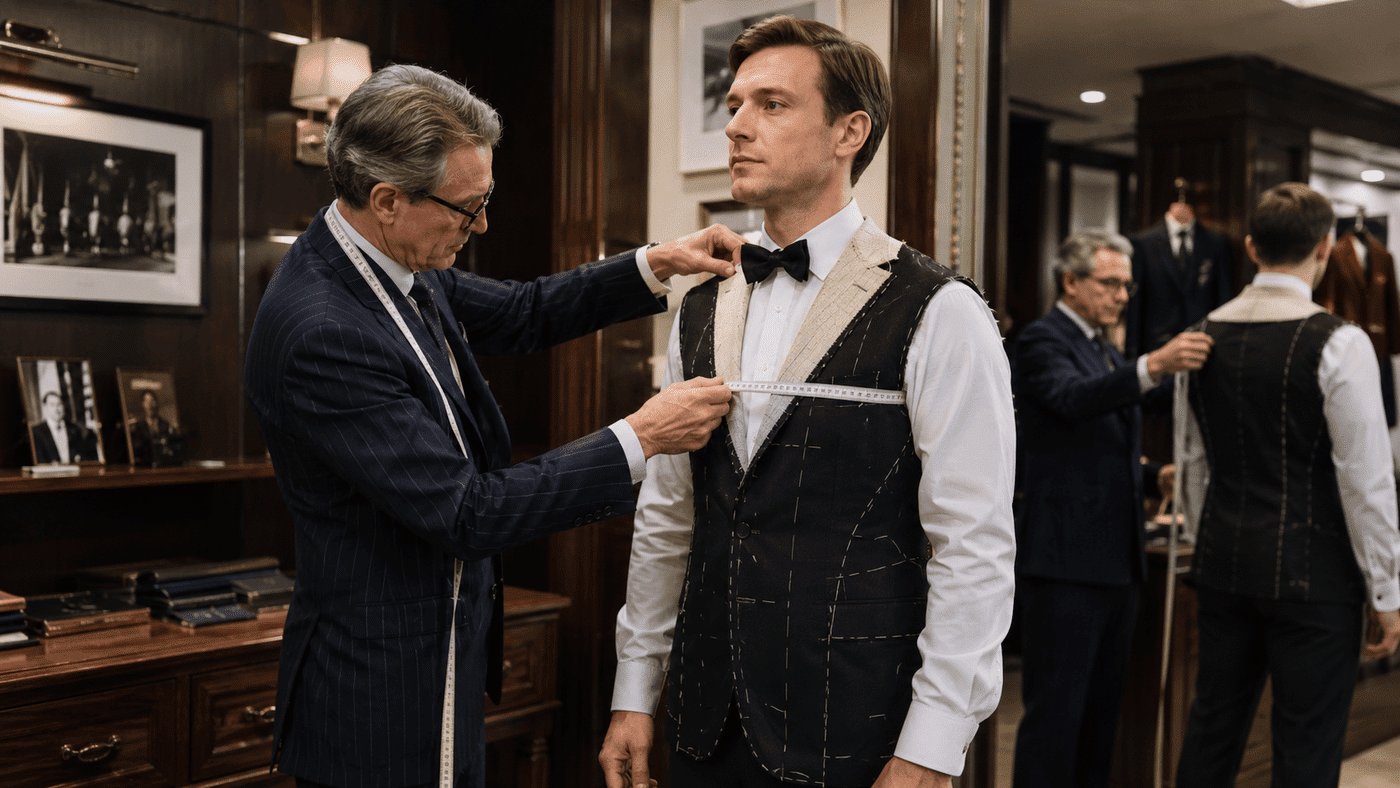
Fit beats fabric, brand, and price. If the tux fits, you will look sharp, even in a rental. If it doesn’t, nothing saves it. Always have a true tailor or master fitter take your measurements.
Start with the shoulders. The shoulder seam should sit at the edge of your shoulder. The line from neck to sleeve should be smooth, without divots or overhang.
Check the chest and waist. The jacket should close cleanly without strain. You want a slight shape through the waist, not tight or boxy. The top button should close at the fullest part of your stomach. Any higher makes you look heavier. Any lower shows too much shirt and throws the balance off.
The sleeves should hang the same on both arms, without pulling through the bicep. You want a clean drape from shoulder to wrist. Show about a half‑inch of shirt cuff below the jacket sleeve.
Set your trouser length. Make sure there’s no pooling of fabric on the shoe. A slim or no break is right for modern black tie. The trousers should sit at your natural waist, not on your hips. That keeps the line long and clean.
Even a rental can be shaped. If you’re renting, budget $30-$50 for a quick tailor visit. A light waist suppression and a sleeve tweak will make a $100 rental look much better.
Select the Correct Tuxedo Jacket
Two lapel styles define black tie:
- Peak lapels are formal and strong. They suit weddings, galas, and any event that calls for presence. A shawl collar is smooth and rounded. It’s timeless, elegant, and a smart choice for evening parties and older gentlemen.
- Notch lapels read like a business suit. They are acceptable but not ideal for a true black tie.
A single‑breasted jacket with one or two buttons is the safer, more versatile choice. A double‑breasted jacket is bolder but still correct. Keep it buttoned when standing.
As for the color, a black tuxedo jacket is standard. Midnight navy is also correct and often looks darker than black under evening light. Keep the jacket simple. No vents are traditional. A single vent is common and fine.
Wear the Right Tuxedo Shirt
The right shirt adds formality and cleans up the whole look. A regular dress shirt is not a tuxedo shirt. Choose a bib front. Go with pleated or marcella/piqué. Both are correct. The bib gives the shirt structure and presence under the jacket. A covered or fly‑front placket is preferred. It hides the buttons and keeps the front of the garment clean.
French cuffs are required. Wear simple cufflinks in silver or black onyx. A wing collar is traditional with a bow tie. A turndown or spread collar is slightly more relaxed and still correct. Keep the shirt white or ivory. Nothing else belongs with a black tie.
Bow Tie vs. Necktie
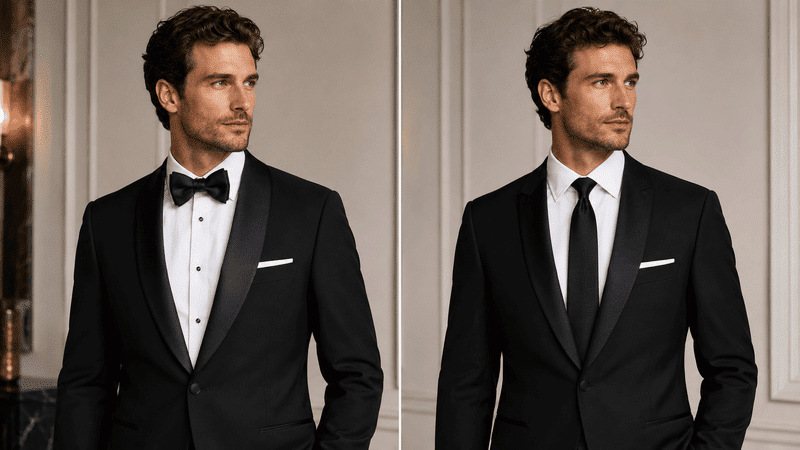
A bow tie is the correct choice for black tie events. A long necktie is a deviation and is best suited to the most relaxed events. If the dress code is strict, always choose the bow.
Wear a real, self‑tied bow tie. Avoid clip‑ons. Clip‑ons look too stiff and too symmetrical. A hand‑tied bow with a slight bend looks right. It shows you know how to wear a bow tie. Keep it black silk or satin to match your lapels. If you need help, learn once, and you’re set for life. Read our bow tie vs necktie article for more details.
Choose Trousers That Match
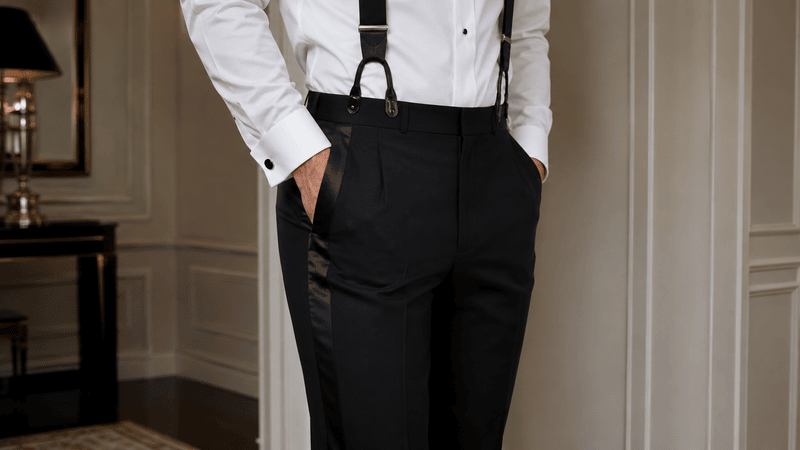
Tuxedo trousers have a satin or grosgrain stripe running down each outer leg. That stripe should match the lapel facing on your jacket. When the facings and the stripe disagree, the outfit looks mismatched, especially under bright lights and in pictures.
Never wear a belt with a tuxedo. The waistband should stay clean. Use suspenders (braces) under the jacket. Side adjusters are also correct. Both keep the waist tidy.
Fit the trousers slim and straight. Avoid tight legs and extra fabric at the bottom. The trousers should sit at the natural waist. A flat front is clean and current. A single pleat is fine for more room in the thigh.
Complete the Look With Shoes
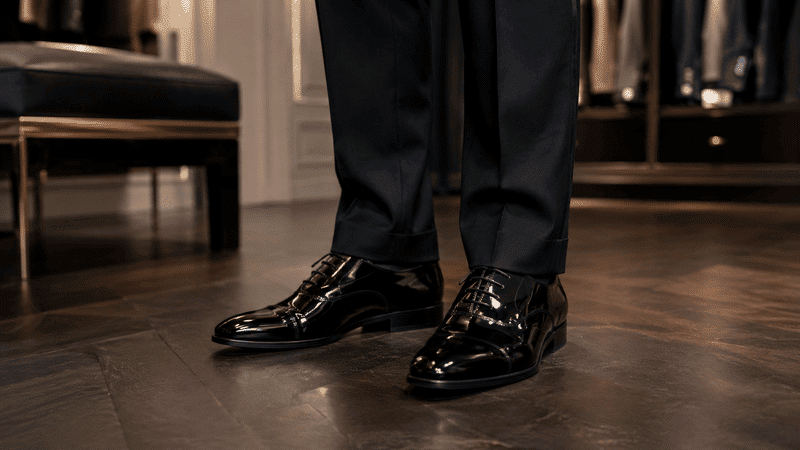
Your socks and shoes should finish the look in a classy way. With a tuxedo, wear thin and dressy black socks. Mid‑calf or over‑the‑calf stays up and keeps your leg covered when seated. Never wear ankle socks or patterned socks.
As for the shoes, black patent leather oxfords are ideal. A polished black cap‑toe oxford works well if you don’t have patent leather. Opera pumps with a silk bow are correct and very formal.
Avoid suede. It’s too casual. Don’t wear brown shoes, as they are inappropriate with a black tie. Chelsea boots only suit very relaxed events, and even then, are a stretch.
If patent leather isn’t available, a high shine on smooth black leather is more than fine.
Add Accessories to Your Look
A clean black tie outfit requires very few accessories, and each one serves a purpose.
When wearing a tuxedo, you should cover the waistband. Wear a cummerbund or a low‑cut waistcoat unless you’re in a double‑breasted jacket. Both are correct. The cummerbund sits at the natural waist and overlaps the waistband. The pleats face upward. That’s not a cute line. It’s the rule. Keep the color black to match the bow tie.
Cufflinks belong on French cuffs. Keep them plain. Silver or gunmetal looks sharp. Black onyx is classic. Save novelty cufflinks for another day.
A pocket square finishes the chest. White linen is best. Fold it flat or with a crease. Skip patterns. Let the tuxedo do the talking.
Studs replace shirt buttons on a proper tuxedo shirt. Stick to a simple black or onyx set. Gold rims are fine if the rest of your hardware follows suit.
Wear a dress watch only if needed. A slim, black leather strap is best. Avoid a steel bracelet and digital watches. If you can, leave the watch at home and enjoy the evening.
Tie bars don’t belong with a bow tie. Lapel pins drag the eye. Loud pocket square folds look out of place with a black tie. Skip anything that adds clutter.
Final Words
Wearing a tuxedo well isn’t hard. You just need to get the fit right and wear the correct components. Follow a few simple rules, and the look takes care of itself. Save this guide and use it as your checklist the next time black tie lands on your calendar.
If you want hands‑on help from a master fitter, visit our New York showroom or book an appointment for an authentic bespoke tuxedo. We take your measurements and make sure your tuxedo fits cleanly today and for years to come.