Button Down vs Button Up Shirts – What are the Main Differences?
Most people say “button-down” when they just mean any shirt with buttons down the front. It happens all the time. Even big retailers and magazines use it that way.
This is not about correcting people over small details. If a man calls his office shirt a button-down in everyday conversation, no one is going to stop him and make a thing out of it.
Still, knowing the differences is useful. It will help you choose with more intent. You can also ask for the shirt you actually want. That matters when you are dressing for a setting where small details count.
This article explains the difference between a button-down and a button-up shirt, and shows where and when to wear each.
What’s the Main Difference Between a Button-Down and a Button-Up Shirt
Say you ask for a button-down when you really want a spread-collar dress shirt. You have already started wrong. The same goes for when you wear a button-down to a formal evening event and can’t work out why the outfit feels slightly off. The answer is often right there at the collar.
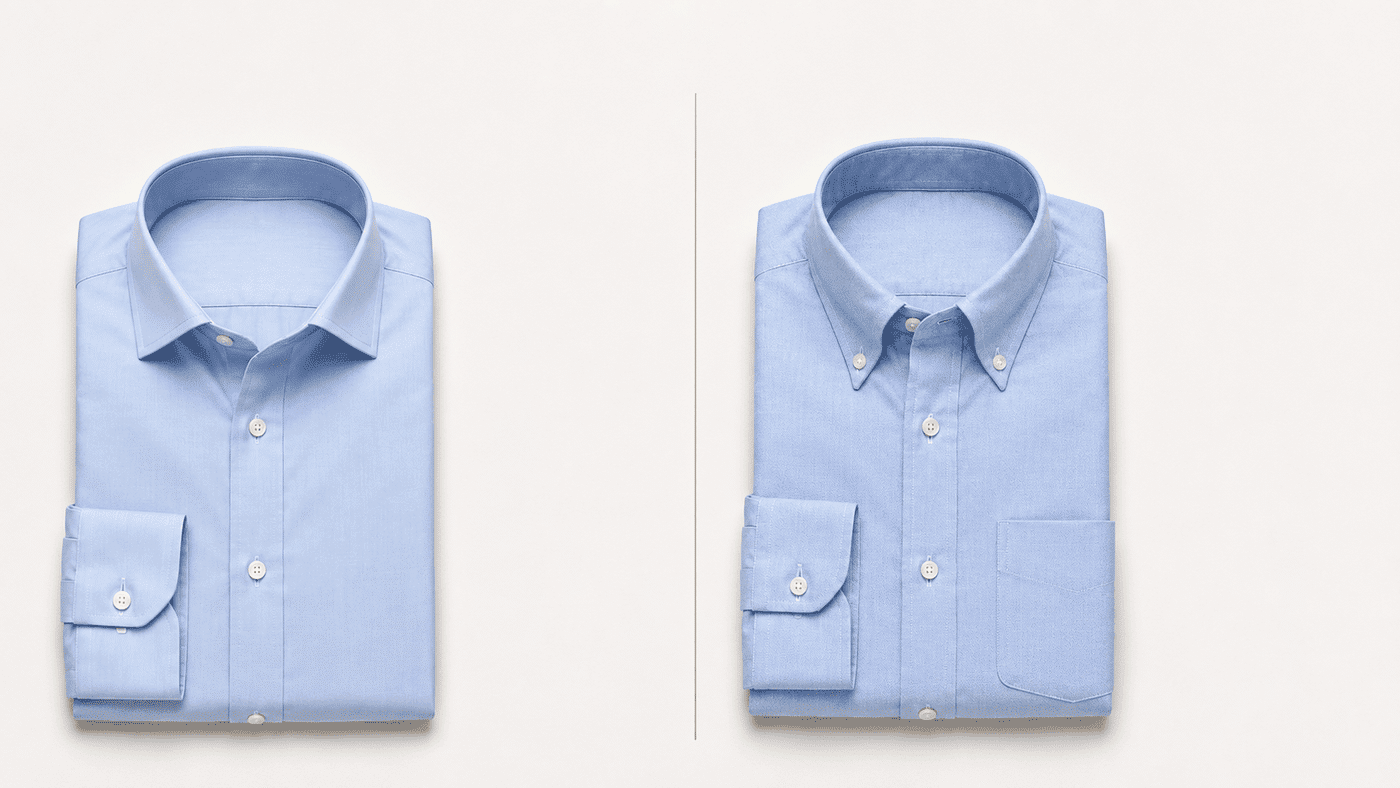
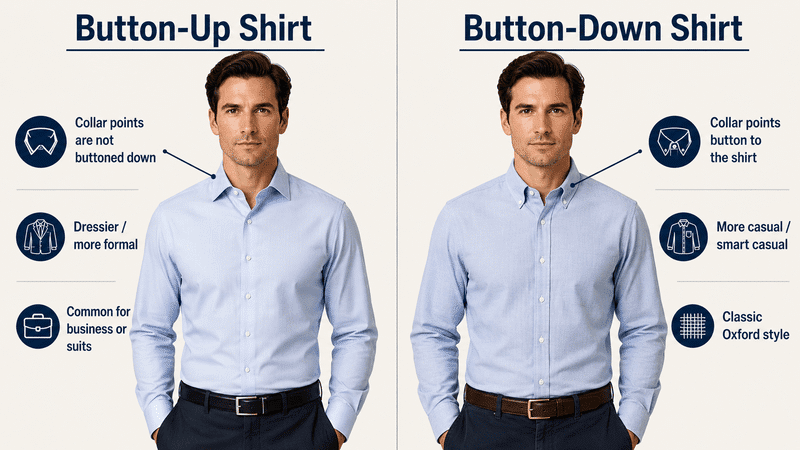
- A button-up shirt is any shirt that closes with buttons along the front placket. The collar points sit free. They do not fasten to the shirt.
- A button-down shirt is a type of button-up shirt. It has small buttons at the collar points that fasten the collar down to the body of the shirt.
So it is safe to say that every button-down is a button-up, but not every button-up is a button-down. The button-down collar looks softer and more relaxed. The standard dress shirt collar looks more formal. It’s interesting how that one small detail changes how the shirt looks.
Button-Up Shirts for Formal and Business Dress Codes
A button-up dress shirt has buttons down the front, but the collar points are left open. That open collar gives the shirt a cleaner look around the neck. It also sits better under a suit and holds a tie in place better.
Not every button-up shirt has the same collar. There are several common styles:

- Point collar: A classic collar with long and narrow points. It’s a more traditional style.
- Spread collar: The collar points are farther apart. This gives the shirt a dressier look and makes room for a larger tie knot.
- Cutaway collar: A wider version of the spread collar. More open at the neck and often seen as more fashion-forward.
- Club collar: A rounded collar style with a more old-school look. This style is less common, but still distinctive.
The construction usually follows the same logic:
- It doesn’t usually have a chest pocket, which keeps the front clean. That makes a big difference once you put on a jacket.
- The hem is longer and slightly curved. It stays tucked even after a full day of moving around. The collar holds its shape. It might have added structure inside or collar stays. Either way, it should still look sharp by the end of the day, not collapse by lunch.
- Fabrics are smooth and refined. Poplin, broadcloth, and twill are the common choices. These fabrics are not flashy. They are comfortable and consistent in everyday use.
A button-up shirt is the standard for formal and business-formal clothing. It is the right choice for pretty much anytime the dress code is not up for debate. You can wear it to finance offices, law firms, client meetings, court, weddings, and evening events with a dark suit.
Button-Down Shirts For Business Casual and Off-Duty Wear
The idea of button-down shirts goes back to British polo players in the late 1800s. Riders wanted their collar points to stay in place while riding. They fastened them down. That sporting habit still has its place in the modern dress code. That is why the button-down collar carries a casual, even athletic, note.
A button-down shirt is still a button-up, but the collar points are fastened with small buttons. That one detail shifts the whole look of the shirt. A button-down collar is designed to be buttoned. If you leave them undone, the shirt can look a bit unfinished, like forgetting to button your cuffs.
The collar rolls softer, and the look is more relaxed. Even when the rest of the outfit is sharp, the shirt won’t let it look too stiff.
Button-downs fit so well in business-casual and smart-casual settings. You will see them:
- On a relaxed Friday at the office
- Out to dinner
- At a gallery on the weekend
They pair easily with chinos, odd jackets, dark denim, and loafers. You can wear a tie with a button-down if you want. But most guys leave the top button open.
The construction is more casual too:
- They often have chest pockets
- The hem is usually shorter or straighter, so wearing it untucked looks intentional
- The collar is softer by design. It is meant to roll rather than keep its shape.
Fabric choices follow the same idea:
- Oxford cloth is the classic
- Chambray and flannel work just as well for more texture
In more formal settings, such as finance, law, or meetings, a button-down collar with a conservative suit can feel slightly off. It’s not really wrong, but a bit too relaxed for the room.
When to Wear a Button-Up vs a Button-Down
Here is the simple rule:
- Wear a button-up when the setting requires a dressier look.
- Wear a button-down when the dress code is not strict.
A button-up dress shirt is appropriate for formal business settings and dressier events. It works best with a suit, a proper jacket, and a tie.
Reach for it for:
- Office meetings
- Interviews
- Client presentations
- Weddings
- Formal dinners
- Any event where you want to look polished without debate
It is also the correct shirt for a tuxedo. A button-down collar softens black tie and looks wrong.
A button-down shirt works better in business casual and smart casual dress. It is neat, though less rigid. You can wear it with chinos, wool trousers, dark jeans, or a blazer.
It suits:
- Relaxed offices
- Dinners out
- Weekend gatherings
- Travel
- Social plans where a suit would feel too stiff
You can wear it with a tie, though many men leave the neck open.
If the dress code is unclear, start with the jacket. A structured suit and tie usually point to a button-up. A sport coat, knit jacket, or blazer allow you to wear a button-down.
Always check the fit:
- The collar should sit close without choking
- The placket should lie flat
- The sleeve should hang clean from shoulder to wrist, with no pulling through the bicep
If the shirt is wrong in those places, neither collar style will look right.
Button-Up vs Button-Down: Quick Comparison
As you can see, the collar is not the only difference between button-up and button-down shirts. Here’s a quick comparison:
| Feature | Button-Up Shirt | Button-Down Shirt |
| Collar | Collar points stay free | Collar points button to the shirt |
| Formality | More formal | More casual to business casual |
| Best use | Suits, ties, formal offices, weddings, evening wear | Blazers, chinos, relaxed offices, dinners, weekends |
| Tie pairing | Strong choice with a tie | Can take a tie, though often worn open |
| Chest pocket | Less common | More common |
| Hem | Longer and more curved for tucking | Often shorter or straighter for untucked wear |
| Collar | Firmer, more structured | Softer, with a natural roll |
| Common fabrics | Poplin, broadcloth, twill | Oxford cloth, chambray, flannel |
Fit still decides the outcome. A fine collar cannot save a shirt that gaps at the neck or pulls across the chest. This is one reason men often choose custom shirts.
Final Thoughts
The collar is the real dividing line. One fastens down and feels more relaxed. The other stays open and looks more formal. It is a small detail, but it quietly signals where you are headed and how you chose to show up.
Both shirts should be included in a proper wardrobe. You will reach for each of them at different times. This is not about picking a winner. It is about wearing the right one for the moment and walking into the room feeling comfortable.
At Alan David, Custom shirts are made from your measurements, not a standard size chart. Those measurements are taken by experienced fitters, so the shirt reflects how you actually stand and move.
If you want to see the process in person, book a consultation at our Midtown Manhattan showroom on Madison Avenue. Don’t hesitate to call us at 212-227-4040.