How to Choose a Summer Wedding Suit?
The summer wedding season brings outdoor ceremonies and long receptions that run from afternoon heat into late evening. It also brings a real test for any man in a suit. You need to look sharp in every photo, stand through vows and speeches, and stay comfortable at the same time.
This means you need a suit with the right fabric, color, and fit. Get those three things right, and you will look proper at a garden wedding, a rooftop reception, or a beach ceremony without feeling overdressed or out of place.
In this guide, we explain how to choose a summer wedding suit, from the right warm-weather fabric and color to the fit, venue, and role you need to dress for.
The Best Fabrics for a Summer Wedding Suit
Fabric comes first because comfort starts there. If the cloth is too heavy, the rest of the suit can’t save it. In warm weather, the choice of fabric sets the tone for the whole garment.
Linen
Linen is the most breathable natural option for hot weather. Air moves through it with ease, which makes it a strong pick for beach weddings, garden ceremonies, and destination events. A linen suit feels relaxed and seasonal.
Linen wrinkles because the fiber has less spring than wool. That is part of its character. The best way to keep it looking good is to pick a linen with some substance. Then keep the jacket light. Soft shoulders and less structure usually suit linen far better than a heavily built coat.
For a groom, linen can look elegant if the wedding setting supports it. For a guest, it is one of the easiest options.
Lightweight or Tropical Wool
If you want the best all-around option, choose lightweight wool, often called tropical wool. It gives you shape without the heat of a heavier cloth. It breathes well, resists wrinkling better than linen, and holds better through a long day.
A true tropical weight usually falls around seven to nine ounces per yard. That range works well for summer weddings because it feels light. For a church ceremony, a hotel ballroom, or an evening reception, this is often the smartest choice.
A tropical wool wedding suit also has a practical side. The groom can wear it again after the wedding, which makes the investment easier to justify. When a suit is made for your measurements, it should have its place in your wardrobe.
Cotton and Cotton Blends
Cotton falls somewhere between linen and wool. It has an easier feel than wool, so it works well for daytime weddings and semi-formal settings. If you choose a cotton blend, you also get a bit more resistance to wrinkling and better shape through the day.
Seersucker deserves its own mention. Its puckered surface lifts the cloth off the skin, which helps air circulate. It has personality, but can still be proper for the right setting. It works especially well for a garden wedding, a Southern venue, or a daytime ceremony with a more relaxed dress code.
For guests, cotton is a strong option. For grooms, it depends on the venue and the tone of the day.
Fabrics to Skip
Heavy wool, thick flannel, tweed, and velvet belong in colder months. They trap heat, add visual weight, and look out of place in bright summer light. Save them for fall and winter weddings. Summer needs fabrics that feel lighter and look that way too.
Choosing the Right Color for a Summer Wedding Suit
Summer calls for lighter and softer shades. The right wedding suit color should match the formality, but it should also make sense for your role.
Light Neutrals
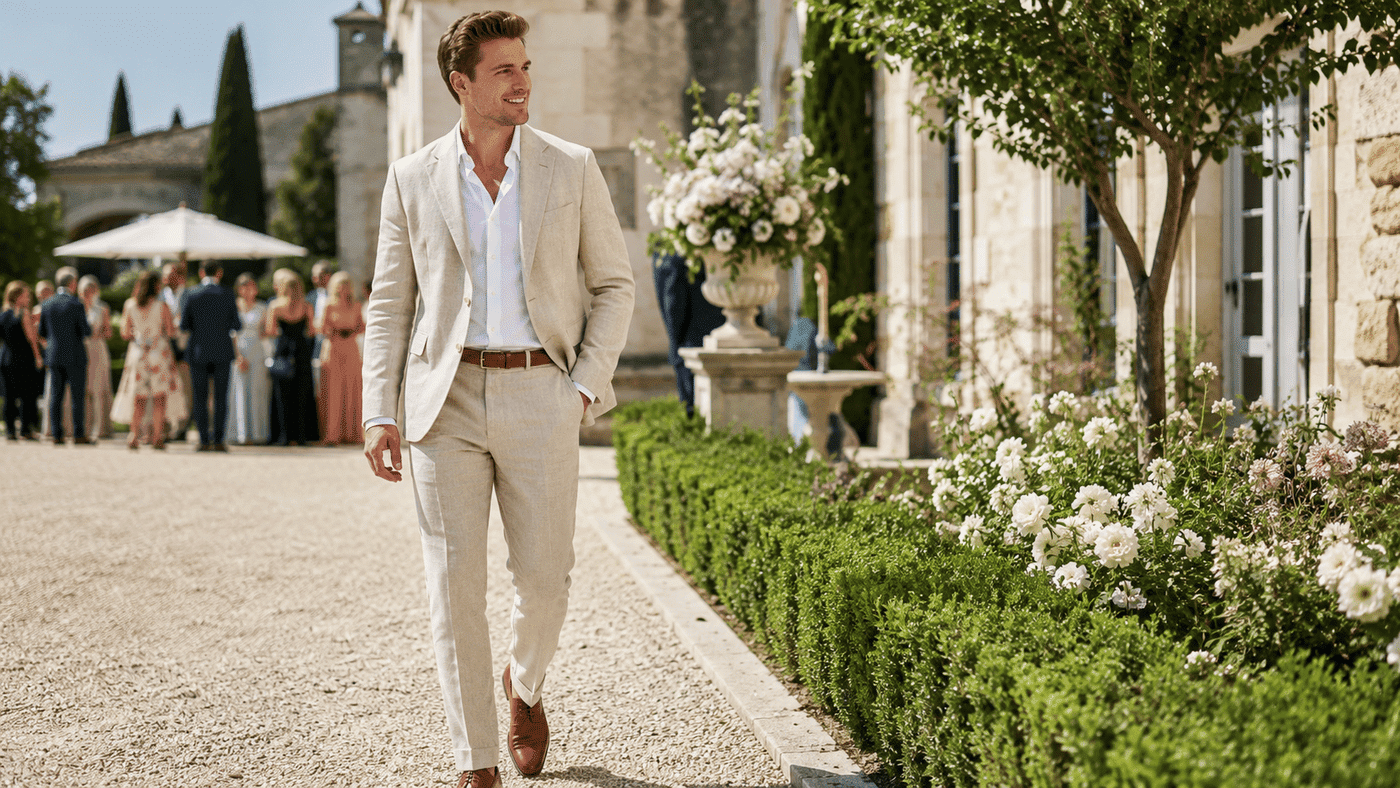
Light gray, cream, sand, beige, and soft stone are the colors most men come back to for summer weddings. They feel right in natural light. They look easy outdoors. And in photos, they stay clean and soft instead of harsh.
These shades are also simple to wear. They work with a white shirt, a pale blue shirt, brown shoes, and understated flowers, all with little effort.
For grooms, cream or ivory can look very good if the setting calls for it. For guests, it is best to keep some distance from white.
If you want the safest choice, start with light gray. It works almost anywhere and looks right from a daytime ceremony through the evening reception.
Navy
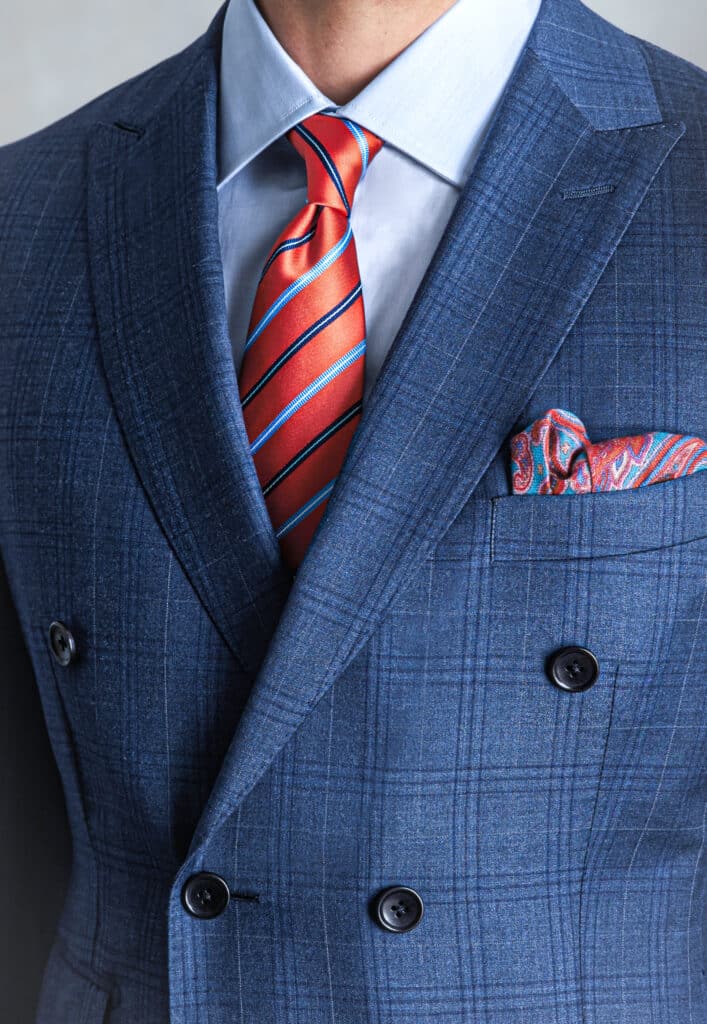
Navy is the most reliable color on the board. It feels cooler than black and carries more formality than tan, making it useful for a wide range of weddings. A navy suit works well for a groom, a groomsman, or a guest.
It is especially well suited to evening ceremonies, church weddings, and hotel venues where the setting calls for a dressier look. In daylight, brown or tan shoes keep it feeling seasonally right. After dark, brown is usually the better choice.
If you need a single suit color that can cover almost anything, navy is the right choice.
Soft Colors and Pastels
Soft blue, dusty blue, sage green, and muted blush are becoming more common for weddings in 2025 and 2026. They bring some color, but they don’t look flashy.
Used well, they feel easy and natural. These shades tend to look best at garden weddings and outdoor estate venues, where the surroundings are softer and more open.
Sage and dusty blue work well beside common bridesmaid palettes. These colors suit men who want some personality without drawing attention away from the couple.
Earthy Tones
Tan, camel, olive, and terracotta work well for vineyard weddings, rustic venues, and destination ceremonies. They feel warm and grounded. They also look well against wood, stone, and natural light.
The shade matters. Muted, sun-washed earthy tones feel right for summer. Very dark or overly saturated versions can be heavy.
Colors to Skip
Black and very dark charcoal absorb heat and can feel severe in bright summer conditions. Save them for formal evening weddings, black-tie dress codes, or a true formal summer wedding. Guests should also avoid colors that pull too much attention. The day belongs to the couple.
Completing the Summer Wedding Look
Accessories should support the suit. In summer, lighter texture and cleaner color usually win.
Shirt
A white shirt is still the safest and sharpest choice for summer. Light blue works well too and feels softer in daylight. Stick with breathable weaves such as poplin or a fine Oxford cloth. A custom shirt made to your measurements will sit better.
Tie or No Tie
Wear a tie for formal venues. Skip it for beach weddings or very relaxed outdoor ceremonies if the invitation allows it. If you do wear one, choose lightweight silk or linen in a quiet pattern. Small stripes, neat prints, and subtle florals all work well.
An open collar can look right in a casual setting, though it still needs intention. The shirt collar must hold its shape. The jacket must fit cleanly. If either one is off, the no-tie look falls apart.
Shoes
Tan or caramel leather works with nearly every summer palette. Brown Oxfords or Derbies suit formal venues. Loafers fit garden weddings, daytime receptions, and destination events.
Black shoes can feel too heavy with summer colors. Save them for darker suits at more formal weddings or events.
Pocket Square
Keep the pocket square simple. White linen always works. Soft color can work too if it matches the tie, shirt, or flowers.
For the groom, the boutonniere should tie into the wedding flowers and sit in proportion to the lapel. Small is usually better.
Belt and Cufflinks
Match the belt to the shoes. If the look is more relaxed, side adjusters can remove the need for a belt altogether.
Grooms can use personalized cufflinks. Initials, a date, or a family link all can work. Guests can keep them plain.
How Your Role Changes Your Suit
Your wedding suit changes based on your role in the wedding.
The Groom
The groom should be the best-dressed man in the room. Not louder than everyone else. Just more polished. A custom wedding suit makes sense here because it fits your body, and the cloth suits the season.
Start at least 6 to 8 weeks early so there is time for cloth selection, fittings, and final changes. If the dress code is black tie, a summer tuxedo may be the better choice.
Groomsmen
Groomsmen should look connected, not copied. Matching cloth across every man can work, though it is not the only option. The group can wear the same color in slightly different shades, or the same cloth with different ties, shoes, or pocket squares.
The groom can set himself apart in quiet ways. A different tie. A different boutonniere. A shawl collar while the group wears notch lapels.
Wedding Guests
For most summer weddings, semi-formal or cocktail attire is a safe place to start. A navy suit usually works. So does light gray or tan, depending on the setting and time of day. Pay attention to where the wedding is taking place. A beach ceremony allows more ease. A church wedding usually calls for a cleaner, more traditional look.
A few rules do not change:
- Skip white and ivory.
- Leave anything too bold to the wedding party.
- Above all, let the venue guide the formality. If the setting feels dressy, your suit should too.
If you are weighing options, start with custom suits that can be cut for warm weather and worn again after the event.
How Venue and Dress Code Shape Your Summer Wedding Suit
The dress code decides what kind of suit you should wear. If the invitation does not mention anything, look at the venue and the time of day.
Beach or Outdoor Destination Wedding
For an outdoor or beach wedding suit, go light. Linen or cotton works well here. Choose sand, cream, light gray, or pale blue. An unstructured jacket and loafers make more sense than a stiff coat and heavy Oxfords.
Garden or Estate Wedding
Lightweight wool or a cotton blend works well in this setting. Sage, tan, light gray, and soft blue all sit nicely against green lawns and stone paths. Brown leather shoes or loafers finish the look cleanly.
Ballroom or Hotel Wedding
Indoor formal spaces still call for structure in summer. Tropical wool in navy or light gray is often the right move. The room is usually climate-controlled, so pure linen may feel too casual and too soft for the setting.
Church Ceremony
Navy, classic gray, or charcoal in a light wool keeps the look proper for a church wedding. Wear a shirt and tie. Stick with black or dark brown dress shoes. Keep jewelry and other extras quiet.
City Hall or Intimate Ceremony
This setting suits a clean two-piece in a neutral shade. The look should feel modern and spare. Suede or smooth leather shoes work well. A silk tie or a pocket square is enough detail.
Summing Up
A good summer wedding suit starts with the right cloth. It moves to the right color for the season, the venue, and your role. Then it comes down to fit, which decides how the whole thing reads in person and in photos.
The goal is to feel comfortable and look properly dressed for the day. That takes judgment. It also takes a suit made with care and fitted by people who know what to check.
At Alan David Custom, we have dressed grooms and wedding guests for more than a century. Five generations have gone into the standards we keep. If you have a summer wedding ahead, we would be glad to help you get the right suit for the occasion.
View our custom wedding suits and book a consultation at our New York showroom.