Suit Shoulder Types and When to Wear Each
Most men pay attention to the lapels or the fabric first. The defining detail sits higher up: suit shoulder types decide how a jacket stands on the body, how formal it reads, and what kind of presence it gives you before you say a word.
The shoulder sets the silhouette. It shapes the line of the sleeve. It can make a suit feel strict, relaxed, sharp, or quietly elegant.
There are several types of suit shoulders: structured, unstructured, roped, soft, extended, Neapolitan, and pagoda. Let’s break down each type, how it’s built, how it looks, and when to wear it.
Structured Shoulders: The Classic Padded Suit Shoulder
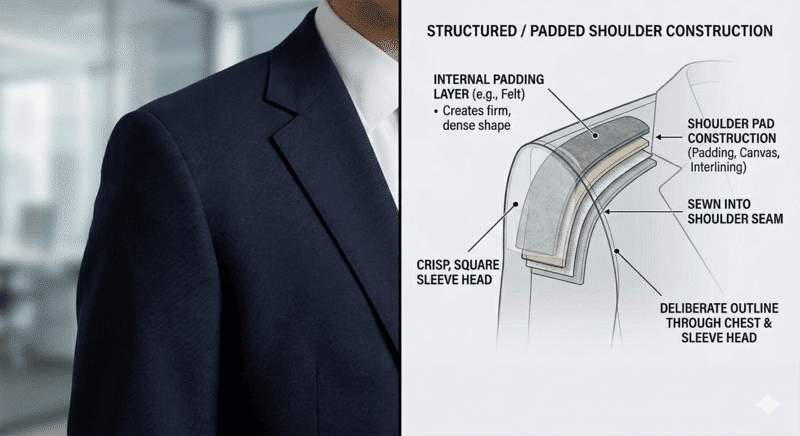
A structured shoulder is built with internal padding sewn into the shoulder seam to create a firm, geometric line. In a padded suit shoulder, that support can be light or heavy. The amount matters. And so does the material. Felt gives a dense, refined shape. Wadding creates a softer lift. Foam can produce a cleaner edge with more visual strength.
This is the backbone of much traditional tailoring. In strong business suit construction, the shoulder does not simply follow the body. It corrects it, broadens the upper frame, and creates a more deliberate outline through the chest and sleeve head.
Visually, you get a squared-off shoulder edge and a crisp sleeve head. The jacket looks settled and upright. It reads formal even before the cloth or lapel style enters the conversation. On some men, that added line brings balance. On others, too much padding can feel stiff or overly severe. The right amount depends on posture.
British houses, especially Savile Row, have long favored this shape. So have many American traditional makers. Corporate dress picked it up for the same reason: it projects order and authority.
Best for formal wear. It suits the boardroom with ease. The mood: “I run meetings for fun.”
Unstructured (Natural) Shoulders in a Soft Shoulder Suit
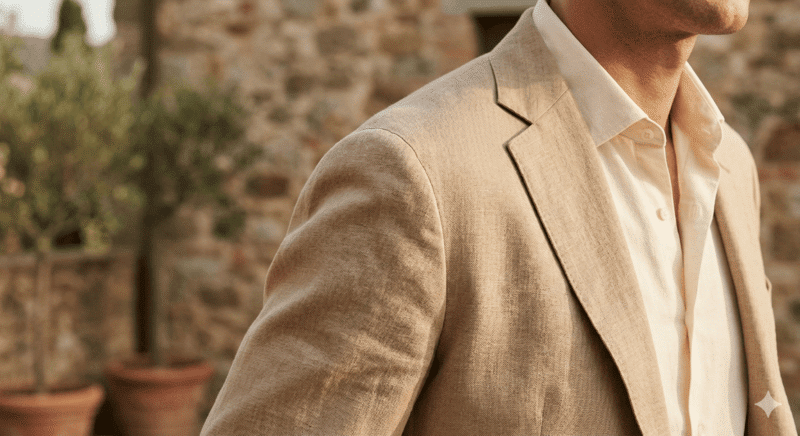
Unstructured shoulders use little padding or none at all. There is no internal canvas at the shoulder seam, so the jacket follows the body’s own slope instead of forcing a straighter line. In an unstructured blazer, the shoulder collapses more gently and moves more freely. A soft shoulder suit built this way feels light in the hand and easy on the body.
That drape is the point. The jacket sits closer to the wearer’s natural form. It bends with motion. It does not fight the shoulder. If you have a clean natural frame, this can look relaxed and beautifully controlled. If your shoulders slope or sit unevenly, the cut has less built-in correction, so the pattern has to be right from the start.
This kind of deconstructed jacket earns its place in warm climates. Linen suits benefit from it. So do travel jackets that need to pack well. The lack of weight helps in summer, but comfort is not the only reason people choose it. There is style in restraint.
Unstructured does not mean cheap. Some of the most expensive Italian jackets in the world are made this way. The work is harder than it looks because the line must stay clean without the hidden support that a structured coat relies on.
Best for casual suits. It’s ideal for summer. The mood: “Italian holiday energy.”
Roped Shoulders and the English Tailoring Shoulder
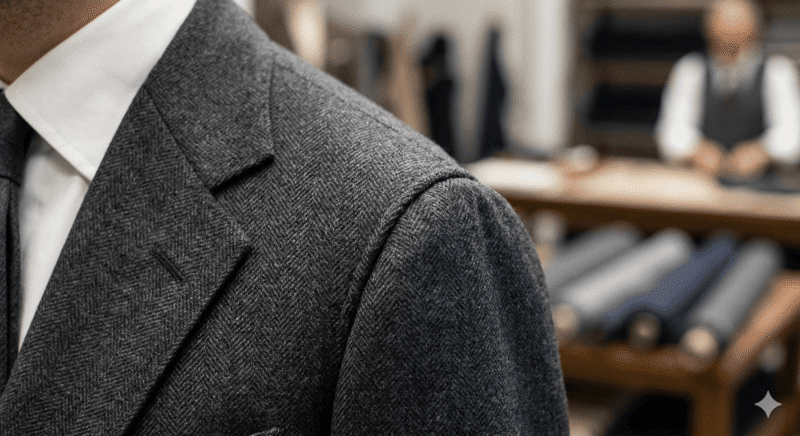
A roped shoulder is defined by a raised ridge where the sleeve is set into the armhole. That detail is called a roped sleeve head. It is made with a higher sleeve head and controlled stitching tension, which creates a small crown at the seam. You see a clean bump or ridge at the top of the sleeve instead of a flat transition.
This matters because “roped” does not mean “heavily padded”. The effect comes from how the sleeve is attached, not from piling mass into the shoulder. A jacket can have a modest amount of padding and still show a roped shoulder. It can also look neat without becoming bulky.
The line feels dressier than a fully natural shoulder. It has roots in English tailoring, where a clean shape and sleeve carried real weight. Many modern makers use it now in slimmer jackets because it adds character without tipping into costume.
It is also worth separating a standard roped shoulder from a pagoda shoulder. Both show height at the sleeve head. A pagoda takes that idea much farther, with an upward sweep that feels more sculpted and more theatrical.
Best for modern tailoring. It works well in fashion suits. The message: “subtle but intentional.”
Soft Shoulders: The Most Versatile Suit Shoulder
Soft shoulders sit between structure and full natural ease. They use light padding and a gently curved seam, which gives the jacket more shape than an unstructured coat but less rigidity than a classic padded build. A soft shoulder blazer keeps some polish without forcing a hard line across the upper body.
This is the most adaptable choice for most wardrobes. It can look good at the office and still feel right at dinner. You are not locked into one mood.
A lightly padded suit with soft shoulders tends to flatter a wide range of frames. It helps smooth the shoulder line a little but still allows movement. This is why it has become the quiet default in many modern collections.
You will see this construction often in contemporary slim suits and transitional wardrobes. Mid-weight wool handles it particularly well because the cloth has enough body to hold the shape without asking for heavy internal support. Many off-the-rack suits in the middle of the market settle on a versatile suit shoulder like this because it suits many settings.
Best for everyday office wear and smart casual dressing too. It is a strong base for wardrobe building. The mood: “polished but not trying too hard.”
Extended Shoulders and the Wide Shoulder Jacket Look
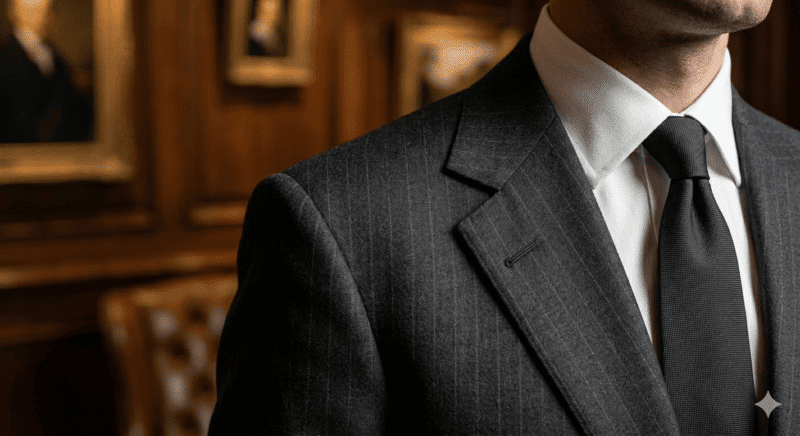
Extended shoulders push the shoulder seam past the wearer’s natural shoulder point. The extension may be subtle, at half an inch. It can go a full inch or more in a more dramatic coat. In an extended shoulder suit, the width is intentional from the pattern stage. It is not an accident of sizing.
Add padding to that extension, and the effect becomes much stronger. The torso looks wider. The hips can appear narrower by contrast. A wide-shoulder jacket creates presence from across the room because the eye catches that top line first.
This shape reached its most famous peak in the 80s power suit, when men’s and women’s tailoring both leaned into authority through width. Fashion circles return to it every few years, usually in editorial cuts or statement eveningwear. In daily business dress, it is less common.
When the shoulder is extended, the sleeve pitch has to be right. The chest cannot billow, and the waist needs control. Miss those points, and the jacket stops looking strong and starts looking like borrowed clothing.
Best for statement occasions and creative industries. It suits men who enjoy a bold line with a slightly retro edge.
Neapolitan Shoulders and the Spalla Camicia
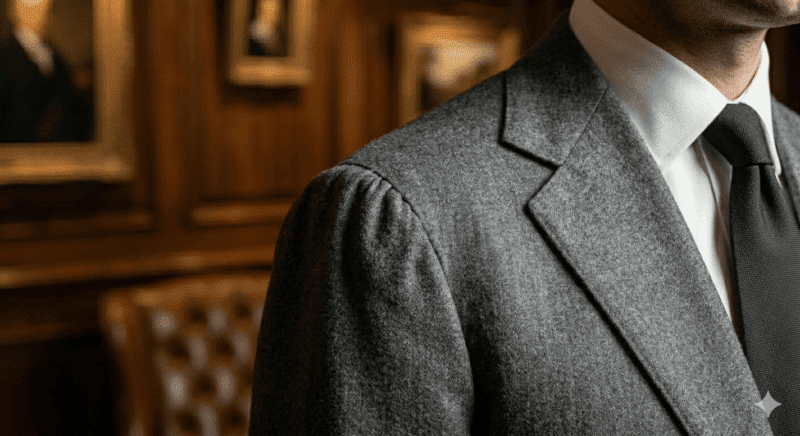
Neapolitan shoulders come from Naples, where jacket making developed around softness, movement, and a close relationship between body and cloth. The best-known detail is the spalla camicia, or shirt-sleeve shoulder. In this construction, the sleeve head is left soft and may show a slight ripple or gather where it meets the armhole.
That ripple is intentional. It signals handwork and a relaxed drape that would be ironed out of a more rigid coat. When done well, the seam looks alive rather than mechanical.
A true Italian suit shoulder in the Neapolitan style is not just an unstructured shoulder with padding removed. The whole coat usually follows a clear set of house rules. You often see open quarters. The armhole is high, and the waist is shaped. The chest stays clean without feeling rigid.
This is what helps to separate generic soft construction from real Neapolitan tailoring. A deconstructed jacket can be made anywhere. A genuine Neapolitan coat carries a recognizable line, and those who know the specifics can spot it quickly.
Names tied to this tradition include Kiton, Isaia, and Attolini, as well as many independent bespoke houses in Naples that still cut jackets in the old manner.
Best for relaxed elegance. It suits men who want to look dressed without looking suited up.
Pagoda Shoulders in Luxury Suit Design
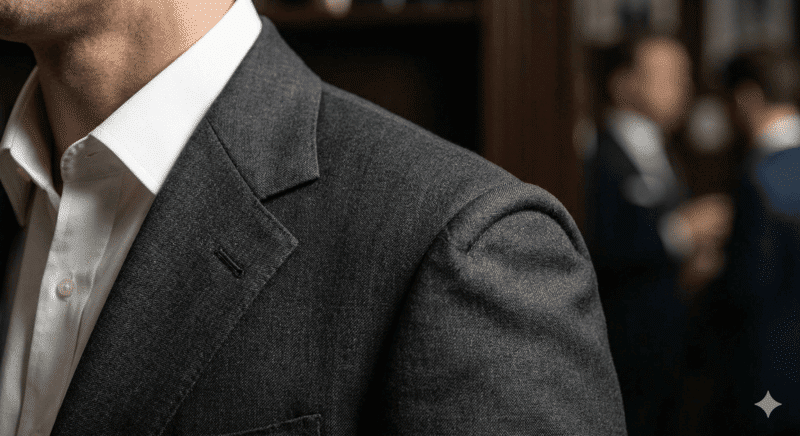
Pagoda shoulders are a more sculpted offshoot of the structured shoulder. The line rises slightly toward the sleeve head before it drops away, creating a peaked silhouette that feels architectural rather than merely padded.
Where traditional structured shoulders focus on classic lines, pagoda shoulders push into more dramatic, fashion-led territory. The build combines firm internal padding with a pronounced roped sleeve head. Felt, wadding, or foam may be used inside, depending on the maker and the degree of height wanted. The sleeve is then set to emphasize the ridge and the curve at the outer edge.
On the body, a pagoda shoulder looks sharper than a standard padded suit shoulder. The structured shoulder line is higher and more sculpted. The ridge at the sleeve head is more visible. In the right evening coat, it can be magnificent.
You will see this kind of statement tailoring in high-end and fashion-led houses more than in everyday business clothing. Tom Ford helped bring it back into view for modern luxury suiting, especially in black tie and eveningwear.
Best for formal events. It suits men who want their jacket to announce itself. The mood: “I didn’t come to blend in.”
Choosing the Right Suit Shoulder Types
Once you understand suit shoulder types, the rest of the jacket becomes easier to read. Start with the impression you want to give. If you want authority, look at structured or soft shoulders. If you want ease, move toward unstructured or Neapolitan. If you want more presence, start with roped shoulders, then decide if extended or pagoda is a step too far or exactly right.
The shoulder is also the one part of a coat that off-the-rack clothing rarely gets truly personal. Bespoke and made-to-measure are the surest ways to control shoulder construction, sleeve pitch, balance, and proportion.
At Alan David Custom, our fifth-generation New York house makes hand-made, fully canvassed custom suits with direct fittings from master fitters, a Perfect Fit Guarantee, and Free Lifetime Alterations. If you would like to see these shoulder styles in person, visit our New York showroom and book an appointment.