How Much Does a Tailored Suit Cost? 2026 Full Price Breakdown
A ‘tailored’ suit might fit your shoulders, but how it’s made can change the price completely. It can cost as little as $75–$200 for alterations on an off-the-rack suit, $400–$2,500 for made-to-measure, and $3,000–$6,500 or more for true bespoke. That is a wide range, but a suit adjusted after purchase is not the same as one cut from your own paper pattern. The construction process and fabric account for most of the cost difference.
In this guide, we break down what each tier includes, what drives the price up, and how to tell which option is worth paying for.
Tailored vs Made-to-Measure vs Bespoke
People often confuse these terms. This is where much of the confusion around bespoke and made-to-measure starts. Before you judge any quote, you need to know what you are being sold.
| Tier | Price range | Who it suits | What you are paying for |
| Alterations only | $75–$200 | Someone with a decent rack suit already | Labor on an existing garment |
| Entry MTM | $400–$800 | Occasional suit wearer | Better fit than rack, limited finishing |
| Mid-range MTM | $800–$2,500 | Regular office or event wear | Better cloth, more options, stronger fit |
| High-end MTM / entry bespoke | $2,500–$5,000 | Frequent wearer, wedding, black tie | Canvassing, better mills, more fitting time |
| True bespoke | $3,000–$6,500+ | Clients who want the highest fit standard | Hand-drafted pattern, more fittings, handwork |
Suit Alterations (off-the-rack + tailoring)
This is the fastest and least expensive route. You buy a ready-made suit, then have a tailor shorten the sleeves, hem the trousers, or reduce the waist. It works well if your chest, shoulders, and posture already match the base size.
This is also where many people mean “tailored” when they ask about cost. In plain terms, suit alteration cost covers changes made after the suit already exists.
Made-to-Measure (MTM)
Made-to-measure starts with an existing pattern. That pattern is adjusted to your measurements before the cloth is cut. You get more say over lapels, pockets, lining, trouser rise, and other details. The fit is usually cleaner than a rack suit that has been altered.
MTM sits in the middle of the custom suit vs tailored suit discussion. It is custom, but not fully bespoke.
Bespoke
Bespoke suits is a different category. A cutter drafts your pattern from the ground up. The jacket is shaped around your stance, shoulder slope, chest, seat, and balance. Multiple fittings are part of the price because the garment is being corrected on your body as it develops.
In a proper fitting, the top button should close at the fullest part of your stomach. Any higher makes you look heavier. Any lower shows too much shirt and throws off the balance, especially on a tuxedo. Sleeves must also be attached evenly so the cloth falls clean from the shoulder to the wrist, with no pulling through the bicep.
Tailored Suit Cost by Tier
If you want to know how much a tailored suit is, the answer depends on which tier you mean. Here is the full range, from simple alterations to true bespoke.
Alterations
A ready-made suit can often be improved with a few changes. Hemming trousers usually costs $20–$50. Taking in the waist often falls between $75–$150. Shoulder work can be $150 or more, which is why many fitters recommend buying the shoulder as close as possible from the start.
A full suit with two or three common changes usually costs around $100–$200. Shops in New York are near the high side of that range. If the garment needs a full overhaul, hourly labor often runs $40–$120, and the work can take 4–8 hours.
This tier makes sense if you already own a suit with a decent fit. It does not turn a poorly fitted one into a great one. If the chest collapses or the jacket balance is off, alterations won’t help.
Entry-Level MTM
This is the low end of made-to-measure. You get a wider size matrix, fabric choice, and a more personal fit than most mall brands.
At this price, much of the work is factory production. Many garments are made in Asia, then sold through a Western label or showroom. Details are often machine-finished. The cloth can be serviceable, but rarely special. You may get one fitting, then some local adjustments after delivery.
For occasional wear, this tier can be enough. If you need a business suit for a few events each year, it can be a sensible step up from buying one off the rack.
Mid-Range MTM
This is the range many working professionals settle into. Here, the made-to-measure suit cost covers better quality and more control over the finished shape. In New York, this is also where serious clothiers begin to separate themselves from volume sellers.
At the lower end, you may see full style customization with modest handwork. At the upper end, you begin to see better canvas structure, finer Italian or British cloth, higher-quality button options, and more thoughtful fitting. A two-piece business suit in this range often gives the best balance between price and daily wear. For men who wear a suit every week, this tier is usually the best choice.
High-end MTM & entry bespoke
Here, the line starts to blur. High-end MTM can approach entry bespoke in finish and feel, especially when the house uses strong cloth mills and gives the garment more than one fitting. You will often see canvassed jackets, hand-finished areas, and stronger pattern control than most MTM programs offer below $2,000.
New York houses in this bracket often work with British and Italian mills such as Loro Piana, Scabal, Dormeuil, Holland & Sherry, and Vitale Barberis Canonico. The cloth alone can change the quote by several hundred dollars.
This tier suits men who want a high standard without going all the way to full hand-drafted bespoke. It is also common for wedding suits and black-tie wardrobes.
True bespoke
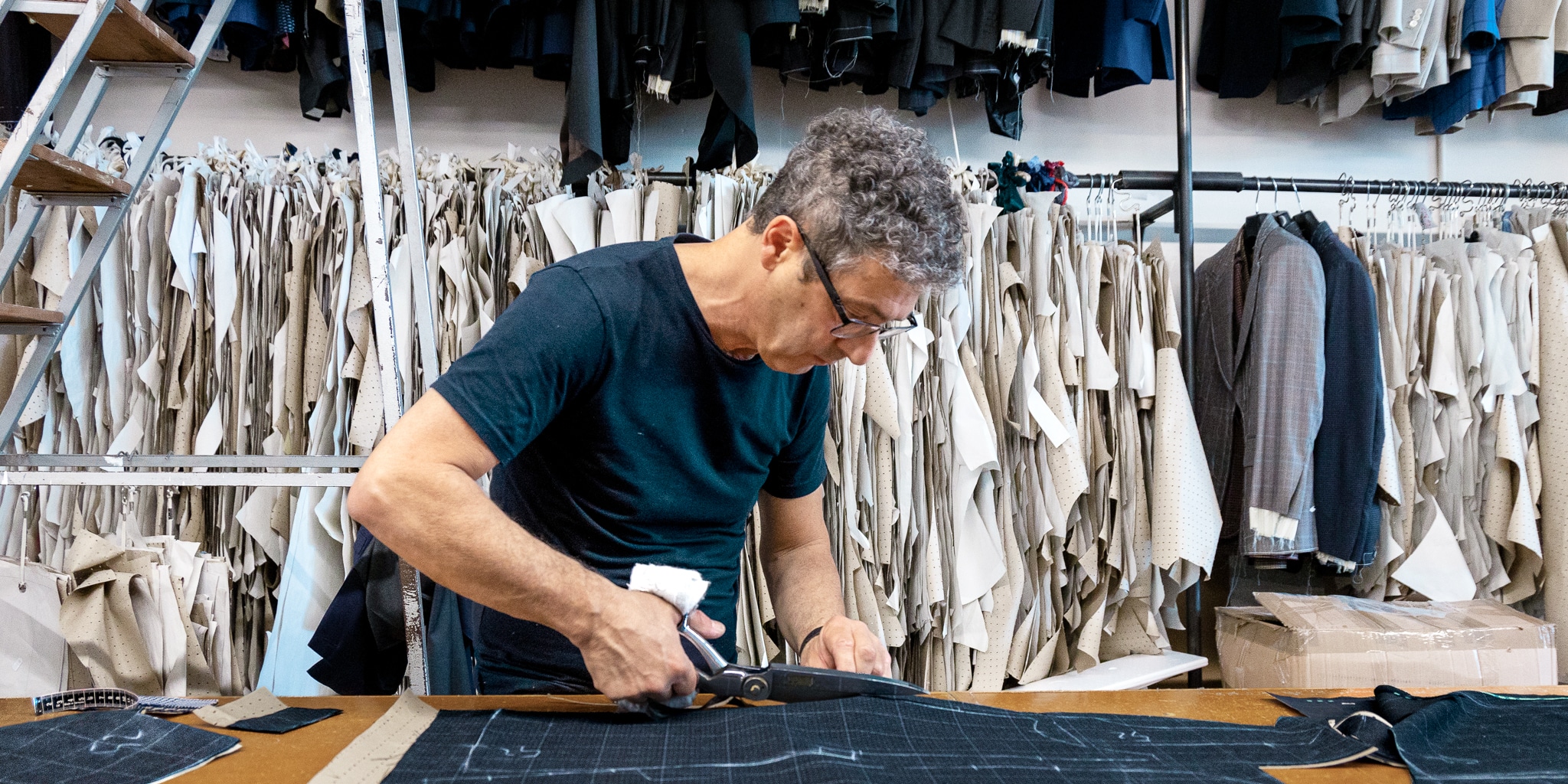
True bespoke starts with a new paper pattern made for one’s body. The jacket is built through fittings, not guessed at by software. Hand-padded lapels, hand-sewn buttonholes, shaped collars, balanced sleeves, and full canvas construction are common at this level.
In New York, a real bespoke suit often starts around $3,500 and moves into the $6,000+ range. Top houses can go past that.
This price reflects labor as much as cloth. A real bespoke garment asks for skilled hands, time, and repeated fittings. That is why the price of a bespoke suit does not compare with low-end MTM.
What Makes a Tailored Suit Cost More or Less
Once people see a $2,000 quote, the next question is obvious. What changed? The answer is not just the label. Price includes labor, fabric, and the way the garment is built.
Fabric Choice
Fabric is often the biggest price driver. A blended wool made for volume production costs far less than a pure wool from a respected English or Italian mill. Move into Super 120s, 130s, or 150s cloth, and the number rises again.
Season also matters. Fresco, high-twist wool, flannel, cashmere blends, mohair, and silk each shift the quote. A suit in navy worsted for year-round office wear will not price the same as a black mohair tuxedo or a soft cashmere sport coat.
Construction Method
Not all jackets are made the same way. A fused jacket is the least expensive. It uses adhesive to bond layers together. That keeps costs down, but it can bubble with age and rarely molds to the body.
Half-canvassed jackets are in the middle. Full-canvassed jackets cost more because they take more labor and often wear better over time. Add hand stitching, real surgeon’s cuffs, hand-set sleeves, or hand-sewn buttonholes, and the price rises again.
Tailor’s Experience
A shop in Manhattan charges more than a shop in a small suburban market. Rent is higher. Labor is higher. The fitter may also have decades of pattern-making experience, which affects what can and cannot be corrected.
Number of Fittings
More fittings mean more labor. But, they also mean better correction. MTM may give you one measurement session and one try-on. Bespoke often includes three or four appointments.
A first fitting can correct the balance. A second can clean up the sleeve pitch. A later fitting can refine skirt shape, trouser break, and collar lay. That time is built into the quote.
Custom Details
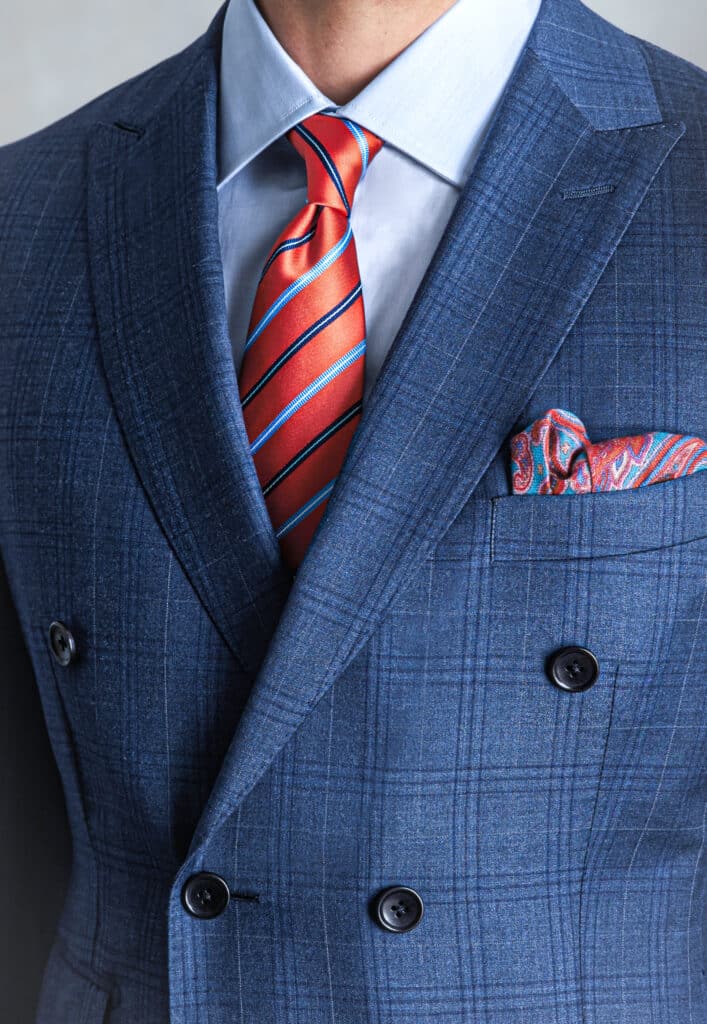
Style choices change price faster than many clients expect. A double-breasted jacket usually costs more than a single-breasted one because it uses more cloth and more work. Silk or Bemberg lining, horn or mother-of-pearl buttons, monograms, ticket pockets, contrast undercollar felt, and extra inside pockets all add small charges that add costs.
Tuxedos also cost more than business suits in many houses. Satin lapels, matching braid, silk facings, and a dress shirt pairing all add to the bill. That is why a groom may see one price for a navy office suit and another for formalwear.
Is a Tailored Suit Worth the Cost?
For many men, this is the real question. Is a tailored suit worth it, or is it smarter to buy a cheaper one and replace it more often?
Cost-per-Wear Math
Take a $1,500 suit worn 100 times across 10 years. That comes out to $15 per wear. If it fits well from day one and can be adjusted as your body shifts, the number holds up.
Now take a $300 rack suit worn 50 times before it looks bubbled and doesn’t feel right. Replace it three or four times over that same span, and you have spent $900–$1,200. The raw dollar figure looks lower, but the fit is still weaker, and the garment often never fits the way it should.
That gap narrows even more in New York, where people judge clothes quickly. In meetings, at weddings, and during interviews, the difference between “good enough” and “right” is easy to see.
Non-Financial Returns
A well-fitted suit changes posture. It changes comfort. And, it also changes how the wearer is perceived across a room. That kind of fit sends a message. It says the wearer pays attention. It says he knows the difference between price and standard. Off-the-rack can look neat. A properly fitted suit looks intentional.
To Sum Up
If you’re choosing a price range, the right one depends on several factors: how often you wear suits, how exact you want the fit to be, and the fabric quality.
At Alan David Custom, the process is rooted in New York bespoke standards. Our clients get a garment that hangs clean, closes in the right place, and can be worn for years.
Visit our New Your showroom for a true bespoke experience. We offer a Perfect Fit Guarantee and Free Lifetime Alterations. That kind of reassurance matters when the suit is tied to a wedding or a black-tie event.