Tuxedo vs Suit: How to Choose the Right One
When you get a formal invitation, the right outfit choice comes down to the dress code and event timing. A tuxedo and a suit are used for different occasions.
A tuxedo is for black-tie and evening events. A suit is appropriate for most other settings. Note the time of day and the formality of the event. Then choose with confidence and stick to timeless standards.
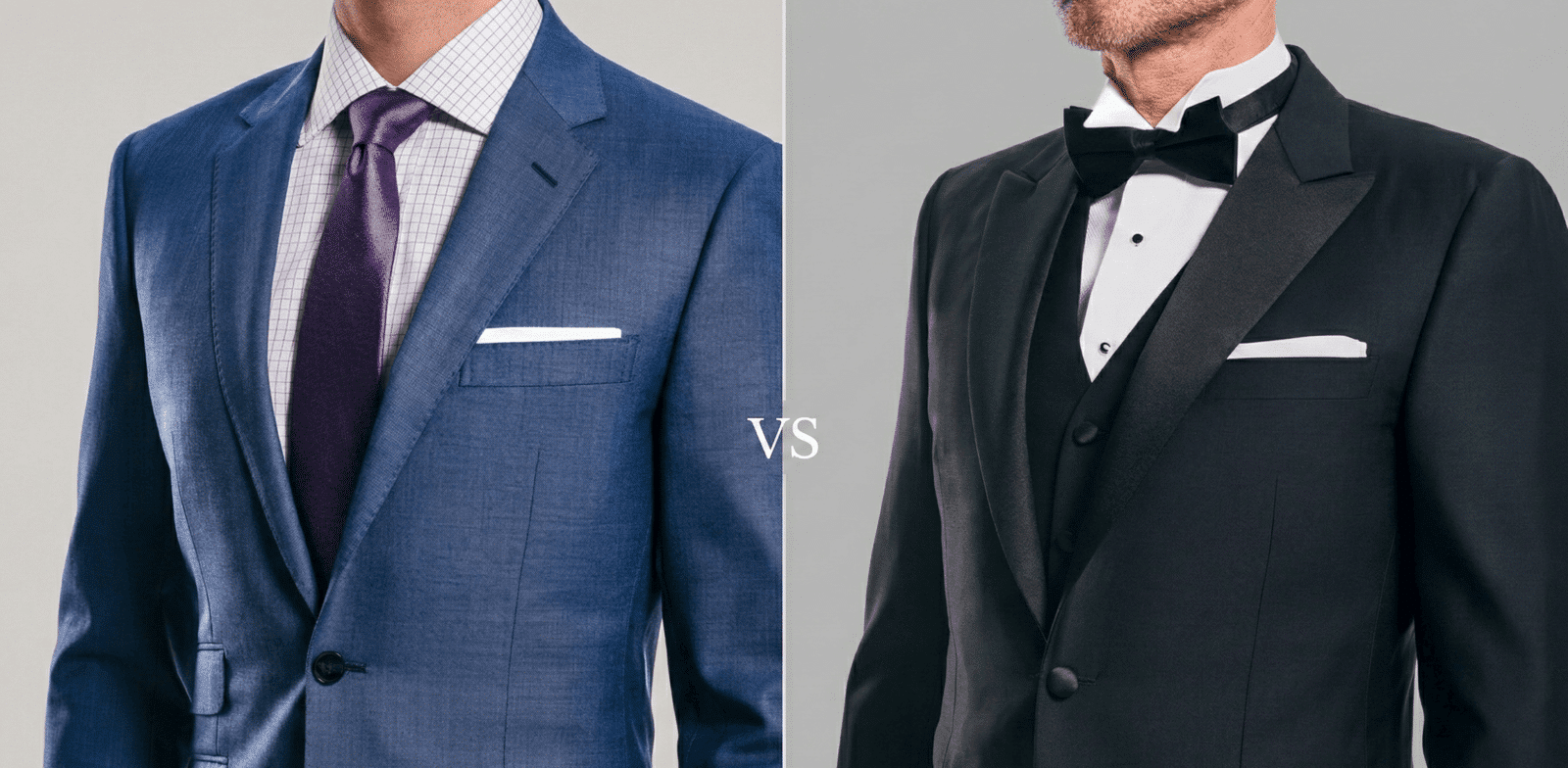
This guide focuses on how each one looks and the main differences between them. We’ll point out the visual cues to help you avoid looking over- or underdressed.
The Main Features of a Tuxedo
A tuxedo is defined by satin accents and strict accessories. You should be able to tell it apart in three seconds when you see the details.
Satin-Faced Lapels
Peak or shawl lapels get a satin or silk facing. The shine sets the jacket apart from a suit. It reads as formal from across the room.
Covered or Satin-Wrapped Buttons
Buttons are covered in satin or wrapped to match the lapel facing. This removes casual texture and blends into the coat. It keeps the front clean.
Side-Seam Satin Stripe on Trousers
A slim satin stripe runs down the trouser side seam. It pairs with the lapel facing. There are no belt loops. Side tabs or braces handle the fit.
Accessories Follow a Uniform Code
A bow tie is the standard choice. A crisp white dress shirt anchors the look. Black patent or highly polished black oxfords finish it. A cummerbund or low-cut waistcoat is optional and helps cover the waistband line.
Made for Black Tie Evenings
A true tuxedo is the expected answer for black tie. It belongs to evening events, formal dinners, and high ceremony. If the invite says black tie at 6 PM or later, you wear a tux.
Why Suits are More Versatile
A suit is your reliable formal stand-in when black tie is not required. It adapts to setting, season, and time. It covers more dress codes than a tuxedo.
Because it’s less strict, a suit moves from business hours to weddings to cocktail events with ease. Jacket and trousers are made from the same cloth. The lack of satin keeps it refined but more relaxed than a tuxedo.
A suit shifts with styling and fabric. You can break it up and wear the jacket or trousers as separates. That gives you smart options for less formal settings.
Seasonal materials help it flex. Choose breathable wool or linen blends for heat, and flannel or heavier wool when the weather is cold.
Moving from day to night is simple. Remove the tie and change to darker shoes. Swap a patterned shirt for a white one. Cuts are flexible too. Single- or double-breasted, both work in the right room.
Choose black oxfords for a cleaner finish. Switch to loafers or a plain derby when the setting is relaxed.
Navy and charcoal are the safest colors. Mid-gray and lighter tones work well in warmer months and daytime events. You can wear a tie when the room feels more formal. Otherwise, you can skip it.
Tuxedo vs Suit: Differences at a Glance
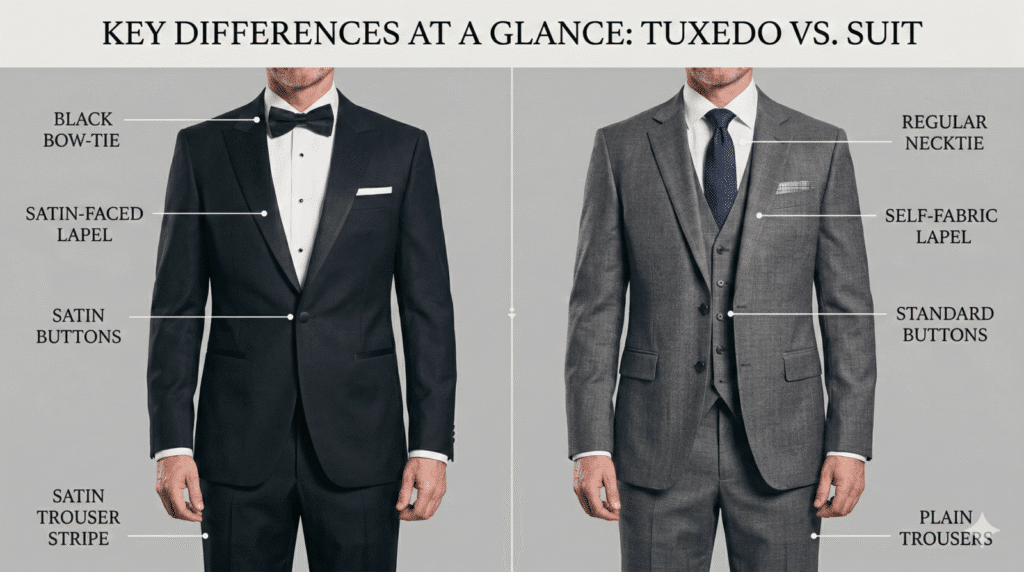
Here are some visual and practical cues that separate the two. It covers everything people notice in a single glance.
| Tuxedo | Suit | |
| Formality Level | Highest evening formality | Mid to formal, more flexible |
| Lapels | Satin or silk facings | Same fabric as the jacket |
| Buttons | Covered or plain black | Standard horn, plastic, or metal |
| Trousers | Satin stripe, side adjusters, no belt | No stripe, belt loops are common |
| Shirt & Neckwear | White tux shirt + bow tie | Dress shirt + tie optional |
| Waist Covering | Cummerbund or waistcoat optional | None or matching vest |
| Shoes | Patent or high-shine black oxfords | Oxfords, derbies, loafers |
| Best Occasions | Black tie, galas, formal weddings | Business, cocktail, semi-formal |
| Belt vs Suspenders | Suspenders; no belt loops | Belt or suspenders, both are fine |
| Color Flexibility | Black, midnight, ivory jacket | Wide range: navy, gray, light tones |
Use this side-by-side comparison to match the dress code.
Common Mistakes People Often Make
People repeat the same mistakes with suits and tuxedos. Avoid them, and your outfit will look intentional.
First of all, never ignore the dress code. If the invite says black tie, wear a tuxedo. Black tie is optional, but a tux is still preferred.
People notice fit issues first during events. You won’t make a good impression with the messy look of trousers that puddle at the ankle, or sleeves that swallow the shirt cuff. If you want to look your best, your suit should fit well and reflect your body’s true dimensions.
Watch for jackets that pull when buttoned. If the front forms an X, it’s too tight, or the button stance is wrong. The chest and waist should lie flat.
The top button on a two-button jacket should close at the fullest part of your stomach. Higher adds bulk. Lower shows too much shirt and throws off balance, especially on a tux.
Sleeves must be set symmetrically. If you see pulling over the bicep or uneven wrinkling, the sleeve was set wrong.
Pads can be great in a business setting because they increase your stature, but be wary of them if you have a muscular build.
Never wear a belt with tuxedo trousers. Use side tabs or braces. A belt cuts the waistline and clashes with a cummerbund or waistcoat.
Quick Outfit Formulas for Events
Save these formulas for when you need a safe choice for an event, or when the time is working against you.
Classic Black-Tie Tux Formula
Select a single-breasted black tuxedo. Add a crisp white formal shirt with studs and French cuffs. Tie a black bow tie. Wear black patent oxfords or high-polish calf shoes. Add a black cummerbund or a low-cut waistcoat.
Black-Tie Optional Safe Suit
Start with a sark navy or charcoal suit. Add a white shirt with a structured collar. A solid black or deep charcoal tie will complement the look. Wear black cap-toe oxfords. A small touch: pocket square in white, folded flat.
Wedding Guest Formal / Cocktail Suit
A mid-to-dark navy or gray suit with a white or pale blue shirt will look good. Tie optional based on venue and time. Put on plain-toe dress shoes in black for evening, dark brown for daytime.
Summer Formal Variation
Mid- or light-gray suit in a breathable cloth. Add a white shirt. Put on black or dark brown dress shoes. A white dinner jacket with black tux trousers is an elegant black-tie alternative.
Edge-Case Shortcuts
Daytime Formal Shortcut
Wear a dark navy or charcoal suit, a white shirt, and a dark silk tie. Choose black oxfords and a plain white pocket square. Skip tuxedos before sunset unless the invite says black tie.
Business-formal Crossover
Start with a navy suit and a white shirt. Add a deep navy or burgundy tie and black shoes. Remove the tie after work, and you’re ready for a cocktail room.
Seasonal Footwear
Black leather at night and in winter. Dark brown works for daytime suits in spring and summer. Save suede for daylight settings.
How Much Do Tuxedos and Suits Cost?
A tuxedo usually costs more than a suit. Satin lapels, covered buttons, and the formal shirt and shoes add to the price. You’ll also wear a tux less often.
Rent if you expect to wear a tux once a year or less. Buy if you attend three or more black‑tie events in a year or two, or if you’re the groom.
If you need sharp clothing for work, weddings, and dinners, a well-cut navy or charcoal suit will see far more use.
Debating between a tuxedo and a suit? Visit our New York showroom. A master fitter will take your measurements, then we cut and hand‑assemble your garment and refine the fit through multiple fittings. We back every piece with our Perfect Fit Guarantee and Free Lifetime Alterations.
FAQs
Can I wear a necktie with a tuxedo?
A bow tie is standard for black tie. A long tie can work at relaxed black-tie-optional events. If you’re unsure, choose a black silk bow tie.
What shoes should I wear with suits and tuxedos?
With a tuxedo, wear black patent or high-shine black calf. Black is safer at night. Dark brown works well during the day. Keep them well-polished and skip sneakers for formal events.
Should I wear suspenders or a belt with a tuxedo?
Suspenders are right for tuxedos. Tuxedo trousers are cut without belt loops and sit cleaner with braces. A suit can be worn with a belt or suspenders.