The History of the Tuxedo: Origins of Modern Formalwear
Men used to dress to show rank: starched shirts, rigid tailcoats, strict rules. Over time, it has changed in many ways. And, out of that world came a quieter idea that formalwear should not only look correct, but also feel comfortable. That idea is the heart of tuxedo history.
The tuxedo began as a relaxed alternative to white tie. It traded ceremony for comfort, yet kept respect for the occasion. It signaled a shift in manners. At dinner, men wanted dignity without the theater of full court dress. Social rules softened. Hosts favored conversation over display. Clothing followed.
From private smoking rooms to grand ballrooms, the dinner jacket changed how evening style worked. It shortened the coat, simplified the line, and put the wearer, not the garment, at the center.
In this article, you’ll see how we arrived there, how black-tie culture formed, how Hollywood carried the look worldwide, and what that means for a modern tuxedo today. You will also learn how history informs fit, fabric, and the standards that separate a fine tuxedo from a suit.
Before the Tuxedo: The Era of White Tie
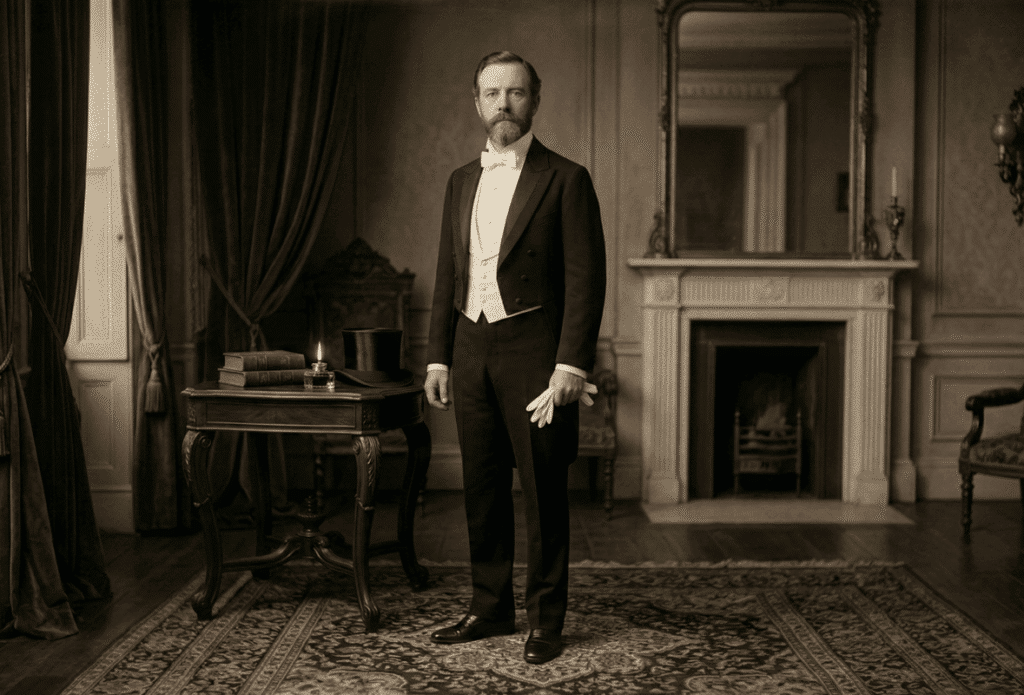
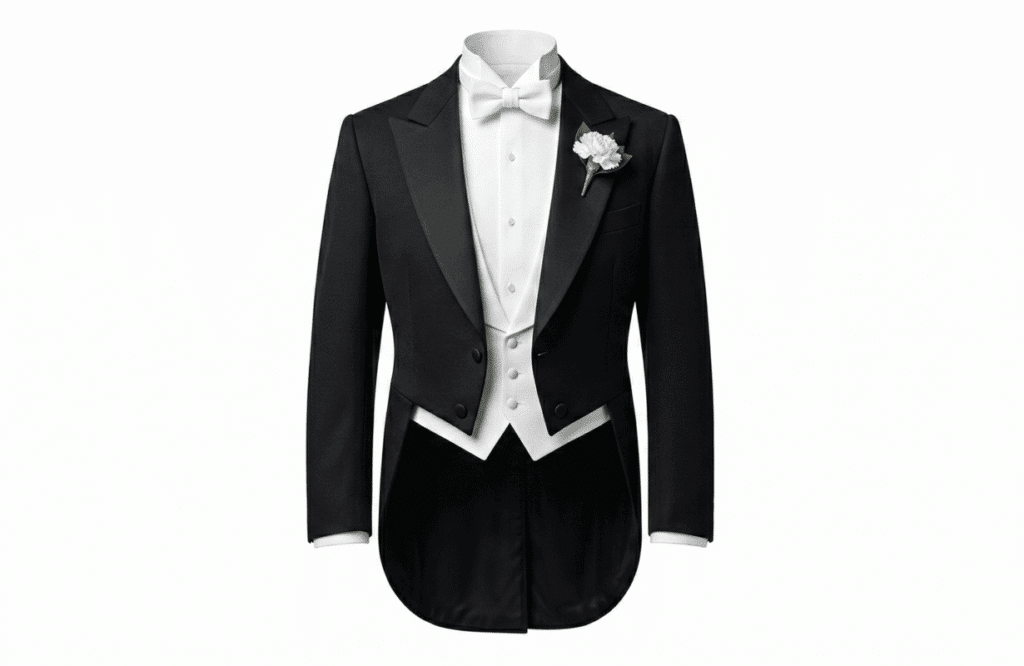
In the 19th century, proper evening dress meant white tie. Men wore black tailcoats with a cutaway back, a white waistcoat, a stiff wing-collar shirt, and a white bow tie. The silhouette was formal. It matched the social order of the time. Ballroom gatherings, opera boxes, and banquets were staged like a theater. Clothing was part of the set.
Etiquette was exact. Hosts and guests understood the code. Every piece had a role, from the gleam of shirt studs to the tails resting behind a chair. The look announced status and adherence to rules.
Comfort ranked low. Starched collars scratched. Shirts were rigid. Tailcoats restricted movement. The outfit fit the pace of evenings that were structured and ceremonial.
White tie was also costly and complex to maintain. Pressing, laundering, and storage required care. Dressmakers and valets kept wardrobes in order. The formality worked in rooms built for display, but it felt heavy in private settings.
As dinners moved from showpiece salons to more intimate spaces, that weight became clear. The stage needed a less ornate costume. The shift to black tie began not with spectacle, but with a wish to relax the ritual without losing respect for the occasion.
The Birth of the Dinner Jacket in England
In England, the dinner jacket appeared as a shorter evening coat for private use. Aristocratic houses had smoking rooms where men gathered after dinner. A long tailcoat was awkward in these spaces. Tobacco ash and heavy upholstery did not pair well with formal white waistcoats. A simpler coat matched a practical need: sit, stand, and talk in comfort.
The Prince of Wales, later King Edward VII, favored this approach. He worked with his tailor to refine a shorter black evening coat for dinners at his country home. The look suited the setting. It kept the dignity of dark cloth and clean lines, but it shed the ceremony of tails. The move spoke to a wider change among the elite. Hospitality was becoming warmer. Conversation mattered more than display. The dinner jacket fit that mood.
Savile Row played a quiet role. Tailors there knew how to cut a coat that draped cleanly when seated and looked sharp when standing. They trimmed excess, balanced lapels, and kept proportions precise.
This was not fashion for show. It was dress for life at the table and in the smoking room. That practical origin explains why the dinner jacket lasted. It solved a real problem and did it with restraint. The dinner jacket origin story is one of comfort guiding style, supported by British formalwear traditions.
How the Tuxedo Got Its Name
Across the Atlantic, the new dinner jacket found a welcome audience. New York’s Tuxedo Park, a private community for American high society, was built for weekend life outside the city. Guests wanted evening clothes that felt right for country dinners, then for city clubs. The shorter English coat made sense.
The story goes that a group of Tuxedo Park men wore the English dinner jacket to the Autumn Ball. The look stood out among tailcoats. The name stuck. In the United Kingdom, it stayed “dinner jacket.” In the United States, it became “tuxedo.” The American name came from a place and a circle of people who liked the ease of the garment and had the influence to spread it.
From there, the tuxedo moved into urban life. Private clubs, luxury hotels, and restaurants adopted it for evening use. The tone shifted from rebellion to refinement. It felt modern without being loud. The question “why is it called a tuxedo?” carries a simple answer: because Tuxedo Park made it a thing. The label is American, but the idea is British. That blend helped the tuxedo travel.
The Rise of Black-Tie Culture
As the tuxedo gained ground, a dress code took shape around it. Black tie emerged as the standard for formal evening events. The code gave structure without the severity of a white tie. Hosts could ask for elegance. Guests knew what to wear.
Elements settled into place:
- Jackets were cut in black or midnight blue.
- Lapels faced in satin or grosgrain.
- Trousers carried a single braid at the outseam.
- Shirts had a clean front and a collar that suited a bow tie.
- The waist was covered with a cummerbund or a low-cut waistcoat.
- Shoes were polished and quiet.
The look was considered, not ornate.
This standardization matched a new kind of evening life. Cities pulsed with music halls, hotels, and supper clubs. Elegance became more democratic. Men who were not born to titles could still dress with authority.
The black-tie dress code is the move from private aristocratic rooms to public spaces where grace and order still mattered. The tuxedo became the uniform of modern manners. You could meet the standard and still feel like yourself.
Hollywood and the Symbol of Elegance
Hollywood films carried the tuxedo to a global audience. On screen, a black dinner jacket did more than meet a code. It set a mood. Under a spotlight, the satin lapel caught light. The bow tie drew attention to the face. A well-cut jacket framed the shoulders and narrowed the waist. Directors used that to signal sophistication and quiet strength.
Audiences connected the tuxedo with romance, success, and a certain kind of restraint. Leading men wore it with grace. Red carpets turned it into a rite. Tuxedo style has a history in classic Hollywood, not for fame alone, but for what the clothes said without words. The garment became a symbol of standards.
The Modern Tuxedo: Tradition Meets Flexibility
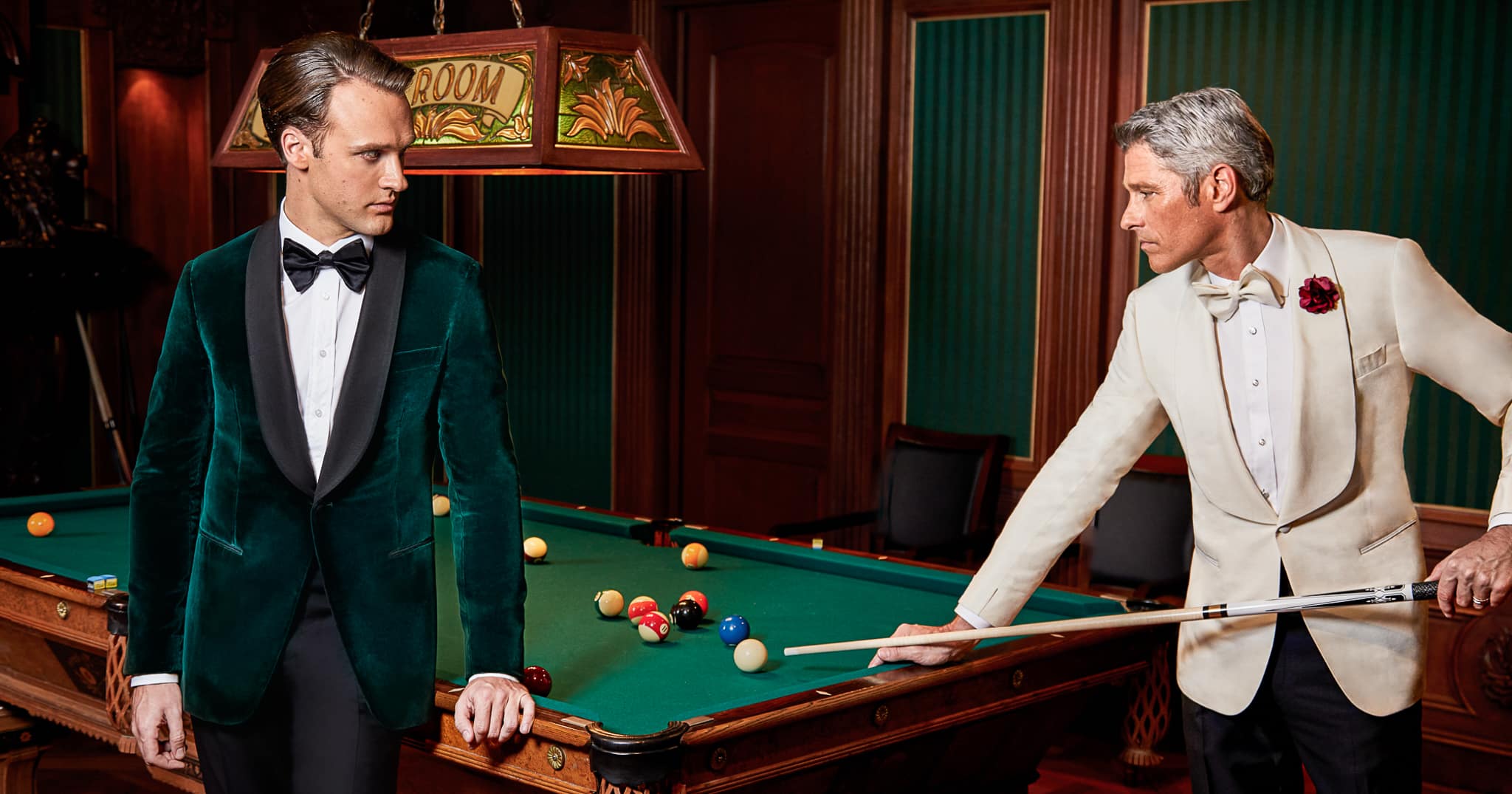
Today, the tuxedo holds its ground while allowing more choice. Fit has sharpened. Jackets follow the shoulder and chest with accuracy. Fabrics have a range. There is the depth of midnight wool. There are mohair blends for a crisp line. Velvet appears in controlled ways for dinner parties and winter galas.
Silhouettes vary by event and taste. Peak lapels project formality. Shawl collars bring ease to a dinner at home or a modern wedding. Double-breasted coats return in measured cuts. Accessories adjust the tone. A cummerbund keeps a classic line. A low waistcoat adds structure. Studs and cufflinks keep it simple.
Dress codes have expanded. More weddings now require black tie. Galas and award nights expect it. Red carpet events keep it popular. The rules have evolved, but the aim did not change: keep the silhouette clean. Keep the details coherent and let the wearer lead. That is modern tuxedo style at its best: contemporary black-tie attire that respects the past and fits the present.
Why Tuxedo History Still Matters Today
Knowing where a tuxedo comes from helps you wear it well. When you understand the history of the tuxedo, you learn why certain details exist and how to apply them with intent. Each decision connects to a reason shaped over time.
The dinner jacket began as a practical solution, refined by tailors who understood balance and drape. That tradition still guides excellence today. Proper fit is measured by a trained eye and steady hands. Fabric selection respects season and formality. Styling stays true to the event. Do this, and black tie feels natural, not forced.
A few standards are non-negotiable if you want your tuxedo to read right. The top button should close at the fullest part of your stomach. Sleeves must be set symmetrically so the line falls clean from the shoulder to the wrist. Wrinkling or pulling signals a problem in the pattern or the set of the sleeve.
Measurements make or break the result. Always have a tailor or master fitter take them. A trained fitter reads posture, shoulder slope, and stance. They cut a pattern that belongs to you, not to a size run. That is how a tuxedo earns the title ‘bespoke’.
At Alan David Custom, we carry this heritage forward in New York City with full bespoke tuxedos cut and hand-assembled by experienced tailors. Five generations stand behind our approach. We work with fine mills in Italy and England, select from thousands of evening fabrics, and shape each garment through fittings until it fits your frame.
If you are considering a custom tuxedo, this is the right time to take history off the page and put it on your shoulders. Visit our New York showroom for an authentic bespoke experience. Sit with a master fitter. Review fabric and styling options grounded in black tie history. Leave with tailored black-tie attire that looks timeless because it is built on timeless standards. You should feel confident on the night you wear it, and for years after.