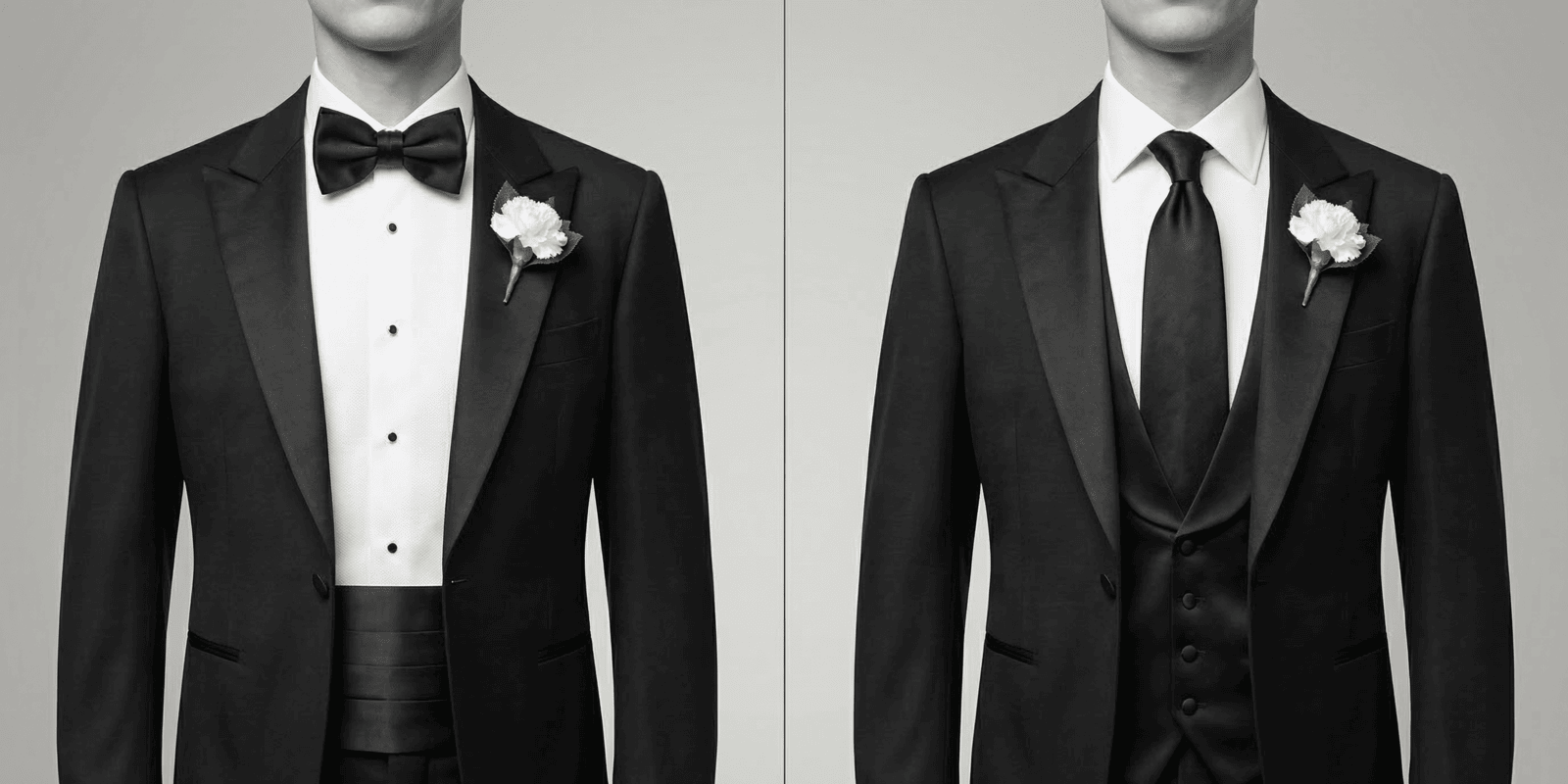
Tuxedo with Tie vs. Bowtie: Which One Should You Wear?
You’ve got the tuxedo. Now, you’re staring at the neckwear and second-guessing everything. The neckwear will decide the look. Choose wrong, and the proportions feel off. Choose right, and you look composed from the first photo to the last toast. You just want to choose it right and look like a gentleman. Do you reach for the bowtie or the long tie?
This guide settles the tuxedo tie vs. bowtie question with dress code rules, some backstory, real-world examples, and a how-to for choosing what to wear.
The Bowtie vs. Long Tie Debate
The tuxedo was first introduced in the late 1800s. The original neckwear was a hand-tied bowtie. That choice was deliberate. The tuxedo was designed for evening wear. Shiny lapels, a crisp shirt, and a bowtie that sat cleanly at the collar. No long tie pulling the eye down. A bowtie with a tuxedo kept the look balanced and formal.
The long tie showed up later. In the mid 20th century, some men started mixing a long tie with tuxedo jackets to bend the rules. Hollywood made it feel normal on red carpets, especially when events leaned “black tie optional.” It worked because fit and styling were deliberate: satin or grosgrain long ties, slim but not skinny, paired with a clean shirt and formal shoes.
This is why the bowtie is the rule, and the long tie is the stylish exception. If you respect the setting and your tux is cut correctly, both can look strong. If you want the traditional standard, wear the bowtie. If the event allows some freedom, a long tie can look really good.
Bowtie or Long Tie? It Depends on the Dress Code
Invitations come with a dress code. That short line at the bottom usually tells you exactly how formal the event is.
Here’s how to match your neckwear to the occasion:
| Dress Code | Best Choice | Why |
| Black Tie | Bowtie | The classic choice. It matches the tuxedo’s formality and keeps the neckline clean. |
| Black Tie Optional | Either | You’ve got flexibility. A bowtie feels more formal, while a long tie looks a bit more modern. |
| Creative Black Tie | Long tie | This dress code allows more personality. Think richer textures or deeper colors while keeping it refined. |
| Business Formal | Long tie | This setting leans more toward the boardroom than the ballroom. If you’re wearing a tux, a long tie keeps the look professional. |
If the card says “black tie,” wear a bowtie. If it says “black tie optional” or “formal,” choose based on your taste. When in doubt, the bowtie is the safer pick. It never looks out of place in a tuxedo dress code guide.
What Does Your Choice Say About You?
Your choice of neckwear sets the tone for your look before anything else. It’s a small detail, but it can say a lot about your style.
A bowtie says classic and intentional. You respect the room, appreciate tradition, and still look current because true black tie never dates. It’s quiet confidence. Think classic elegance without trying to impress anyone.
A long tie says modern and sure of your taste. You know the rules and bend them with care. You like a sleek line, a little edge, and a tuxedo that feels like your uniform, not a costume.
Both can look right. The question is which version feels more like you.
Which Style Flatters Your Look?
Beyond formal rules, neckwear should work with your natural features. The right neckwear can complement your face shape and body frame.
A bowtie looks well on rounder or wider faces. It draws the eye up and in. It also suits shorter or stockier builds because it keeps the visual focus at the collar and balances the torso.
A long tie lengthens the line of your face and body. It flatters taller or slimmer frames because it adds a clean vertical line without crowding the neckline.
Oval faces and average builds have the most flexibility. Both options can look great when proportions are right.
Tie width matters too. Slim ties suit slim frames. Slightly wider ties suit broader shoulders. Match the tie’s character to your lapels and shirt. A satin bowtie pairs with satin lapels. A subtle grosgrain long tie pairs well with peak or shawl lapels. Keep it cohesive.
How Style Icons Do It
Some of the best examples come from men who live in formalwear. So, if you want to see how this works in practice, look at people who often wear tuxedos: classic Hollywood legends and modern red carpet regulars.
Think James Bond in a black satin bowtie. Timeless and sharp. The lapels shine, the collar sits clean, and the self-tie bow adds depth that a clip-on can’t match. Look up any 007 premiere look, and you’ll see the standard done right.
Frank Sinatra wore bowties with natural ease. Rat Pack class, soft shoulders, and perfect proportion. The bowtie framed his face and worked with his stance.
Ryan Gosling has paired tuxedos with long ties on red carpets. Sleek, minimal, monochrome. It works because the tie is satin or grosgrain, and the tuxedo’s cut is clean.
Tom Ford has championed directional long ties with tuxedos in certain collections. Strong lapels, lustrous fabrics, and long ties that match the tux’s formality. The look is bold, but every element is considered.
David Beckham has worn long ties with tuxedos at fashion-forward events. The tie is slim, the shirt is pressed, and the jacket fits close.
Both choices can look excellent. The success lies in fit, fabric, and commitment to the choice.
Tuxedo Neckwear for Weddings
A wedding is not just another formal event. The right tuxedo neckwear for a wedding often depends on the setting. The venue and atmosphere often point you toward the most suitable option.
The Venue and Season
In a grand ballroom or cathedral, a bowtie respects the space. It keeps the look formal and balanced under high ceilings and chandeliers. For a garden or beach ceremony, a long tie can feel more relaxed while still sharp. If the tuxedo has satin lapels, choose a satin or grosgrain long tie to keep a formal style.
Fall and winter weddings lean towards a more formal style. Rich fabrics and deeper tones pair well with a bowtie. Spring and summer open the door. Either can work. A long tie in lighter silk can feel fresh in warm light.
Matching vs. Coordinating
The bride’s gown often sets the tone. The more formal the dress, the more the bowtie earns its place. If her look is sleek and modern, a long tie can echo that line.
Grooms and groomsmen can mix on purpose. One easy way to separate the groom is to use a bowtie for him and long ties for the groomsmen. Or the reverse if your style leans modern. Keep fabrics and tones aligned so the group looks cohesive, not random.
Ties do not need to match bridesmaid dresses exactly. Coordinate depth and texture. Black or midnight neckwear for all is always safe. If you add color, keep it muted and formal.
Our tuxedo wedding neckwear advice only works when the fit is right. This is where expert fitting pays off. A long tie or a bowtie will fall flat if the jacket button stance is wrong. Your top button should close at the fullest part of your stomach. If you’re planning your day, start with a proper fitting and a clear dress code plan.
Final Words
Choose the option that suits your face and frame. Then wear it with quiet confidence.
Here’s a cheatsheet:
- If the event is traditional or the invitation specifies black tie, wear a bowtie.
- If the event allows some freedom and you like a modern line, wear a long tie.
- If you are unsure, default to the bowtie. It never fails.
If you want a bespoke tuxedo in NYC that fits the way it should, visit our NYC showroom for a fitting with a master tailor. See us in New York for an authentic bespoke experience done the right way. We offer a Perfect Fit Guarantee and Free Lifetime Alterations on our bespoke garments.