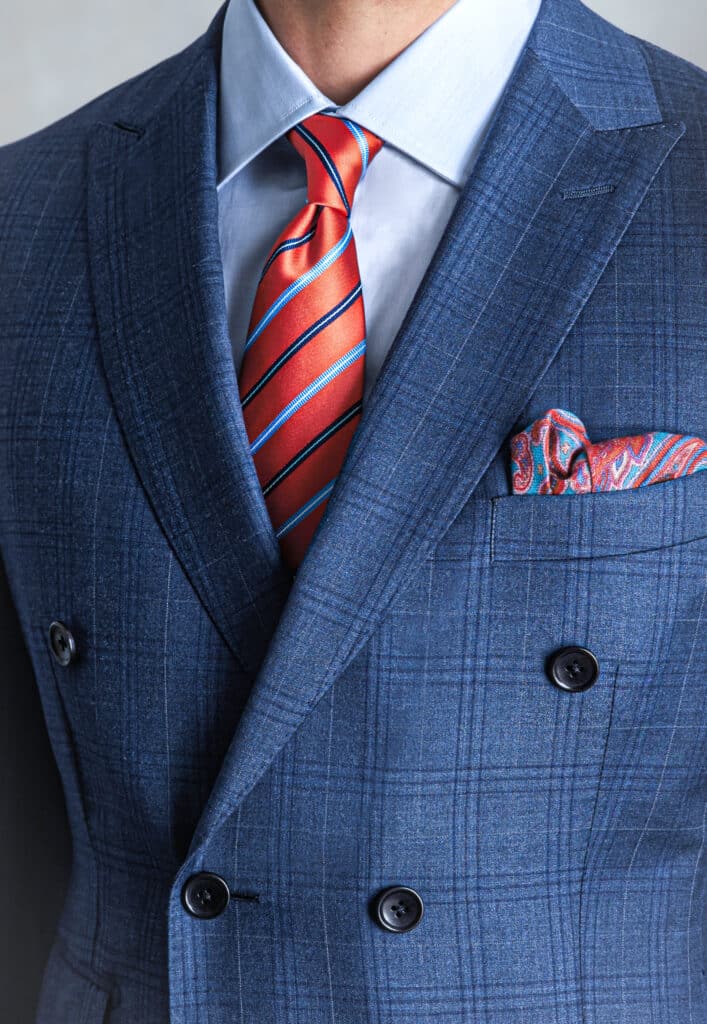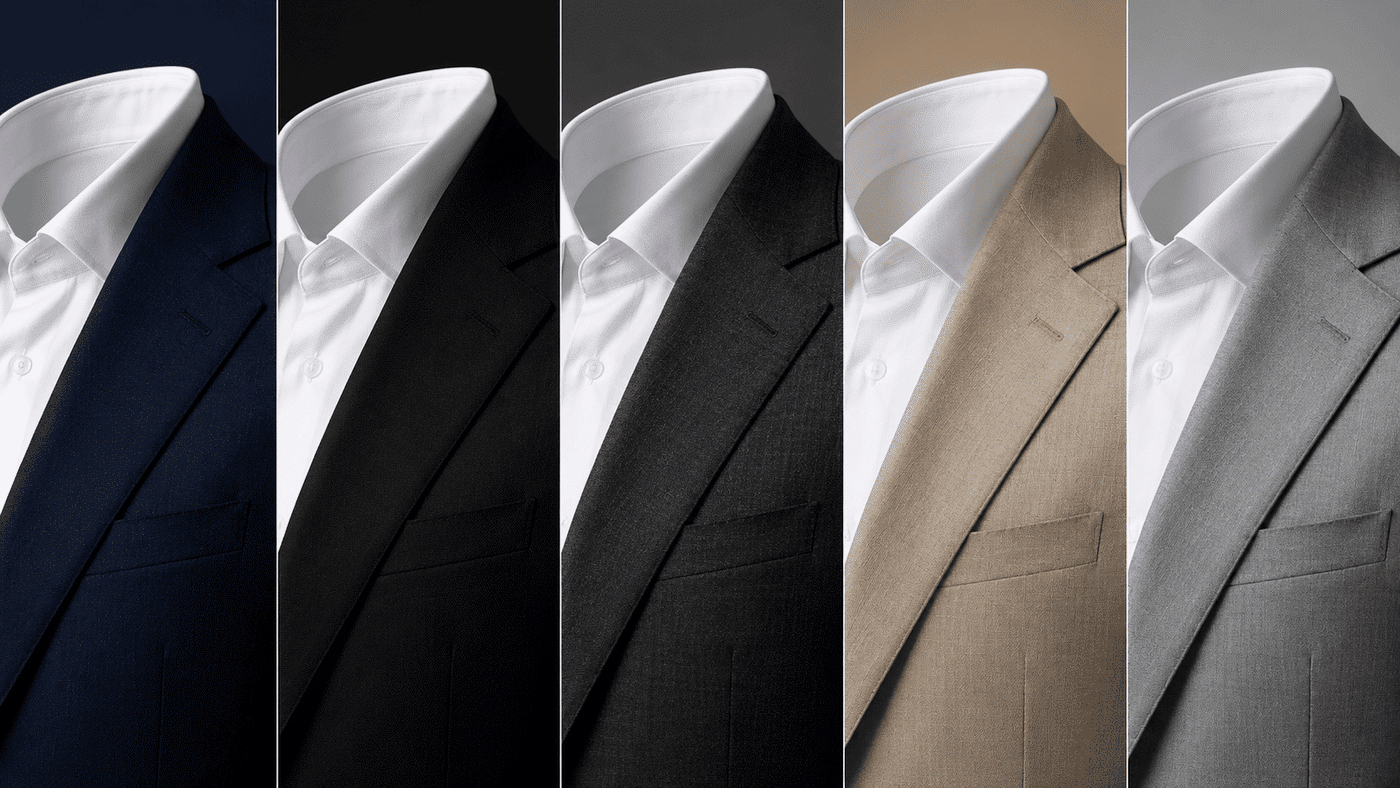
Best Suit Colors for Men: Which Shade Works for Every Occasion
When you go to events, even before you say a word, people notice the color of your suit. It shapes the first impression. Dark colors usually come across as more serious and steady. Lighter shades feel less strict and more low-key.
Most men do not own many suits. Some have one they rely on for almost everything. Others have two or three. So before buying a suit, you should consider when and where you can wear that color. It should match your office dress code, feel right at dinner, and still look presentable at an interview or a formal event.
In this guide, you will learn about the main suit colors for men, when to buy them, how to match colors to the setting, and how skin tone affects your choice.
The Main Suit Colors for Your Wardrobe
A good suit wardrobe starts with proven colors. Each one earns its place for a different reason.
Navy Blue Suits

If a man asks what color suit he should buy first, the straight answer is navy. It looks professional and carries authority. That is why navy works in so many settings.
They fit:
- Formal dinners
- Business meetings
- Office wear
- Job interviews
- Dates
- Dinner parties
- Cocktail events
Navy has long stood as the standard business suit color because it’s reliable and flatters almost everyone.
Styling navy is simple. A white shirt keeps it sharp. A light blue shirt softens it a bit without losing polish. Pale pink can work well too, especially in social settings. Brown shoes are a natural match and usually make navy feel richer. Black shoes dress it up and make the suit read more formally. If you want the outfit to stay serious, wear a navy tie. If you want it to feel more casual, go lighter.
Navy also puts fit under a brighter light. If the jacket pulls, navy will tell on you. If the sleeve pitch is off, you will see it. That is one reason men turn to custom suits.
Charcoal Grey Suits

Charcoal grey is the suit for serious days. Charcoal signals maturity and judgment. You can wear it to client meetings and senior-level settings. It is also one of the safest choices for a high-stakes interview.
This is one of the best suit colors for men who want a formal look that still works for daytime wear. A white shirt and silk tie with charcoal remains one of the cleanest combinations in menswear. It has no weak point. Add black shoes for the most formal take. Dark brown works too, especially in a more relaxed office setting.
If you are weighing charcoal vs navy suit options, the difference is less about right and wrong and more about tone. Navy feels more open. Charcoal feels more senior. Navy bends a bit more across day and night. Charcoal leans more formal. Black can feel hard in daylight. Charcoal avoids that problem. It has more warmth, so it reads like clothing rather than a uniform.
Black Suits

Many men assume black is the safest suit color. In practice, it has the narrowest lane of the major shades.
Black works best at night. It belongs at:
- Black-tie events
- Formal evening occasions
- Funerals
- Award ceremonies
- Theatre or opera nights
- Upscale parties
In daylight, black can feel out of place. At a daytime business meeting, it often reads too stark. This is why many well-dressed men skip black as their first suit. Charcoal and navy usually give you more flexibility.
Black also asks for discipline in styling. Wear black shoes. Wear a white shirt. Keep the tie black if the event calls for it. If the dress code is tuxedo level, a bow tie makes more sense than a long tie. This is another reason black is not the first choice in a men’s suit color guide.
Light Grey Suits
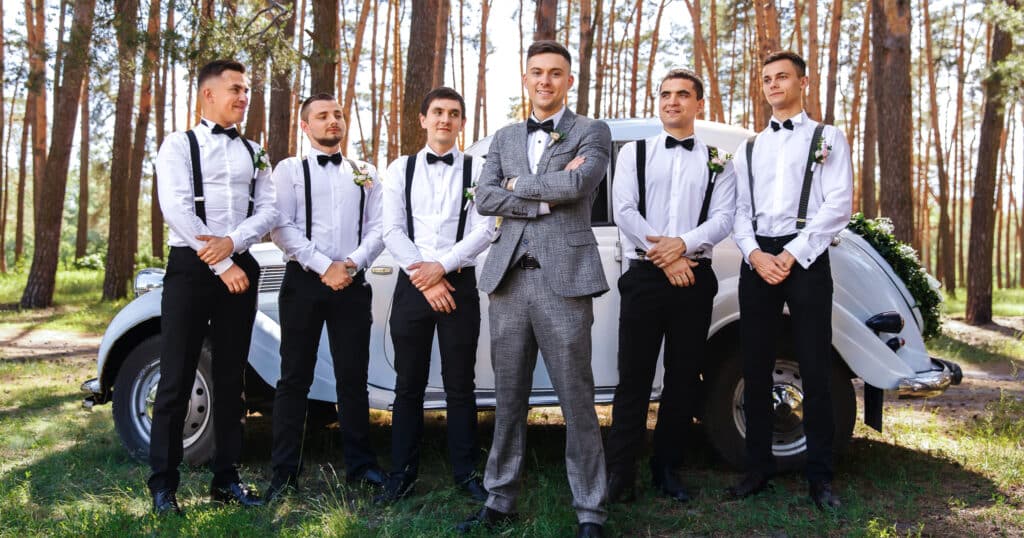
Light grey feels easier on the eye than darker colors. It has polish, though it does not carry the same weight as navy or charcoal. That makes it a strong choice for daytime wear, warm weather, and offices with a more relaxed dress standard.
The message here is approachability. Light grey feels modern and light. That makes it useful in social settings and in work settings where a dark suit would feel too heavy.
Light grey is not the standard choice in conservative finance or law offices. It’s a more common choice for:
- Creative fields
- Tech settings
- Daytime social events
- Daytime weddings
- Brunches
- Dates
- Graduations
- Engagement parties
Men who ask about suit colors by occasion often find that light grey fills the gap after navy and charcoal are already in place.
Brown shoes lift light grey well. Burgundy shoes can give it an edge. Shirt choice can move it in different directions. A white shirt keeps it clean, while a blue stripe or a soft check adds character without much effort.
Tan and Beige Suits
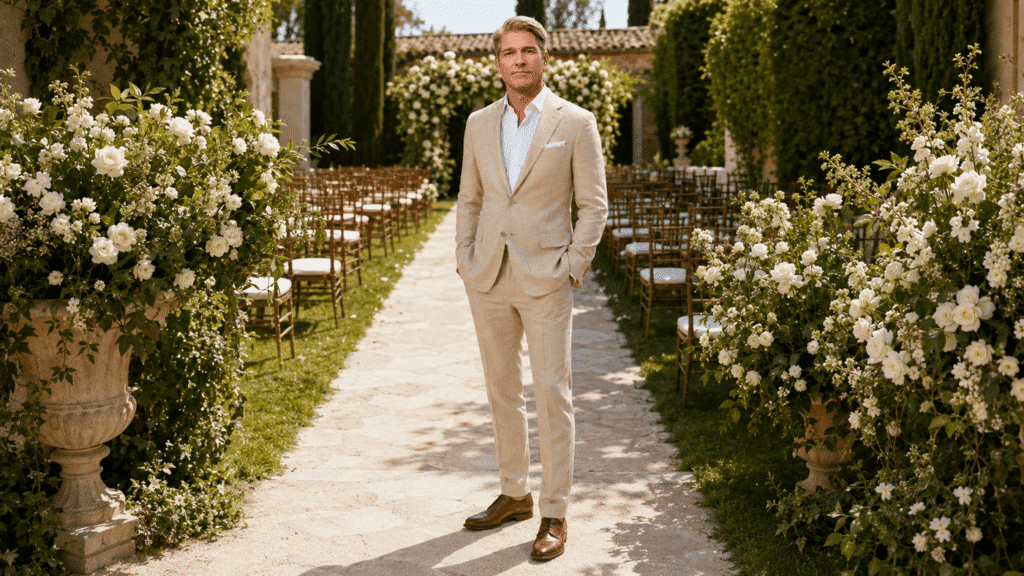
Tan, beige, and camel suits are best for spring and summer. They bring ease to a wardrobe that leans too dark. They also solve a practical problem: a navy or charcoal suit can feel visually dense in bright sun.
These lighter shades signal relaxed confidence. They feel social and open. The styling rules matter more here:
- Mid-blue and navy shirts sit nicely against tan. White also works, though it can feel sharper than the mood of the suit itself.
- Brown shoes are the right choice. Suede works very well in warmer months.
Lighter-colored suits usually look better with darker accessories. That contrast gives the outfit shape. It keeps the suit from drifting into a flat block of color.
Colors Beyond the Basics
Once your wardrobe includes all the main colors, you can start adding more colors to have more suit options for any season and occasion. These shades do not replace navy or charcoal. They just add range.
Burgundy and Deep Wine Suits
Burgundy has presence. It works well at evening dinners, social events, and occasions where black feels too formal, and navy feels too safe.
The best versions are deep and controlled. Think wine, not bright red. Cream or ivory shirts pair well with it and keep the look rich rather than loud. Burgundy tells people a man knows his clothes and is comfortable wearing them.
Midnight Blue Suits
Midnight blue is darker than navy, yet it is lighter than black. The color reflects light in a way that the suit has more shape and depth.
This is a strong choice for formal dinners or night events where a tuxedo is not required. With a white shirt and black shoes, midnight blue looks impeccable. It is one of the smartest evening alternatives a man can own.
Olive and Forest Green Suits
Olive and forest green have gained popularity in recent menswear collections. They feel fresh without looking trendy if the shade stays deep and earthy.
These greens work better in relaxed offices and social settings than they do in a strict boardroom. Olive also makes sense as a jacket with tan trousers. As a full suit, forest green looks good in fall.
Suit Color and Skin Tone
Your skin tone changes how a suit color looks on you. A shade that looks rich on one man can look flat on another. The best way to judge a color is to see it up close.
Fair and Light Skin Tones
Mid-to-deep colors usually work best for light skin. Navy and charcoal are strong. Medium grey gives enough contrast to frame the face well. Burgundy can also add depth.
Very pale complexions can disappear in light tan or washed-out pastel shades. Darker colors give the face definition and help you stand out.
Medium and Olive Skin Tones
Men with medium or olive skin usually have the most flexibility. Navy, charcoal, and tan all work well. So do earth tones like camel and brown. This skin tone holds warmth nicely, which is why softer browns and richer neutrals often look so natural.
Dark and Deep Skin Tones
Rich colors look excellent here. Navy, burgundy, deep wine, and forest green can look striking. Dark complexions also wear lighter shades well. Light grey and tan create strong contrast and can look very clean.
These color options for different skin tones are starting points. It’s recommended to use swatches to get the color match right.
Suit Colors by Occasion
A suit should match the room as much as the man wearing it. That is where color choice gets practical.
Job Interviews
Start with navy or charcoal. Both colors signal competence and seriousness. They also look right at first glance, which matters in a room where people judge your appearance alongside your skills.
Keep the shirt plain. The tie can stay conservative. Light grey and tan can work in looser fields, but they are not the strongest move in a competitive or formal industry.
Business and Office Wear
Navy, charcoal, and medium grey cover most office settings. If the office is formal, stay with navy and charcoal. If the office is more relaxed, medium grey and lighter shades work fine.
What suit color you wear for work also often comes down to industry:
- Finance, law, banking lean darker: navy, charcoal, dark grey.
- Creative work gives more freedom: Light grey, beige/tan, olive, burgundy, subtle patterns.
- For tech and startups: navy (no tie), light grey.
Black-Tie and Formal Evening Events
Black or midnight blue fit formal events. A tuxedo is the right choice if the invitation asks for black tie. If a suit is acceptable, it should be dark.
Cocktail and Semi-Formal Events
This setting gives more freedom. Navy and charcoal work well. Burgundy can be a strong option in the right fabric.
A patterned tie or pocket square can add personality here, but restraint still wins. The suit color should do most of the work. The accessories should support it, not compete with it.
Weddings
Wedding dress codes change based on season, venue, and time of day. For that reason, we cover the subject separately in our guide to best suit colors for weddings.
Funerals
Keep the suit dark and respectful. Black and charcoal are proper. Dark navy can work as well. Wear a white shirt. Keep the tie dark. Strip the outfit back to its quietest form. This is not the time for flair.
Building a Suit Color Wardrobe in the Right Order
Most men do not need ten suits. They need the right few, bought in the right order:
- Start with navy. It is most useful across work and social life. If a man owns one suit, navy is often the soundest place to begin. It is easy to wear often without feeling repetitive.
- Then add charcoal. This covers the more formal end of the spectrum. It gives you a stronger option for serious meetings, occasions, and settings where navy feels too open.
- After that, move into light or medium grey, or tan if warm weather is part of your lifestyle. The darker suits handle duty. The lighter suit adds range.
Only after that can you move to midnight blue, burgundy, or green. At that stage, color becomes more personal.
On a custom suit order, even a standard navy becomes your own through the shade, the weave, and the way the garment is cut for your frame.
The Right Color Starts With Intent
The best suit colors are not about strict rules. They are about knowing what each shade says and choosing with purpose. Once you have navy, charcoal, and a lighter option in place, the rest of the wardrobe becomes much easier to build.
At Alan David, we have helped men choose the right color, fabric, and cut for more than a century. With an experienced fitter, color stops being guesswork and becomes a clear conversation. Every shade changes with the weight and weave of the cloth, which is why we keep a wide range of fabrics from leading mills on hand.
If you want to see what the right color looks like in the right cloth, book an appointment and visit our NYC showroom for a fitting. Check out our First-Time Buyer’s Discount.