How to Pick Groomsmen Suits: Style and Coordination Guide
Picking groomsmen suits seems easy at first. Just pick a suit and move on, right? Not quite. Once you get into it, there’s more to think about than you expect. The groomsmen’s suits need to fit the overall wedding style and look good alongside the groom. But the catch is that they still should work for a group of men who all look a little different.
The best way to pick groomsmen suits is to make each decision in the right order. When it comes together, it feels effortless. The group looks coordinated, and the photos turn out amazing. But getting there takes a bit of planning.
In this guide, you’ll see how to line up the style, choose colors and fabrics, and keep everything coordinated without overthinking every detail.
1. Set the Tone With the Wedding Setting and Dress Code
A ballroom wedding at night needs a different look than a garden ceremony in the afternoon. If you get this part right first, the rest is much easier.
Start with the wedding itself. The venue, time of day, and dress code should guide the decision.
Black Tie Weddings
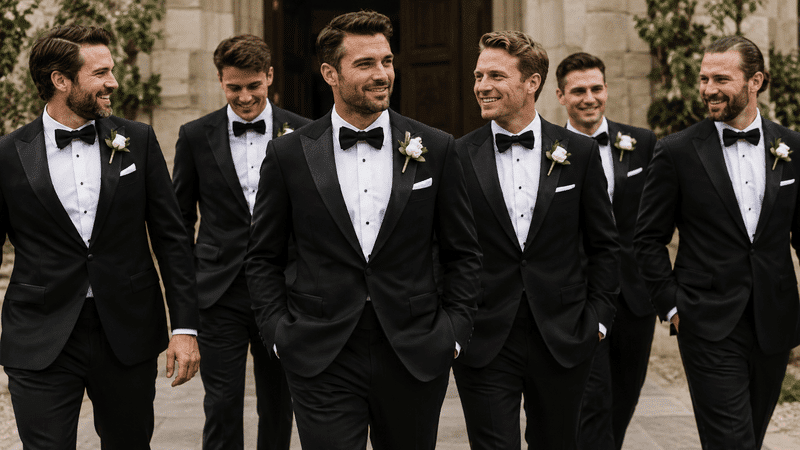
If the wedding is black tie, the groomsmen should wear tuxedos. That means:
- Satin lapels
- Matching trousers with a side stripe
- Formal dress shirts
Black and midnight navy are the best color choices. If guests are asked to dress in black tie, the wedding party should not be dressed below that level. Custom tuxedos look and fit well if the budget and time allow you to order them.
Semi-Formal Weddings
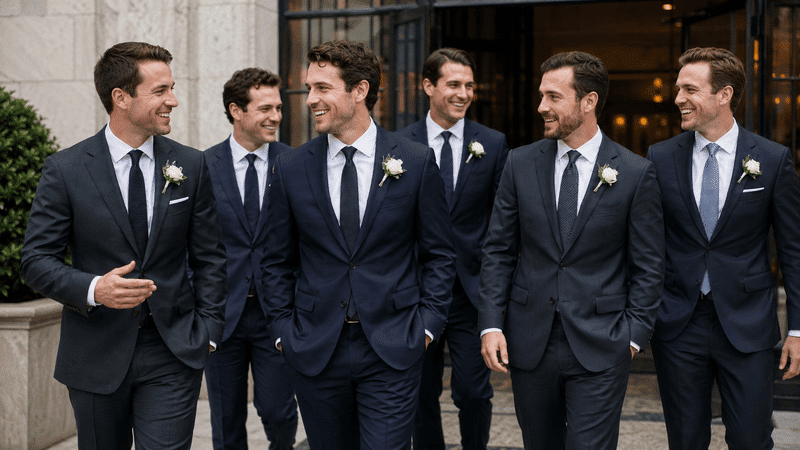
A semi-formal wedding gives you more range. A dark suit in navy, charcoal, or deep grey usually fits the setting well.
A two-button jacket in worsted wool works well here without being too formal. This is a strong fit for hotel weddings, church ceremonies, and city receptions.
Daytime or Outdoor Weddings
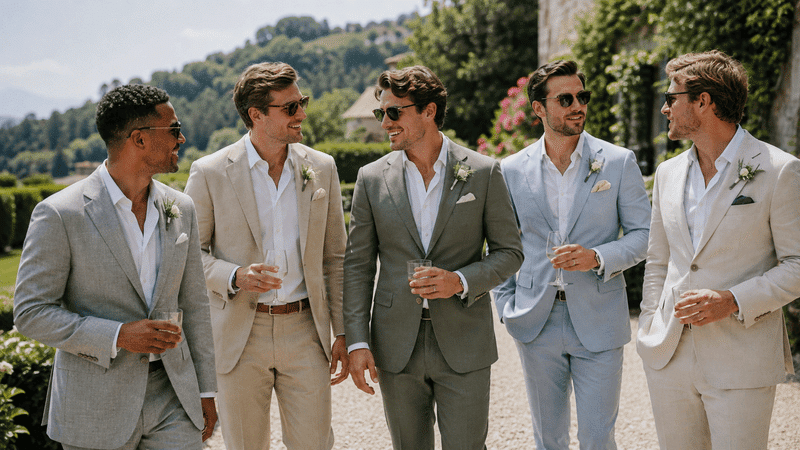
Daytime and outdoor weddings can carry lighter tones and fabrics. Good options include:
- Light grey
- Tan
- Soft blue
- Muted olive
Linen, tropical wool, and cotton-linen blends also work well in natural light and warm weather.
Casual or Destination Weddings
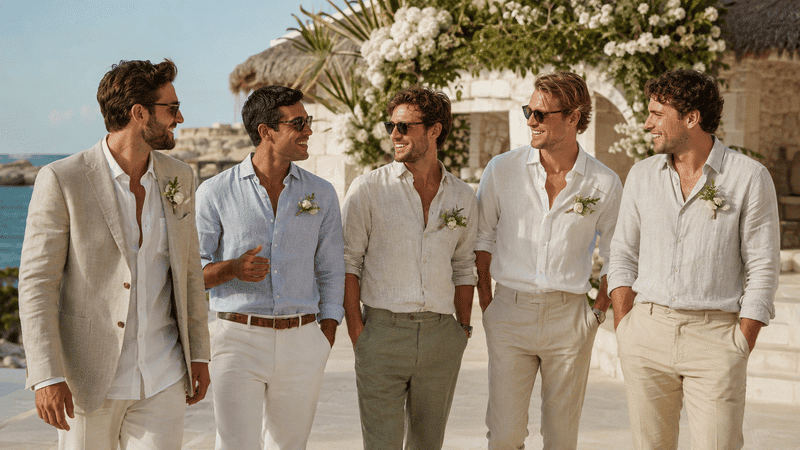
These weddings need a different kind of discipline. Comfort matters more here, but the group should still look coordinated.
That may mean:
- A linen jacket with an open-neck shirt
- Soft trousers with no jacket
The point is not to strip away formality at random but to dress for the place.
Never dress groomsmen with personal preference. Consider the vibe of the wedding and the setting. This is also where the suit vs. tuxedo question usually gets settled. Each one fits a different level of formality,
2. Keep the Groom Distinct Without Breaking the Group
The groom’s suit should look distinct yet still like part of the group. It’s hard to get that balance right. Many couples miss it in one of two ways:
- Everyone wears exactly the same thing, so the groom disappears.
- The groom wears something so different that the group looks disconnected.
The simplest decision is to put everyone in the same suit, shirt, tie, and shoes. That gives you a very orderly look. But it also means the groom will need another detail to set him apart.
For most weddings, the better move is to keep the group coordinated and give the groom a slightly elevated version of the same look. He can wear a darker shade of the same color, or a tuxedo with groomsmen in dark suits. This keeps the wedding party cohesive while making the groom easy to spot.
The groom does not need a dramatic change. Small changes often do enough:
- Different tie
- White pocket square
- More formal pocket square fold
- More distinct boutonnière
Do not push the contrast too far. If the groom wears a bold patterned jacket and the groomsmen wear plain neutral suits, the group can look mismatched.
Accessories should also relate to the bridesmaid colors. Ties and pocket squares can pull from that palette without matching it exactly. A complementary color usually looks better in photos than an exact match.
3. Pick a Color That Works for the Whole Group
Choose a color that suits the wedding, complements the overall palette, and looks good on all the men at the party. The goal is not to pick the newest shade. The goal is to choose one that looks right in person and in photos.
The most reliable suit colors for weddings are:
- Navy is the easiest choice for most weddings. It works in every season, suits both day and evening, and flatters almost everyone.
- Charcoal grey feels a bit more formal. It works well for evening weddings and pairs easily with most bridesmaid colors.
- Medium grey is better for spring, daytime, and outdoor weddings. It feels lighter than charcoal but still looks sharp.
- Black is best for formal evening use. It can feel too heavy for daytime or outdoor settings.
- Earth tones and greens like tan, camel, sage, and forest green can work well, especially outdoors. They need more care, since they depend more on the season, venue, and wedding colors.
Keep these rules in mind:
- Match the color tone of the wedding palette. Cool colors usually work better with navy, charcoal, and blue-grey. Warm palettes suit tan, camel, and olive.
- Darker suits look more formal. Lighter suits feel more relaxed.
- The groomsmen’s suits should support the bride’s gown, not attract more attention.
Remember that the color should suit every man in the group, not just one person. If one groomsman looks great in it but the others look washed out, stop and reconsider the choice.
4. Choose Fabric and Cut for Comfort
Comfort matters. A suit can look good for ten minutes and still wear badly through a full wedding day. If the cloth is too heavy or the fit is off, it shows in posture and photos.
To get the fabric right, pick it by season. Start with the weather and venue.
For spring and summer:
- Tropical-weight wool is a strong choice. It breathes well and still looks polished.
- Linen works well outdoors but wrinkles more easily.
- Cotton-linen blends hold up better than linen throughout the day.
For fall and winter:
- Mid-weight or heavier wool works best.
- Flannel adds softness and visual depth.
- Velvet can work for a formal evening jacket in cold weather.
For indoor weddings:
- Mid-weight wool is usually the safest option.
- It works well in climate-controlled spaces and wears comfortably across seasons.
Construction matters as much as fabric. If the groomsmen will be outside in summer heat, choose a jacket with a lighter build. It will feel better and move more naturally than a stiff, heavily built coat.
Get the Fit Right
Fit matters more than any other detail. A poor fit looks careless, no matter the price.
One man may need more room in the chest. Another may need a different shoulder shape. Once the group has enough variation, stock sizing becomes a problem. Off-the-rack or made-to-measure suits are cut for an average build. Most wedding parties are anything but average.
That is why most men choose custom groomsmen suits. Good fit starts at the first appointment. Just as important, measurements should be taken by a master fitter.
At Alan David Custom, clients go through a true custom suits program with master fitters and pattern cutters, then review a fitting garment before the final suit is cut. You can read more about that process here: bespoke tailoring process.
5. Add Matching Accessories
The best accessories feel simple and complete. Everything fits together, and nothing stands out too much. You just need a consistent look across the whole group.
Neckwear
Start with the tie choice:
- Ties work for most weddings.
- Bow ties suit tuxedos and formal evening weddings.
- No-tie works for more casual weddings.
Keep everyone in the same style. If some men wear ties and others wear bow ties, it usually looks unplanned.
Pocket Squares
Pocket squares are a nice way to keep the groomsmen’s looks coordinated:
- White linen is always safe
- A simple square in a wedding color can also work
- Keep the fold neat and the fabric understated
Shoes
Decide on the shoe style and color, then tell the group to follow it:
- Black cap-toe oxfords are the safest choice with dark suits and tuxedos.
- Brown shoes can work with lighter suits for daytime weddings.
Shoes also need attention early on. This is one of the easiest details to get wrong. Every man should wear the same general style and color. If one man wears loafers and another wears formal lace-ups, the group will look uneven.
Other Accessories
A few finishing pieces:
- Belts or suspenders should match across the group.
- Cufflinks suit formal shirts and tuxedos.
- Boutonnières should connect to the wedding flowers and fit the scale of the jacket.
Don’t turn each groomsman into a fashion experiment. Just make sure everything looks good together, and nothing pulls focus.
6. Plan Everything Ahead
This step saves more weddings than any other. Start early to keep your options open. Try to begin 6 to 9 months before the wedding. That gives you time to:
- Set the dress code.
- Choose between suits and tuxedos.
- Decide how the groom will stand apart from the groomsmen.
- Talk about budget before anyone feels pressured.
Rent, Buy, or Mix?
Be direct about cost from the start. The groom should know what he is asking the group to spend money on. If the plan is to rent, say that early. If the plan is to buy, say that too.
Renting works best when:
- the groomsmen live in different cities
- in-person fittings are hard to arrange
- the budget is tight
- the suits probably will not be worn again
- the timeline is short
Rentals are practical. They also come with limits, especially on fit.
Custom suits cost more but work best when the groomsmen have very different builds, and the suit will be worn again after the wedding.
A mixed plan can also work well:
- the groom gets his own custom suit or tuxedo
- the groomsmen rent
- or the groomsmen buy off-the-rack suits and have them altered
This keeps the groom’s look exact without pushing the whole group into the same price range.
Follow a Clear Timeline
If the group is buying custom suits, place orders 5 to 6 months out. That leaves enough time for fittings and final adjustments.
For most custom wedding clothing, 3 months out is the absolute minimum.
By 4 to 6 weeks before the wedding, all alterations should be finished. Every man should try on the full outfit, including shirt and shoes.
No one should be opening a garment bag the night before the wedding and hoping for the best.
Late orders often create the same issues:
- a groomsman cannot come in for his fitting
- a rental coat arrives with sleeves that are too short
- stock trousers need more alteration than expected
Rush service can help in some cases. Still, that should be the backup plan. Not the plan itself.
Final Thoughts
The best groomsmen suits come from a clear order of decisions. Start with the wedding’s mood. Keep the groom distinct without breaking the line. Choose color, cloth, and fit with the whole group in mind, then finish the look with restrained accessories and enough time to do the work properly.
That is really what answers the question of how to pick groomsmen suits. Good judgment early and no shortcuts where they matter.
If you are dressing a wedding party in New York and want experienced guidance from the first fitting to the final pickup, we are here to help. Visit Alan David’s showroom, and we will help you build a wedding look that feels ready for the day. Book an appointment to get started.