Tuxedo Styles: Choose the Right Look for Any Occasion
You open an invitation and see the words black tie. A tuxedo may seem a simple choice at first. But then you notice the details that can change the whole look. That is when most men start searching for tuxedo styles and sorting out what matters.
The right tuxedo style can make you feel confident, while the wrong one can look slightly out of place, even if you cannot name the reason. Knowing the differences makes it much easier to choose the right style for any occasion.
In this guide, we will compare the main tuxedo styles, discuss how a tuxedo should fit, what works for different events, and how to choose a style.
What Is a Tuxedo and How Is It Different From a Suit?
A tuxedo and a suit differ in many ways. A tuxedo is evening wear. A suit is not. That sounds simple, yet this is the point most buyers get wrong.
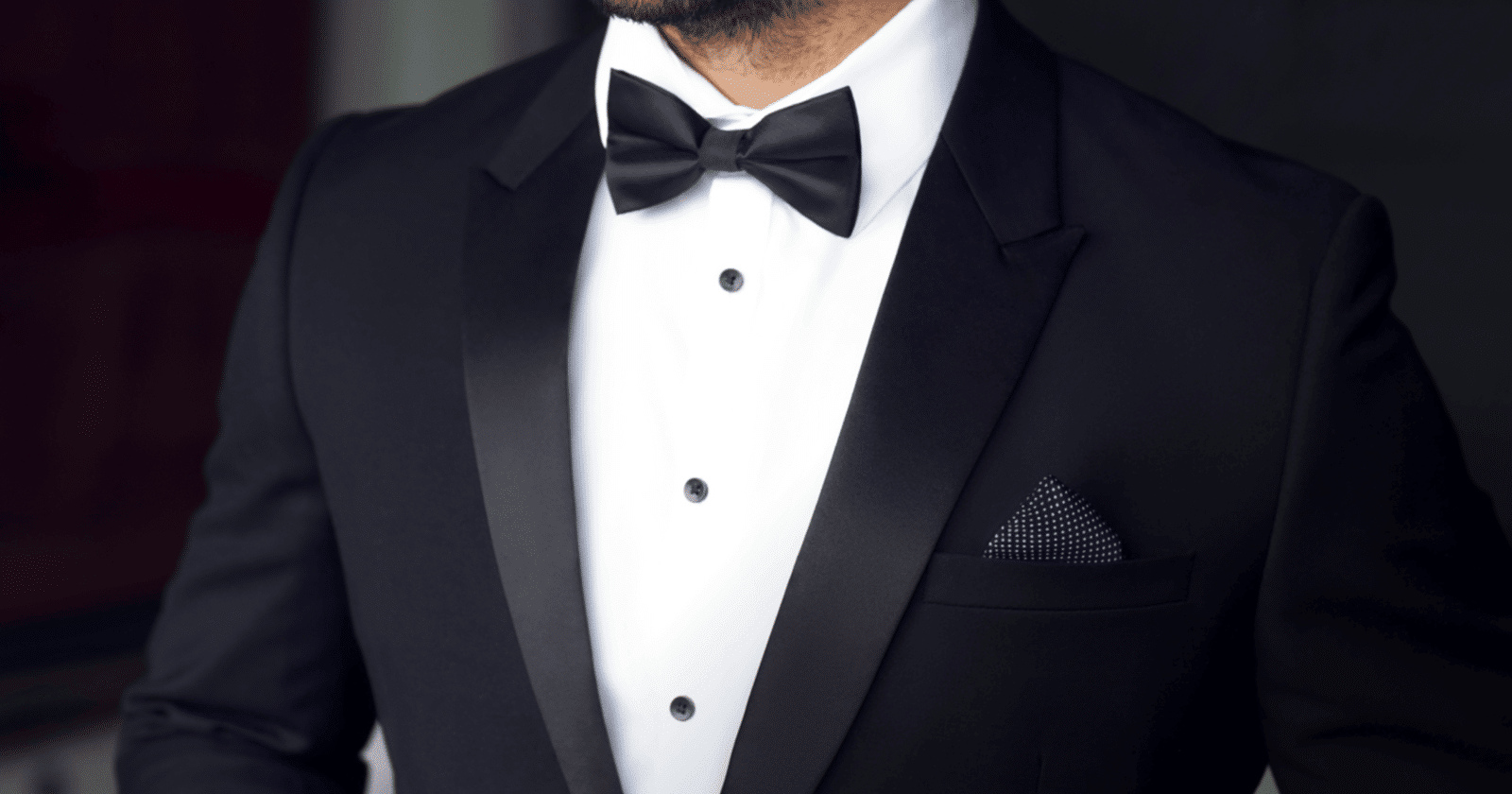
The difference starts with the jacket. A tuxedo uses satin or grosgrain on the lapel facing. The trousers carry a matching stripe down the outer leg. The buttons are usually covered or finished in the same formal fabric. A suit does none of that.
The shirt changes too. A tuxedo shirt is meant for evening dress. It is worn with a bow tie. In stricter settings, it may also take studs and cuff links. A business shirt under a tuxedo weakens the whole look.
Black tie is the dress code. The tuxedo is the garment. If the invitation says black tie, the host expects evening wear. If it says black tie optional, you may wear a dark suit, though a proper tuxedo is still the stronger choice.
Design Details that Define a Tuxedo
It’s the small, formal details that carry the look. Satin or grosgrain lapels catch light in a controlled way. The trouser stripe picks up on that same finish, quietly linking top and bottom so the whole thing feels considered. And then there’s the one-button stance, cut low. It keeps the front clean, opens up the chest a bit, and gives the jacket a more natural line.
Fit matters just as much as fabric. The top button should close at the fullest part of your stomach. Any lower shows too much shirt and throws off the balance, most of all on a tuxedo.
The Main Tuxedo Styles
Tuxedo styles are defined by their lapel shape, fit, and jacket color. The main types are classic black, shawl lapel, peak lapel, white dinner jacket, and velvet or statement designs. Each one fits a different setting, from strict black tie to modern weddings.
Classic Black Tuxedo
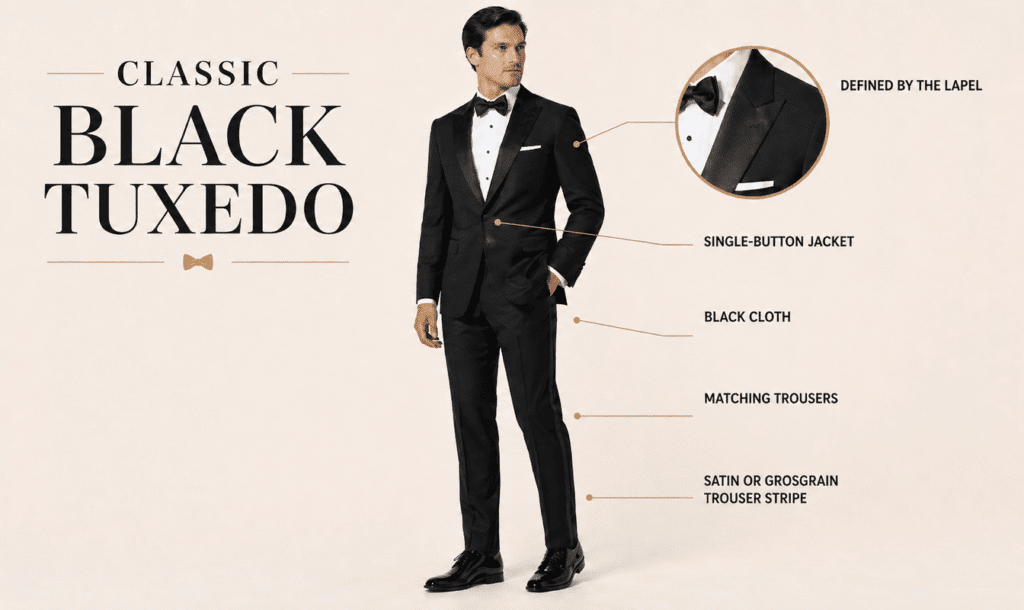
This is the standard all other tuxedo styles are measured against. Think single-button jacket, black cloth, and matching trousers with a satin or grosgrain stripe. From there, it’s really about the lapel. A peak lapel has a bit more authority to it and sharpens the look. A shawl lapel is smoother and more relaxed, with a slightly old-school evening feel.
Wear it to a gala, opera, awards dinner, or any strict black tie event. Do not choose it unless the event calls for a lighter seasonal look, such as a summer wedding by the water.
Shawl Lapel Tuxedo
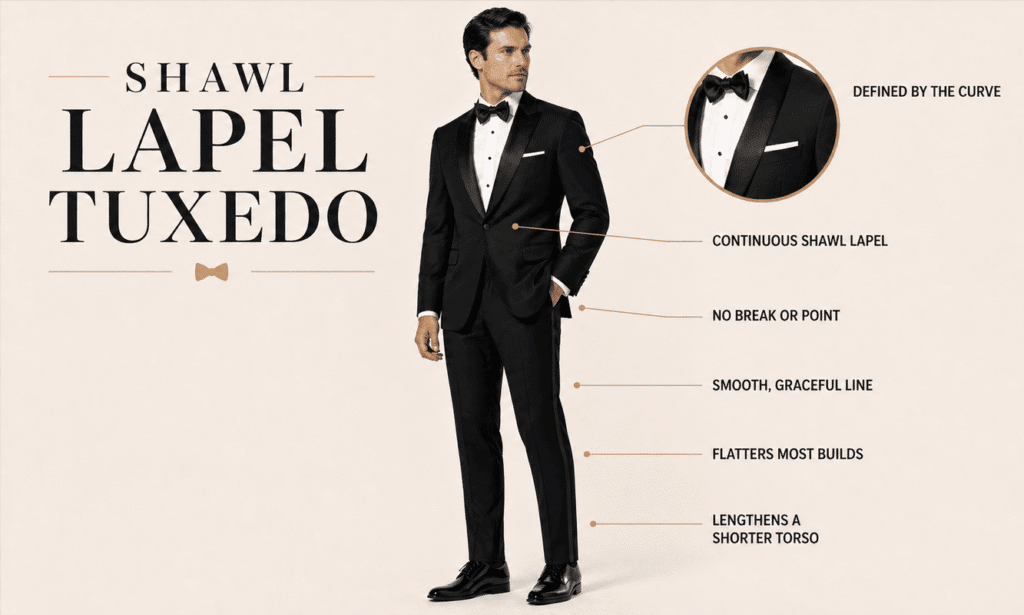
The shawl lapel has one continuous curve with no break or point. It is the smoothest of the tuxedo lapel types and often the most graceful on the body. It tends to lengthen a shorter torso and flatter most builds.
This style suits formal weddings, winter galas, and evening receptions with old-school dress standards. Skip it for daytime wear. Skip it for a black tie party if the room will be more relaxed and less formal.
Peak Lapel Tuxedo
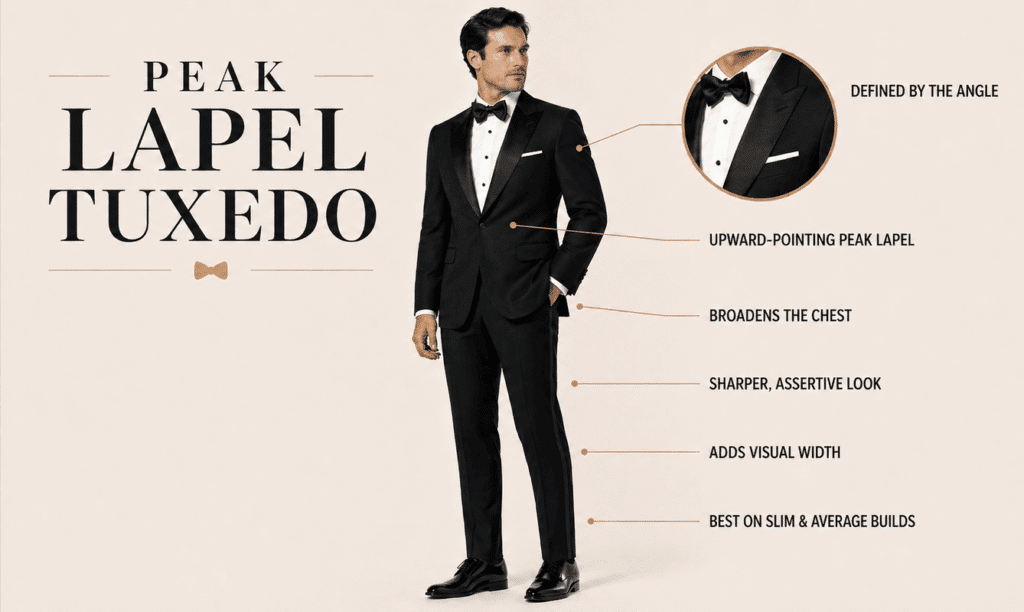
The peak lapel angles upward toward the shoulder. That shape broadens the chest and gives the jacket a firmer line. In the shawl vs peak lapel tuxedo debate, shawl feels softer and more timeless. Peak feels sharper and more assertive.
It works best on slim and average builds because it adds visual width. If your shoulders are already broad, the effect can be too strong. Wear it to black tie events, evening weddings, and formal receptions.
Notch Lapel Tuxedo
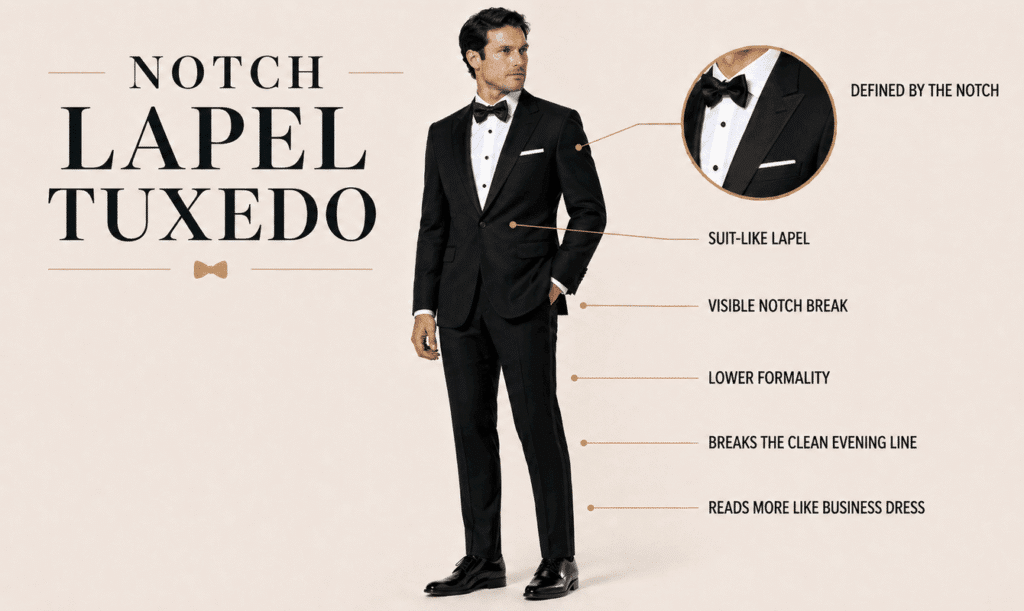
A notch lapel is the most suit-like option. That is exactly why it sits lower on the formality scale. The notch breaks the clean evening line and reads more like business dress.
Use it for prom, stylish parties, and black tie optional events. Do not wear it to a strict black tie. The shape does not carry the same evening authority as a shawl or peak style.
White Dinner Jacket
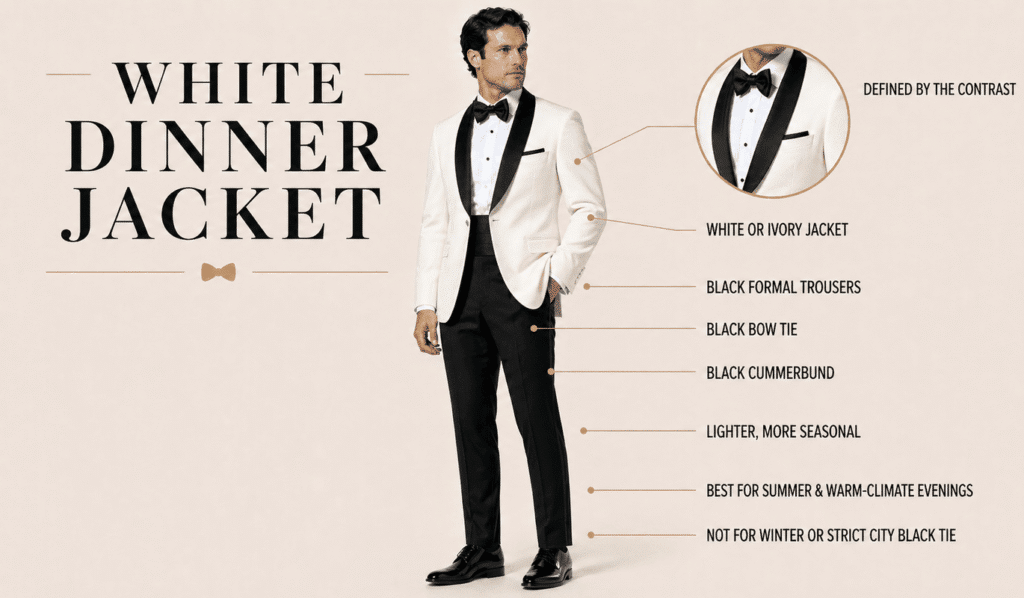
A white or ivory dinner jacket is worn with black formal trousers. It is part of the same evening dress family, though it reads lighter and more seasonal than a full black tuxedo.
Choose it for summer weddings, warm-climate events, or destination dinners after dark. Keep the bow tie black. Keep the cummerbund black too. Do not wear it in winter. Do not wear it to a conservative city black tie unless the host signals a lighter tone.
Velvet and Statement Tuxedos
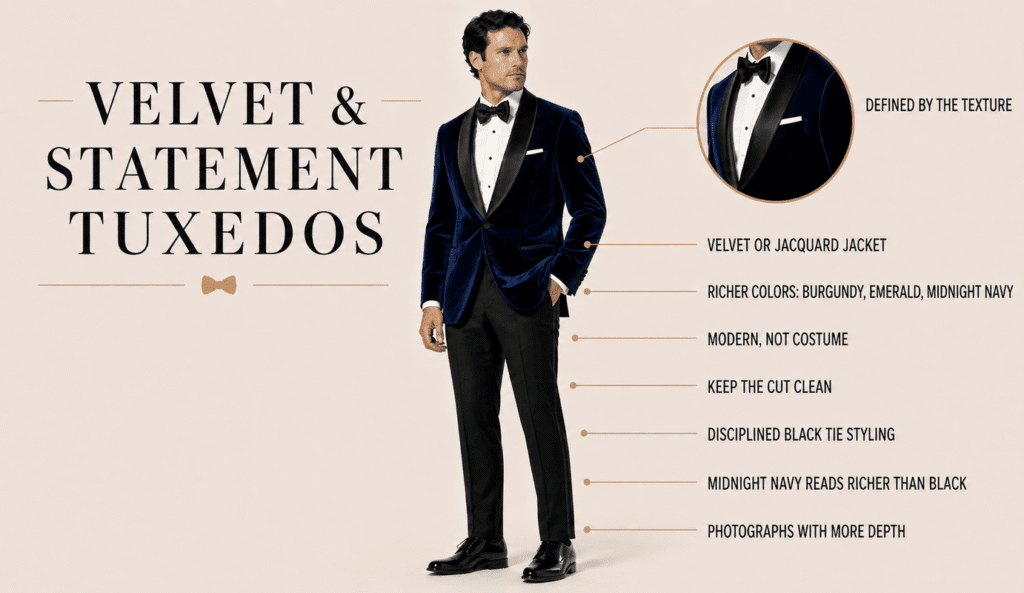
This group covers velvet jackets, jacquard evening jackets, and richer colors such as burgundy, emerald, and midnight navy. These are modern tuxedo styles, but they are not costumes if the cut stays clean and the rest of the outfit stays disciplined.
Midnight navy deserves a separate note. Under evening light, it can read richer than black. Under flash, it often photographs with more depth. That is why it remains one of the best tuxedo colors for men who want a formal look with slight distinction.
Save these styles for creative black-tie parties and weddings, with room for personality. Do not wear velvet to a strict charity ball unless the host leans fashion-forward.
Slim, Modern, or Classic?
A tuxedo can tick every box on paper and still fall flat once it’s on. Fit is what makes or breaks it, and that starts with how it’s measured in the first place.
A slim has a slightly shorter jacket and a cleaner line through the waist. It can look sharp on lean or athletic builds. You should be able to sit, lift your arms, and walk without feeling restricted. If it pulls, it’s too tight, no matter how good it looks.
A modern fit is the best choice for most men. It shapes the chest and trims the waist without squeezing the body. A classic fit gives more room through the chest and seat. That helps larger frames, though it can look dated if the jacket hangs too loosely.
Pick slim if your build is lean and the event has a younger tone. Pick modern if you want the safest option for weddings, galas, and black-tie events. Pick classic only if you need the extra room or prefer a fuller drape.
Choosing the Right Tuxedo for the Occasion
The event should decide the jacket, not the other way around. Here’s your cheat sheet if you need help:
| Occasion | Best choice | Leave aside |
| Strict black tie | Black tuxedo with shawl or peak lapel | Notch lapel, brown shoes, long tie |
| Groom at a formal wedding | Black or midnight navy, shawl or peak | Loud color if the venue is traditional |
| Wedding guest | Black tuxedo, modern fit | Anything that competes with the groom |
| Prom or party | Notch, peak, velvet, or color | Overly stiff black tie styling in a casual room |
Weddings
For the groom, wedding tuxedo styles are simple if the venue is formal. Choose a shawl or a peak. The color should be black or midnight navy.
If you are a guest, a black tuxedo in a modern fit is always safe. If it is a summer evening, ivory can work if the dress code supports it.
Black Tie Events
If the invitation says “black tie,” wear a shawl or a peak-lapel tuxedo. That is the rule. Notch lapel is not correct here because it borrows too much from a lounge suit.
Stay with black or midnight navy. Wear a black bow tie. Keep the shirt formal and the shoes black.
Prom and Parties
Prom gives you more freedom. So do holiday parties and festive evening events. A notch lapel can work here. Velvet can work too.
Just keep one thing in mind. More freedom does not mean “no standards”. The tuxedo still needs a clean fit and proper balance.
Tuxedo Colors and Fabrics
Color changes formality faster than most men think. Black remains the safest answer. Midnight navy is the second best and often looks richer under indoor light. Ivory works in warm weather. Burgundy and emerald belong to creative dress codes, not strict black tie. Grey is best left alone because it reads as a suit.
Fabric matters just as much. Year-round formalwear works best in wool or a wool-mohair blend. A summer evening dress needs lighter wool. Autumn and winter can take velvet if the event allows it. Linen belongs only in warm-weather settings.
Skip polyester. Under flash photography, it often reflects light, cheapening the look.
Tuxedo Styling Details
The tuxedo should carry the look. Everything else is there to back it up, not compete for attention. If an accessory stands out before the jacket does, something’s off. Keep it in step, and let the suit lead.
A formal white shirt is the cleanest choice. A pleated or marcella front works well. So does a plain front if the proportions are right. At a strict black tie, wear a black bow tie. Do not wear a four-in-hand tie.
Shoes should be black and polished. Patent leather works for the most formal rooms. Plain-toe or cap-toe Oxfords also work very well. Brown shoes do not belong with a tuxedo.
A cummerbund or low-cut waist covering keeps the shirt front neat. Studs and cuff links can sharpen the look. Add a white pocket square.
Keep things controlled. One strong detail is enough to carry the look. Add more than that, and it starts to feel busy, even a bit forced.
How to Choose the Best Tuxedo Style for You
Start with the occasion. Shawl or peak suits black tie. Notch works for parties or prom. Pick a modern fit as your default. Choose black for formal events. Choose navy or richer colors only if the dress code allows more room.
Here is the body-type part. Shawl lapels can lengthen a shorter torso. Peak lapels add width, so they suit slim and average builds best. If you have broad shoulders or a larger frame, a modern fit with balanced lapels usually gives the cleanest result.
Summing Up
The right tuxedo style starts with the invitation, then moves to the lapel, fit, and cloth. Get those parts right, and the rest falls into place. Get them wrong, and even an expensive jacket will look off.
If you want to see these differences in person, visit our New York showroom. A master fitter will take your measurements and guide you through the right option for your event. Book a consultation at Alan David and get your custom tuxedo.