Morning Coat vs Tailcoat: Choosing the Right Formal Menswear
Many men get stuck when choosing the right attire for formal events. A morning coat and a tailcoat both have tails, both belong to formal dress, and both tend to appear on strictly formal invitations. At a glance, they seem close enough to confuse.
That confusion is easy to understand. Even men who dress well every day may not know if “morning dress” means the same thing as “white tie,” or if a morning coat can cross into evening wear. It cannot, and that is where people make most mistakes.
This guide explains the difference between a morning coat and a tailcoat, when to wear each, what goes with each, and how to read an invitation to match your dress.
What Is a Morning Coat?
Men began wearing morning coats, or cutaway coats, in the early 19th century as riding coats. Over time, men started wearing it for formal daytime occasions, and it became the proper coat for dressy events held before evening.
It still has a place in the U.S. You see it at formal weddings, at the Kentucky Derby, at Saratoga, and at some civic and diplomatic events.
How to Spot a Morning Coat
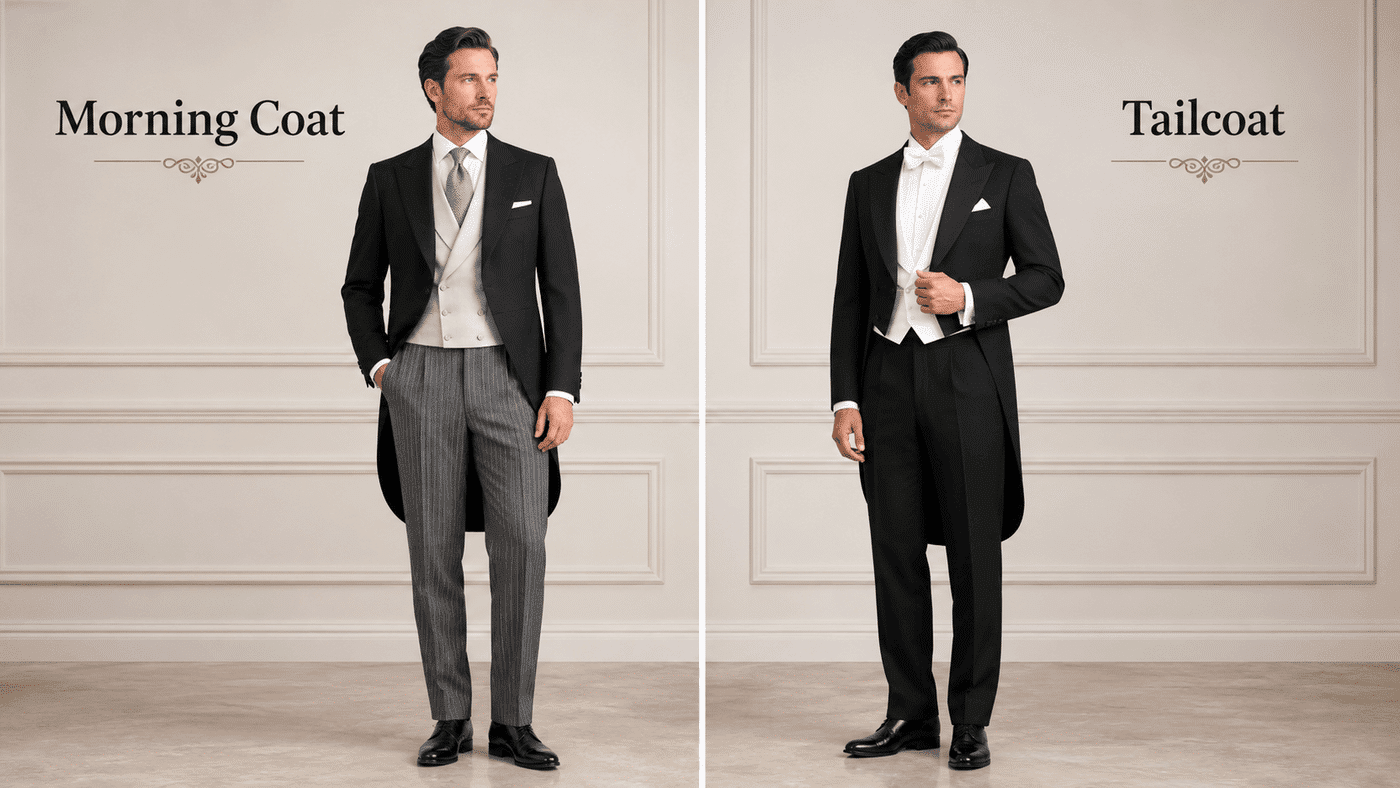
A morning coat is always single-breasted. It closes with one button near the waist, then sweeps away in a long, gradual curve into tails at the back. From the side, the line forms a clean S-shape. That one front button should close at the fullest part of the stomach to keep the balanced look.
The lapels are peaked, which means the lapel points angle up toward the shoulders. They do not have satin facings. The coat usually comes in black or charcoal gray wool, and the tails fall to about the knee.
What Goes With It
A morning coat is only one part of a morning dress. The coat is the dark anchor, usually black or charcoal gray. The pants do not match the coat. They should be gray with black stripes, often called cashmere stripes. That contrast is part of the dress code.
The vest adds a layer. Dove gray is classic. Cream and soft pastel shades also work for weddings.
Wear a white or pale shirt with either a spread collar or a wing collar. The wing collar stands up and folds down in front, which gives the outfit a more formal line. Add a proper tie or a cravat at the neck. Silver and black are safe, classic choices.
Shoes should be polished black cap-toe Oxfords or plain black Oxfords. If the event is at the races or calls for full formal day dress outdoors, a black or gray top hat is the right finishing piece.
When to Wear a Morning Coat in the U.S.
Wear a morning coat to formal daytime occasions that begin before 6 PM. This attire is the best choice for formal weddings in New York, New England, and the South. It also fits the Kentucky Derby, especially in the more formal club areas. You may also see it at state or diplomatic functions, and at very formal funerals or memorial services in sober black.
Do not wear a morning coat to an event that starts in the evening. If the invitation indicates evening formality, the dress code is white tie or black tie.
Differences of a Morning Coat, Morning Suit, and Morning Dress
Many men assume they mean the same thing. They do not. The difference is obvious once you see it.
A morning coat is the coat by itself. It is the cutaway jacket, nothing more.
Morning dress means the full formal daytime outfit. That includes the morning coat, the vest, and the contrasting striped pants. If an invitation says “morning dress,” it asks for the whole ensemble, not just the coat.
A morning suit is a coordinated version. In a morning suit, the coat, vest, and pants are made from the same cloth, most often gray. It looks softer and a little less formal than a full morning dress. That makes it popular for weddings and social race day events.
If the invitation says morning dress, wear the full setup with contrasting striped pants. If it says morning suit, a matching gray set is correct.
What Is a Tailcoat?
Tailcoat means the evening dress coat. In strict clothing terms, a morning coat is a kind of tailcoat because it has tails. In everyday American use, that is not what people mean. In the U.S., if someone says “tailcoat,” he almost always means the evening dress coat worn for white tie.
So if you are sorting out a cutaway coat vs a dress coat, keep this rule in mind. Morning coat means day. Tailcoat means white tie evening wear.
How to Spot a Tailcoat
The evening tailcoat has a stricter shape than a morning coat. The front cuts away straight across at the waist rather than in a gradual curve. From there, the back falls into two pointed tails.
The front looks double-breasted, but that is only visual. The buttons are decorative. The coat does not fasten. The lapels are peaked and faced in satin, and the coat is always black.
That hard cut at the waist gives the tailcoat its formal line. It leaves the white shirt front and white vest exposed, which is exactly how white tie should look.
At this level of formal dress, a poor fit stands out right away. The coat should sit cleanly through the shoulders. The sleeves should hang evenly from the shoulder to the wrist, with no pulling at the biceps and no twist in the sleeve.
What Goes With a Tailcoat
The tailcoat belongs to full white tie. This dress code leaves very little room for personal taste.
The coat is black. The pants are black and high-waisted, with a double satin braid down each leg. The vest must be white Marcella. Marcella is a stiff white piqué cotton used in formal evening wear. Other colors or shades aren’t appropriate, so it shouldn’t be cream, silver, or anything coloured.
The shirt should be a stiff white formal shirt with a starched bib front, usually piqué or pleated, and a wing collar. The bow tie must be white and self-tied. Shoes should be black patent leather formal pumps or plain patent Oxfords.
It includes some accessories too. Studs and cuff links should stay understated, often in mother-of-pearl. White gloves and a pocket watch are part of the old formal tradition and still appear at some events.
When to Wear a Tailcoat in the U.S.
White tie is rare in America, but it still exists. You wear a tailcoat for the most formal evening occasions in Western dress.
That includes white tie balls, certain gala events in New York, formal state dinners, and a small number of grand weddings with an explicit white tie dress code. You also see it at debutante balls, cotillions, and some opera or classical music openings that keep the older standard.
If the invitation does not say white tie, do not assume a tailcoat is welcome. It is too formal for black tie, and far too formal for a business event.
Morning Coat vs Tailcoat Comparison at a Glance
Here is a direct side-by-side breakdown of everything that separates the morning coat from the tailcoat.
| Feature | Morning Coat | Tailcoat (Dress Coat) |
| Time of Wear | Daytime only, before 6 PM | Evening only, after 6 PM |
| Dress Code | Morning dress or formal daywear | White tie |
| Front Cut | Gradual curved sweep into tails | Square horizontal cutaway |
| Breast Style | Single-breasted, one button | Double-breasted appearance, non-fastening |
| Lapels | Peaked lapels, no satin | Peaked lapels with satin facings |
| Pants | Gray and black striped, contrasting | Black with double satin braid |
| Vest | Gray, buff, cream, or pastel | White Marcella only |
| Shirt | Wing collar or spread collar | Starched wing-collar formal shirt with white bib |
| Neckwear | Cravat or formal tie | White bow tie only |
| Typical Occasions | Weddings, Kentucky Derby, Saratoga, and formal memorials | State dinners, formal balls, white tie galas |
| Colors Available | Black or charcoal gray | Black only |
Common Mistakes Men Make With Morning Coats and Tailcoats
The first mistake is wearing a morning coat at night. That breaks the oldest rule in formal dress. Remember, a morning coat for the day, and a tailcoat for the evening.
The next mistake is confusing a tuxedo with a tailcoat. A tuxedo belongs to black tie. A tailcoat belongs to white tie. They are not cousins with loose rules. They sit in different dress codes. If you need a refresher, our “When to Wear a Tuxedo” guide covers the black tie standard.
Men also confuse the pants for a morning dress. It includes striped gray pants, not black pants or matching suit pants. Match the coat to the pants, and you no longer have classic morning dress.
A colored vest under a tailcoat is another mistake. White tie calls for a white Marcella vest, full stop. Skip the vest altogether, and the outfit still fails, because the vest is part of the dress code in both morning dress and white tie.
One small detail often gets missed with the morning coat. When you are standing, keep that front button fastened. The line looks cleaner, and the coat hangs as it should.
How to Read a Dress Code Invitation
Once you know the terms, the choice gets much easier. You can dress correctly and walk in with confidence. Here’s what you should memorize:
- If the card says “morning dress,” wear the full daytime formal ensemble. That means a black morning coat, striped gray pants, and a proper vest.
- If it says “morning suit,” wear the coordinated gray version. That choice works well for weddings and daytime social events.
- If it says “white tie,” you need the evening tailcoat, black formal pants, a white Marcella vest, and a white bow tie. If the invitation says “black tie,” it means a tuxedo, not a tailcoat and not morning dress.
- If it says “business suit” or “lounge suit,” wear a standard suit. No tails of any kind are needed.
Final Words
Once you know the difference between a morning coat and a tailcoat, you are ahead of most American men. The rule is simple and strict. Wear a morning coat before 6 PM. Wear a tailcoat only for a white tie in the evening.
If you need a custom morning coat for a wedding or a white tie dress coat for a formal evening, Alan David Custom in New York makes formal menswear to your exact measurements. Book an appointment today or visit our New York showroom to get the coat, balance, sleeve line, and full ensemble right from the start.