3 Tuxedo Lapel Styles Explained
You put on a tuxedo and look in the mirror. The fit is good. Still, something is not right. Then you try on another jacket. The front falls into place straight away.
Often, the difference is the lapel shape. A small change in shape can shift the whole look. That is why one tuxedo looks sharp and complete, while another looks like it is missing something, even when both are made from the same kind of cloth.
How to choose the right tuxedo lapel style? It depends on different factors such as the event, your build, and how the jacket is cut.
In this guide, you will learn about the three lapel styles, their differences, when to use each style, and how to choose one based on your build and height.
What Makes a Tuxedo Lapel Different from a Suit Lapel
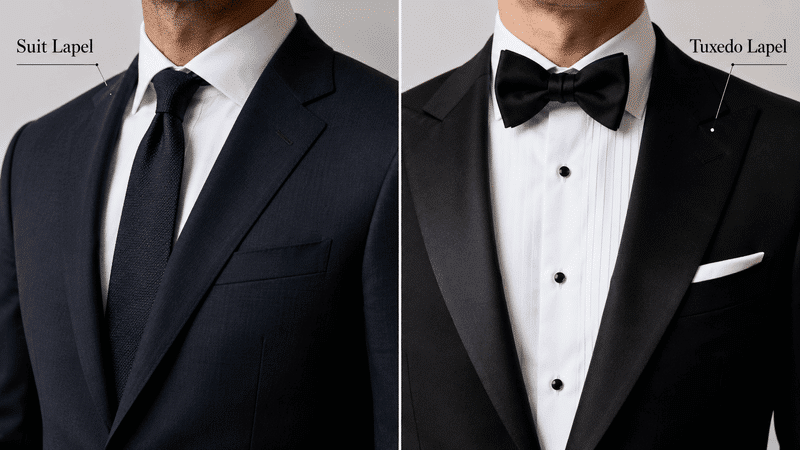
A lapel is the part of the jacket that folds back from the collar along the front. On a suit, it is cut from the same cloth as the coat. On a tuxedo, it is covered in satin or grosgrain silk. You usually see the same facing on the jacket buttons and on the stripe running down the trouser leg. The result is a cleaner formal line.
That’s one of the differences between a suit and a tuxedo. The lapel shape sets the tone. The facing sets the mood. The width sets the balance. This is why lapel choice comes first in a custom tuxedo.
What Are The Three Tuxedo Lapel Styles?
Below are the main tuxedo lapel styles and what defines each.
Shawl Lapel
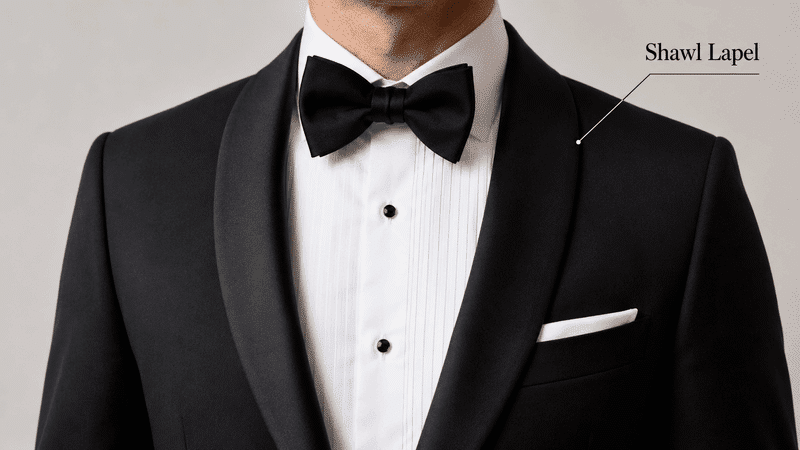
The shawl lapel has the cleanest line of the three. It runs in a single smooth curve from collar to button, with no notch or point. The effect is soft, formal, and very clean.
It is also the oldest tuxedo lapel. The style traces back to the first dinner jackets of the late 1800s, which took cues from the smoking jacket. That history still shows in modern tuxedos. A shawl lapel feels traditional, even when the coat itself feels modern.
For black tie, it is fully correct. It works especially well for galas and formal weddings. On a midnight-blue tuxedo with satin facing, it has a quiet old-Hollywood elegance.
Best for: men who want a refined, timeless look without the sharper line of a peak lapel
Most shawl lapels measure about 3 to 3.5 inches. Slimmer versions feel more current. Fuller ones feel more classic. The shape is very flattering on slim to average builds. A bow tie is the natural choice. Keep other tuxedo accessories simple.
Peak Lapel
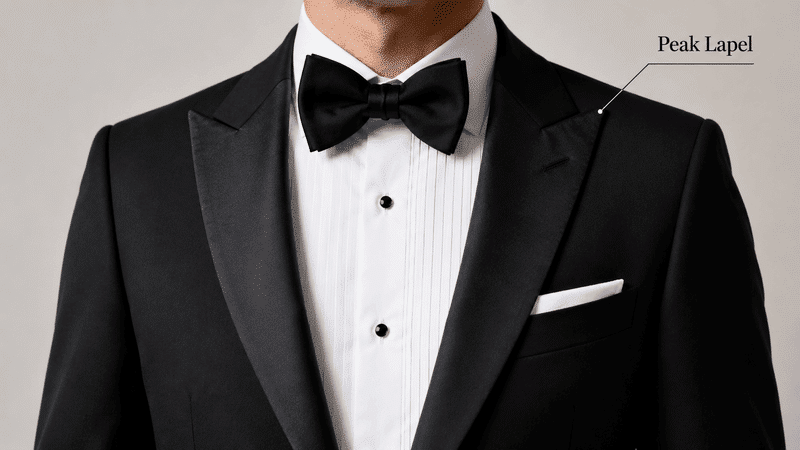
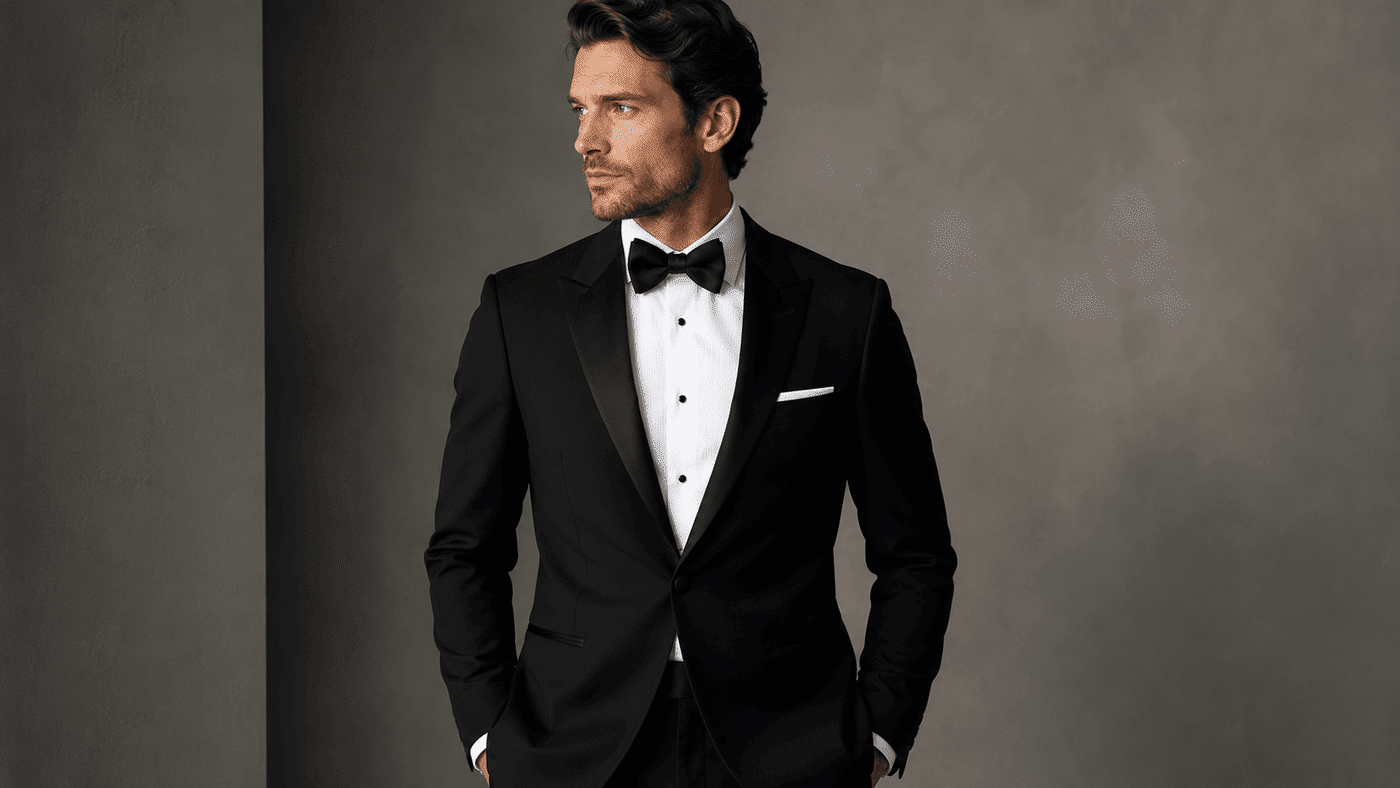
Now move to the strongest shape in formalwear. A peak lapel rises outward and upward, ending in a point that aims toward the shoulder. That angle changes the entire front of the jacket. Peak lapels usually run about 3.5 to 4.5 inches wide. The extra width adds breadth across the chest and shoulders. It gives the chest more presence.
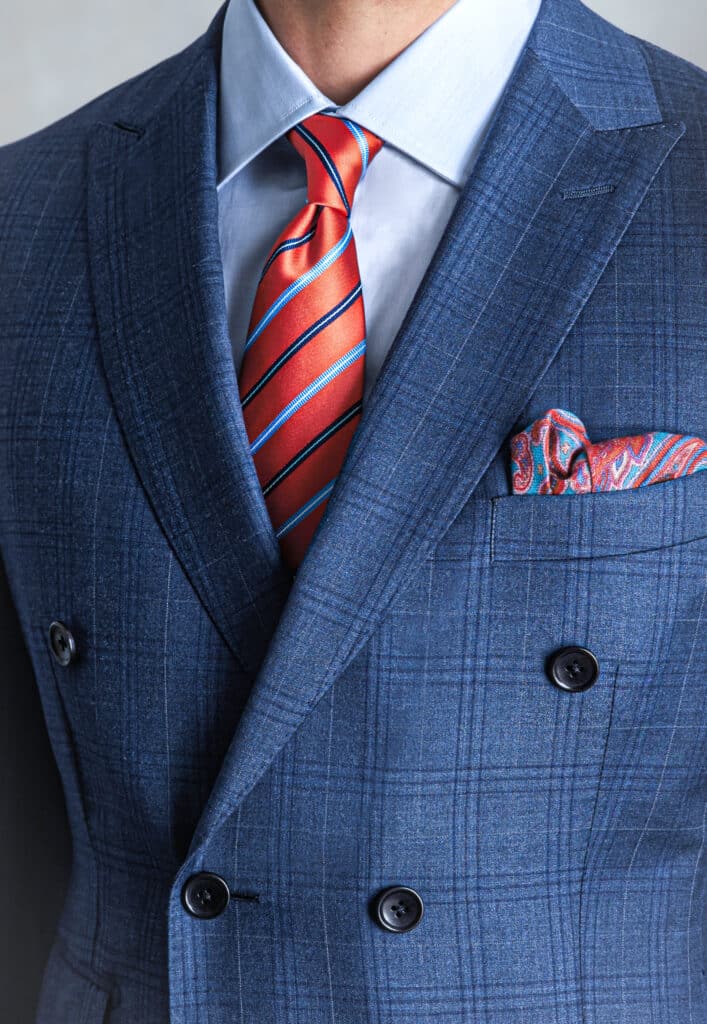
The peak lapel comes from the formal coat tradition of the 19th century. Tailcoats and morning coats were used long before they moved onto dinner jackets. White-tie tailcoats still use peak lapels, which tells you where this style stands in the order of formality. Peak lapel is the most formal style among all tuxedo lapel styles.
Best for: men who want the sharpest formal line, the strongest chest, and the most traditional answer to black tie.
A peak lapel tuxedo works at any black-tie event. It is very good for formal evening weddings. It is the natural choice for double-breasted coats.
Notch Lapel
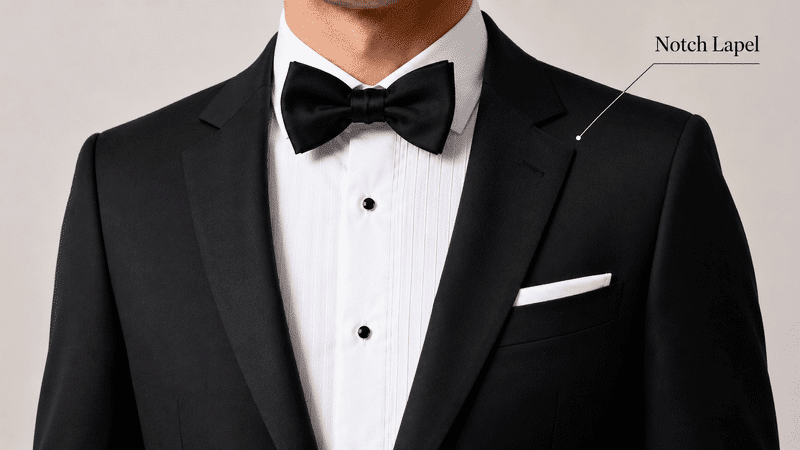
The notch lapel is the shape most men know best, as it has long been the standard on business suits. It has a V-shaped cut where the collar meets the lapel.
On a tuxedo, it is a newer, less formal choice. It is not wrong. It appears more like a suit than an evening dress. That makes it a reasonable option for semi-formal weddings, cocktail events, and dinners without a strict dress code.
Best for: men who want one jacket that can move between semi-formal and evening wear
Most notch lapels fall between 2.5 and 3.5 inches. The shape is balanced and easy to wear, which is why it flatters many builds. Still, in a custom tuxedo, there is usually little reason to choose notch unless you want a less formal look.
Satin vs. Grosgrain Tuxedo Lapels
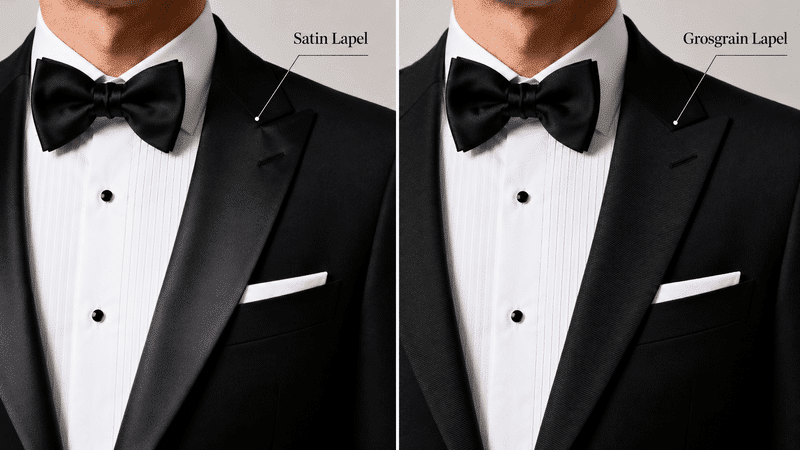
Lapel shape gets most of the attention. The facing material matters just as much for the overall tuxedo look.
Satin has a smooth surface and a brighter sheen. Under evening light, it reflects more. In photographs, it even looks more glamorous. That is one reason satin remains the most common tuxedo facing. It works on shawl, peak, and notch lapels. It looks especially good on a shawl because the curved edge catches light in one clean sweep.
Grosgrain has a ribbed texture and a matte finish. It does not flash the same way satin does. Many old-school houses on Savile Row have long treated silk grosgrain as the more restrained formal option. A grosgrain peak lapel on a black or midnight-blue tuxedo has real depth. It feels less glossy and more assured.
Satin feels richer under bright light. Grosgrain feels more reserved. The event often decides which finish is right. Evening galas and black-tie weddings can carry satin beautifully. Men who want a calmer front often lean toward grosgrain.
Getting Lapel Width Right: The Proportionality Rule
A lapel can be the right style and still look wrong if the width is off. It has to balance the chest, the shoulders, and the bow tie. If the lapel is too narrow and the bow tie is wide, the front looks pinched. If the lapel is too wide on a narrow chest, the coat can swallow the wearer.
Good starting points are:
- 3.5 to 4.5 inches for peak lapels.
- 3 to 3.5 inches for shawl lapels.
- 2.5 to 3.5 inches for notch lapels.
Men with a chest of 38 inches or under may like a lapel close to 2.5 inches, though face width and shoulder shape still matter.
The most common mistake is the too-slim lapel. It makes the tuxedo look dated almost at once. A slightly fuller lapel feels current, but the safest long-term choice is still in the middle. Around 3 to 3.5 inches works on many men and outlasts short trends.
Lapel width should never be determined from a size chart alone. It should be judged on your chest, your face, and your posture. A tuxedo needs a master fitter. He will judge the lapel width, the gorge height, and the button stance as one composition.
Which Tuxedo Lapel Style Suits Your Build?
No lapel style is banned for any build. The question is proportion. That is where a fitting changes the result. A well-cut jacket can make the same lapel look completely different on men depending on their build.
Athletic or Broader Build
A wider peak lapel usually looks excellent here. It echoes the shoulder line and sharpens the drop to the waist. A shawl lapel can also work very well if the width has enough presence to match the chest.
Slim or Narrow Frame
A shawl lapel often suits a lean build because the curve stays elegant without adding bulk. A slim peak lapel can also work nicely. What you want to avoid is an oversized lapel that dominates the torso.
Shorter Stature
Peak lapels often help because the upward line pulls the eye up. Gorge height matters too. Set the gorge a bit higher, and the upper body looks longer. Very wide lapels can shorten the front, so keep them in scale.
Taller Frame
Tall men can wear all three lapel styles well. Shawl lapels often look graceful on height because the curved line reads long and clean. Wide peaks can also work, though you need to ensure the coat does not look too aggressive.
Choosing a Tuxedo Lapel for Your Wedding
Wedding tuxedos need the same discipline as any black-tie coat, with one extra factor. They will live in photographs for years.
For a formal evening wedding, peak and shawl lapels both work beautifully. Peak gives the groom more presence. The shawl lapel gives him a softer line. In a ballroom or cathedral setting, both feel right at home.
A groom can also set himself apart from the rest of the party. One clean way to do that is a peak lapel for the groom and a simpler lapel for the groomsmen. The distinction has to feel intentional. Random lapel mixing never looks good in photos.
Venue matters too. A garden wedding with a relaxed dress code can support a notch lapel tuxedo. A black-tie reception at night calls for a peak or shawl lapel. For the facing cloth, satin looks richer at night and in colder months, while grosgrain stays understated all year.
The safest move for group photos is consistency. Keep the lapels in the same style unless there is a clear reason to separate the groom.
Summing Up
Go back to that first moment by the mirror. The tuxedo that felt right was probably the one with the right lapel that suited your face. The width matched your build, and the front of the coat held together.
You don’t need to memorise every rule. Alan David Custom has guided men through this decision for five generations. We take measurements with a master fitter and cut the lapel, the button stance, and the sleeve balance for the man wearing the coat.
Start with custom tuxedos or view our wedding dress page. If you want to see the collection in person, visit our New York showroom. Book an Appointment and let us make a tuxedo that fits in every sense.