White Tie vs Black Tie: What’s the Difference?
Many men assume that white tie and black tie are similar. They are not. The difference is bigger than it seems, and the rules don’t overlap much. A tuxedo can feel spot-on at a gala, then suddenly too casual at a state dinner. A tailcoat, on the other hand, fits a formal banquet perfectly but will look out of place at a black-tie wedding.
That is why you should learn what matters for each dress code. Formal clothing has its own rules, and those rules are still followed in rooms where protocol counts. If you show up in the wrong dress, people will notice.
In this guide, we’ll break down exactly what each dress code requires for men, so you know precisely what to wear, when, and why.
Where Did These Dress Codes Come From?
White tie and black tie both originate from the 19th-century European evening dress. White tie came first. It developed from court dress in the Regency and Victorian periods, then settled into full evening wear for state dinners, royal balls, and diplomatic occasions. It was formal by design, and it stayed that way.
Black tie came later. Hosts wanted something less ceremonial for private dinners and evening social life, so the dinner jacket entered the picture. That gave men a slightly easier option that still respected formal standards.
Today, white tie is rare. Most men will never need it, though it has not vanished. Black tie is now the term most people use for “very formal.”
White Tie: The Pinnacle of Formal Dress
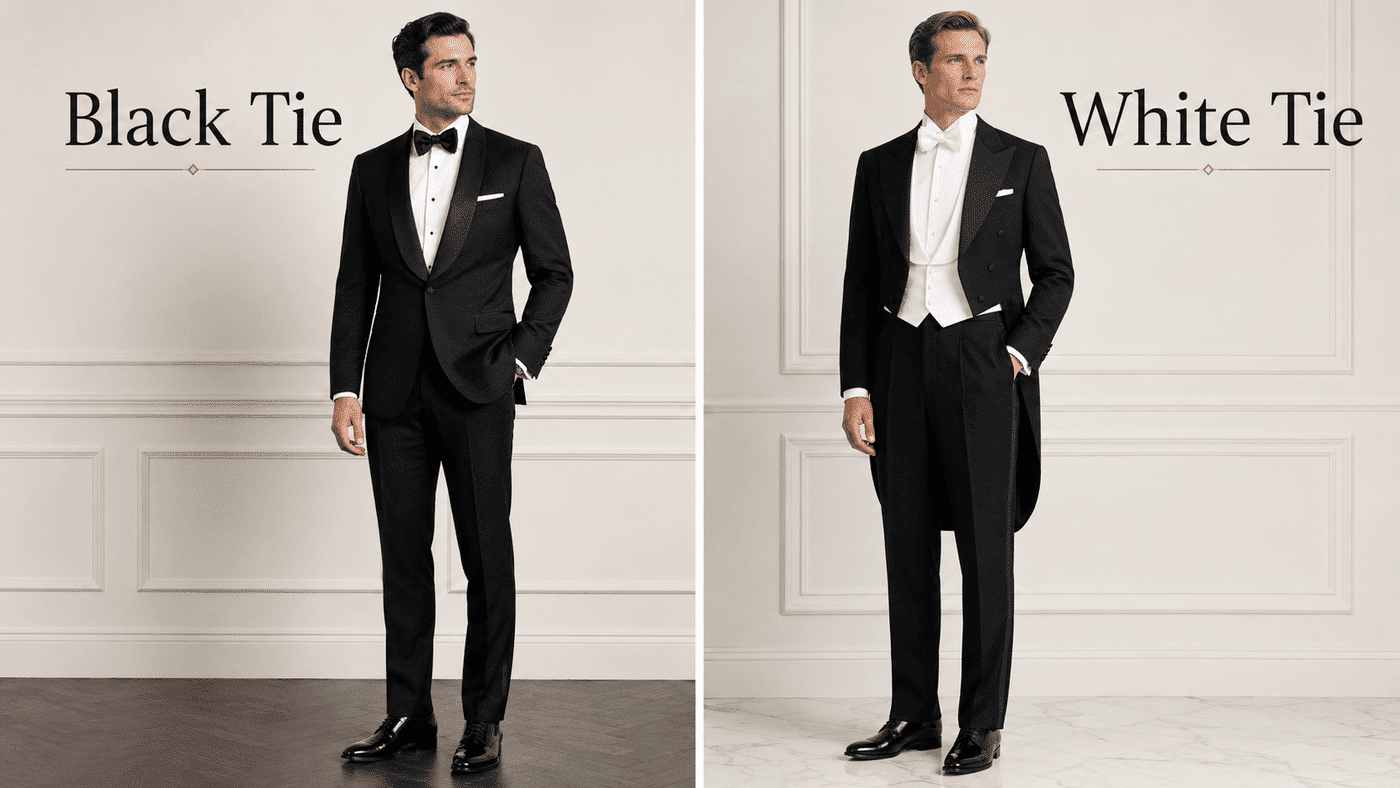
White tie, also called full evening dress, is at the top of the formal scale. It is not “extra fancy black tie.” The rules are fixed. There is almost no room for improvisation.
What Men Wear to a White Tie Event
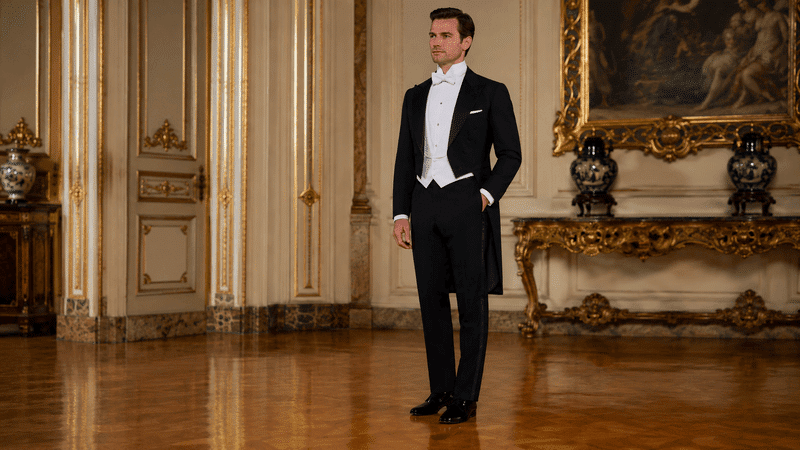
The centerpiece of the white-tie dress code is the tailcoat. It is cut away in front and finished with long tails at the back, usually to the back of the knees. The cloth is black barathea wool. The lapels are peaked and faced in silk. This is not a tuxedo jacket, and it cannot stand in for one.
Under the coat, a white evening shirt with a stiff marcella or pique bib front. The collar is usually a wing collar. The shirt should hold a clean line across the chest. You then wear a white low-cut waistcoat in pique. It sits lower than most men expect, and it is meant to show the shirt front above it.
At the neck, you wear a white bow tie, hand-tied, in silk or cotton pique. Clip-ons and ready-made ties miss the point.
The trousers are black and cut from matching cloth. They carry a double satin stripe down each side. They sit on braces, never a belt. A belt cuts the line of formal evening trousers and adds bulk where you do not want it.
The proper choice for white tie is black patent leather Oxford shoes. Plain, polished, and sharp. Jewelry stays restrained. Mother-of-pearl studs and cuff links are the usual finish. White gloves are optional. A top hat may be worn for arrival, then removed indoors.
When is White Tie Required?
White tie events are narrow in scope:
- State dinners hosted by heads of state still call for it.
- Royal banquets and court receptions may require it.
- A small group of opera opening nights, charity balls, and debutante balls still use the code.
- From time to time, very formal private balls do as well.
This is not wedding attire in the normal sense. A standard wedding, even a grand one, does not call for white tie unless the hosts say so. And if your invitation says black tie, do not decide to “go one step better” with white tie. That is not better. It is wrong for the event.
Black Tie: Elegant and Classic
Black tie is the formal dress code that appears at evening weddings, charity galas, award dinners, New Year’s Eve parties, theater openings, and formal corporate events. The rules still matter, yet black tie allows a touch more latitude than white tie.
What Men Wear to a Black Tie Event
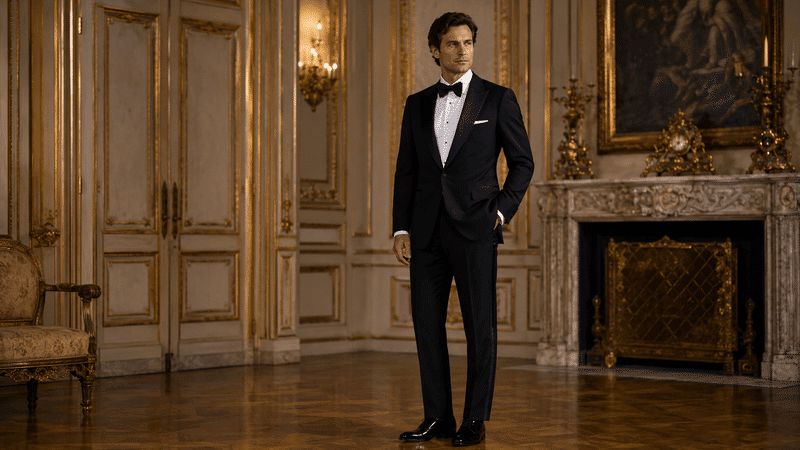
A tuxedo is the foundation for black tie. The jacket should be black or midnight navy, usually single-breasted with one button. The lapels should be peaked or shawl, faced in satin or grosgrain. That detail is what separates a tuxedo from a regular suit.
The trousers match the jacket and have a single satin stripe down the outer seam.. They should be worn with braces, not a belt. Formal trousers should sit neatly at the waist and drop straight down the leg.
The shirt is white and can have a pleated front or a plain bib front. A turndown collar is common. A wing collar also works if the shirt and bow tie are right. At the neck, the proper choice is a black, hand-tied silk bow tie. A pre-tied version is acceptable for black tie, though it never looks quite as good as one tied by hand.
Shoes should be black patent leather or very well-polished black Oxfords. A white pocket square sits well in the breast pocket. Cuff links work nicely. A black cummerbund or a low-cut black waistcoat may be added, though you do not need both.
Fit matters as much as the garment itself. A proper custom tuxedo removes the rental problems and poor fit. If you want to see how our fittings work, you can read about our fitting method and how the custom suit process works.
Black Tie Optional and Creative Black Tie
Black tie optional causes endless confusion. It does not mean casual. The host is hoping for tuxedos, but will accept a dark suit. If you have a tuxedo, you should wear it. If not, go with navy or charcoal, a white shirt, and a simple tie. It should stay closer to black tie than to cocktail.
A dark custom suit may cover black tie optional, but it does not replace a tuxedo at a true black tie event.
Creative black tie gives you room to show some taste, but the base stays formal. A velvet dinner jacket can work. So can a richer lapel shape or a subtle midnight fabric. Jeans do not. Loud sneakers do not. Novelty accessories do not. The code still asks for an evening dress with polish.
When is Black Tie Appropriate?
Black tie fits a wide range of evening occasions:
- Weddings use it often when the hosts want a higher standard.
- Charity galas and museum dinners often call for it.
- Award ceremonies, opera nights, formal holiday parties, and business events.
If the room is grand, the dinner is late, and the invitation names black tie, the tuxedo is the correct answer.
White Tie vs Black Tie At a Glance
If you need the quickest answer to the tuxedo vs tailcoat question, this is it. The table below shows where the two codes part ways.
| Category | White Tie | Black Tie |
| Formality level | Highest, full evening dress | High formal evening dress |
| Jacket | Black tailcoat with tails | Black or midnight navy tuxedo jacket |
| Trousers | Black, double satin stripe, worn with braces | Matching trousers, single satin stripe, worn with braces |
| Shirt | White stiff bib front shirt with wing collar | White dress shirt with pleated or plain front, turndown or wing collar |
| Tie | White pique bow tie, hand-tied | Black silk bow tie |
| Shoes | Black patent leather Oxfords | Black patent leather or polished black Oxfords |
| Waist covering | White low-cut pique waistcoat, required | Black cummerbund or black low-cut waistcoat, optional |
| Flexibility | None | Some, within formal rules |
| Events | State dinners, royal balls, top-level gala evenings | Weddings, galas, award dinners, opera, formal parties |
| Frequency | Rare | Common |
The Most Common Formal Dress Code Mistakes Men Make
The most common mistake is easy to spot. Men often wear a regular black suit to a black tie event and assume the color does all the work. It does not. The attendees see the missing silk lapel facing, the wrong trouser finish, and the wrong shirt.
Another common mistake comes from the neck up. Men spend good money on a white tie ensemble, then finish it with a ready-made bow tie. At black tie, a pre-tied bow tie may pass. At white tie, it looks flat and careless.
Many read “optional” and hear “casual” for black tie events. That is how they end up in a lounge suit while the room fills with tuxedos. If the invitation gives you a choice, pick formal.
White tie brings its own errors. Men skip the white waistcoat, or worse, swap in a black one. Others see the words “white tie” and reach for a white dinner jacket. That jacket belongs to a warm-weather black tie. Some men wear a tuxedo to a white tie event. A tuxedo at white tie reads underdressed at once, much like a business suit at a black tie gala.
Reading Your Invitation: White Tie, Black Tie, or Something Else?
To avoid these mistakes, you should learn to read and understand the dress code in the invitation. Start with the exact wording on the card:
- If it says white tie, take it literally. Full evening dress. No shortcuts.
- If it says black tie, wear a tuxedo. If it says black tie optional, the tuxedo still stands as the preferred choice, with a dark suit accepted if needed.
- If the invitation says formal and the event takes place in the evening, lean black tie unless the host or venue suggests a softer code.
- If the wording is vague, ask. A quick call to the host, planner, or event office can spare you a very public mistake.
White tie events almost always say so clearly. Hosts know guests need time to prepare. If the invitation does not state white tie, it is almost certainly not white tie.
Knowing the Code Is Half the Battle
White tie is full evening dress with no flexibility. Black tie is the tuxedo standard most men will actually use. Once you know that difference, the rest becomes much simpler. You stop guessing. You dress with purpose, and the room reads it at once.
When the invitation calls for your best, the garment should be made for that moment.
At Alan David, we have been making custom tuxedos and evening tailcoats in New York City since 1913. Five generations of work stand behind the cut, the fittings, and the finish. Our Perfect Fit Guarantee and Free Lifetime Alterations exist for one reason: you should feel right in the garment now and for years to come.
Book a consultation at our Madison Avenue showroom. Rush service is available.