Should You Rent or Buy a Wedding Suit? Here’s How to Decide
Choosing a wedding suit is hard enough without wondering if you’re making the wrong financial decision. This choice is about more than the first price you see. When you rent, you might save money, but compromise on fit. When you buy a suit, you spend more upfront but leave with a suit that’s yours to keep.
In this guide, we will compare cost and fit, covering cost over time and long-term use, so you can weigh your decision.
What Renting and Buying a Suit Involve
Renting a suit for a wedding usually means you receive a full outfit for short-term use. A rental package may include:
- Jacket and trousers
- Shirt
- Tie
- Vest
- Shoes
- Cufflinks
The exact items depend on the rental company and package. You wear the suit for the event, then return it within the set window.
This can help when the wedding party needs a consistent look. It can also remove storage and cleaning needs.
The trade-off is that the suit was not made from measurements. It was built to fit a range of men within standard sizes.
Buying a wedding suit covers a much wider field. A groom may buy off the rack from a store. He may order a made-to-measure suit that adjusts an existing pattern. He may also commission a true custom suit, cut from an individual pattern and fitted by a master fitter.
These are not the same product, though people often group them together.
- Off-the-rack buying is the fastest option. You choose an existing garment and have it altered where possible.
- Made-to-measure starts with a standard block. The maker then adjusts the measurements to better fit the client.
- True custom bespoke work begins with the body. The fitter accounts for posture, shoulder slope, stance, and balance. The cutter and fitter account for the person, not just the size.
The difference between made-to-measure and bespoke affects price, timing, comfort, and how the suit looks in photos.
If you are comparing wedding suit rental vs custom suit options, compare the full process. A rental solves short-term use. A custom suit solves fit and future wear.
The True Cost of Renting vs. Buying a Wedding Suit
Rental Costs
Most suit and tuxedo rentals range from $100 to $250 for a full package. The price depends on the garment, location, rush timing, and accessories.
National rental brands often publish prices in this range. The Black Tux lists wedding rentals starting around the low $200s. Large retailers such as Men’s Wearhouse publish rental package pricing by style and location.
Buying Costs
Buying a suit can cost less or more, depending on how it’s made. An off-the-rack suit can start around a few hundred dollars at major retailers. A made-to-measure or custom garment costs more because the process includes:
- Fitting
- Pattern work
- Cutting
- Sewing
- Alterations
Alan David currently lists custom suits starting at $1,395. The final price depends on fabric and construction.
Cost Per Wear
The clearest way to compare rent vs buy wedding suit costs is cost per wear.
If you rent once for $200, your cost per wear is $200. If you buy a $600 suit and wear it four times, your cost per wear drops to $150. If you wear it ten times, the number drops again.
That math is why many grooms who attend weddings, formal dinners, work events, or holiday gatherings tend to buy.
Costs That Can Come Later
Rentals can carry charges that appear late in the process, such as:
- Late return fees
- Damage or cleaning fees
- Rush fees for last-minute orders
Buying can also bring later costs. A suit that fits poorly at the start may require more alterations over time.
Weight change can affect the waist, seat, chest, and sleeve length. A well-fitting suit reduces the need for later repairs because it starts with a better fit.
Cost alone gives you one answer. Fit may give you another.
How Renting and Buying Compare on Fit and Quality
A rental suit must serve many body types. That is the nature of the business. The jacket may fit the chest, but not the shoulder. The trousers may fit the waist, but sit poorly through the seat. One sleeve may show too much shirt, while the other shows too little.
Small Fit Issues Show in Photos
Watch for these common rental fit problems that often become noticeable in photos:
- Pulling across the chest or biceps
- Shoulder divots or wrinkles near the sleeve head
- Trousers that bunch at the shoe
- A jacket collar that sits away from the shirt collar
- Uneven sleeve length
Buying Gives You More Control
A purchased suit gives you more control over fit. Off-the-rack garments can be altered, though the original cut still sets limits.
Made-to-measure gives more room to adjust length, width, posture, and proportion. True custom work gives the highest level of control because the garment is cut for one man from the start.
Measurements Must Be Taken Properly
Measurements should come from a trained fitter, not a salesperson. Never allow a salesperson to take your measurements for a custom wedding suit.
A master fitter knows how posture affects the garment. Shoulder balance, sleeve pitch, button placement, and trouser line all depend on trained judgment.
Button Placement and Sleeves
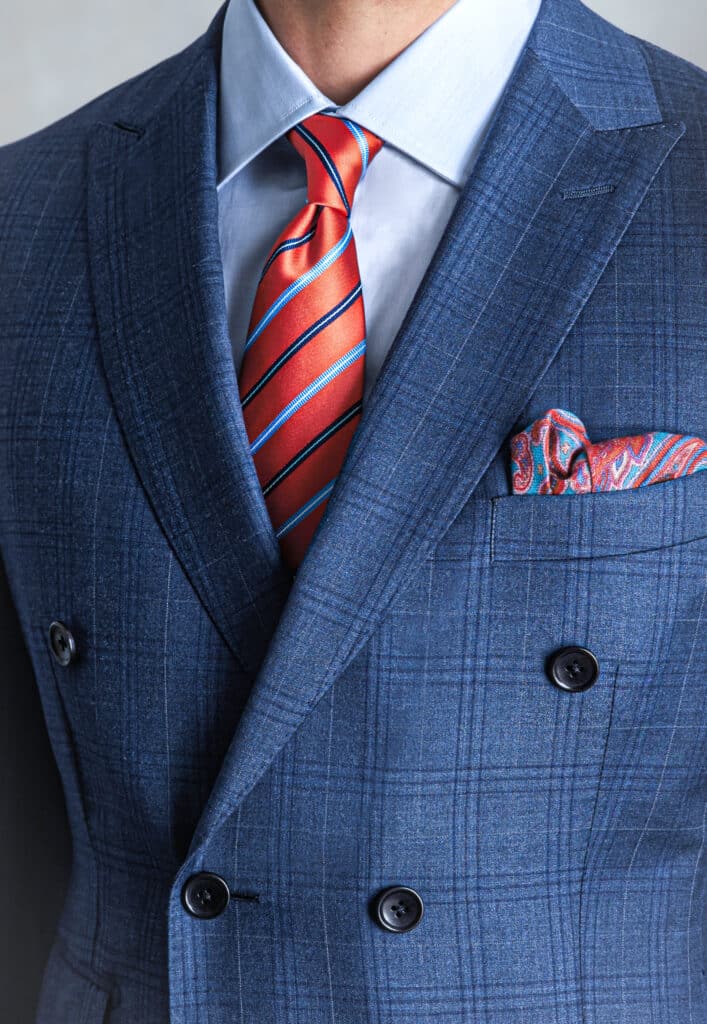
The top button on the jacket should close at the fullest part of the stomach. If it sits too high, the jacket can make the groom look heavier. If it sits too low, the shirt shows too much, and the front looks out of balance.
This matters even more on a tuxedo, where clean proportion is part of the formal look.
Sleeves should attach symmetrically. The cloth should fall cleanly from shoulder to wrist. There should be no pulling through the bicep. There should be no twisting near the upper sleeve.
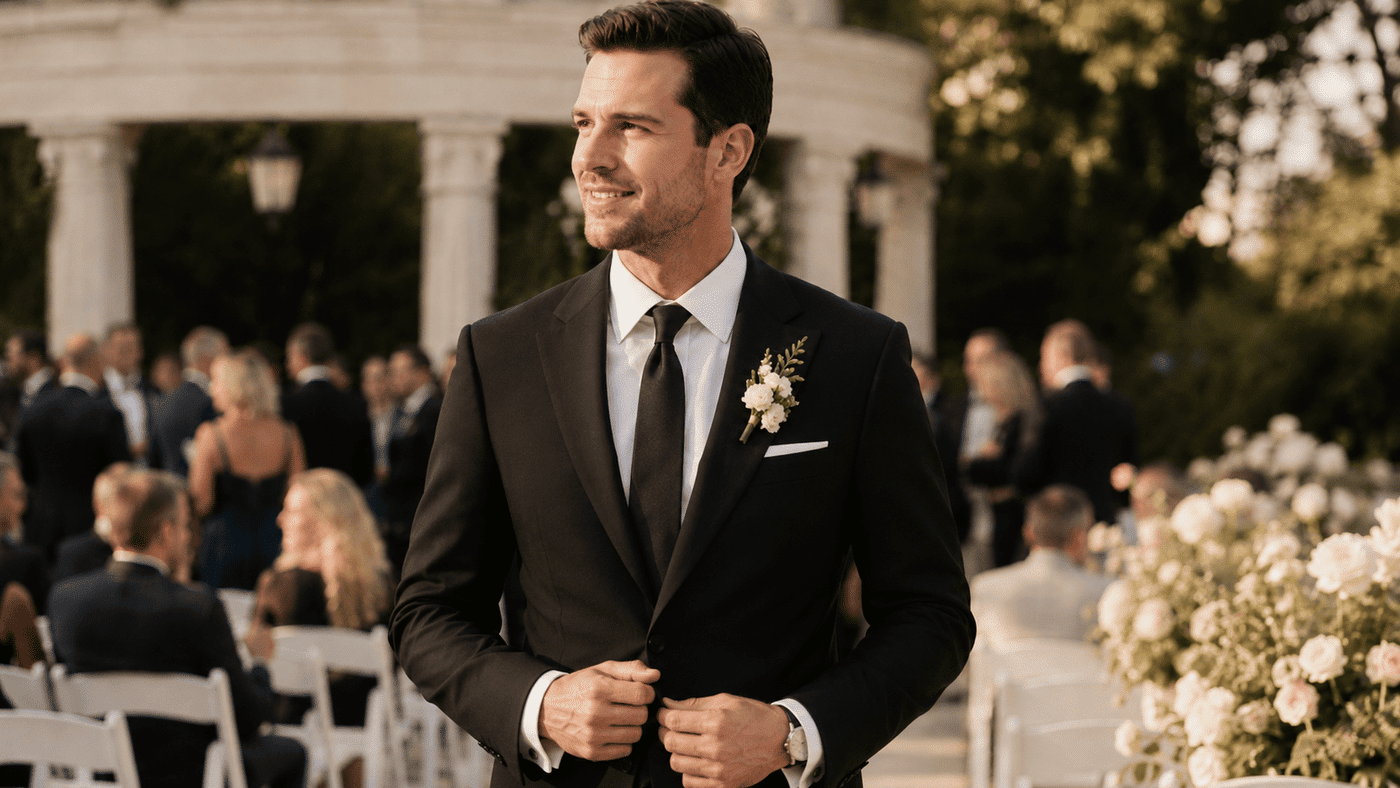
These details may seem small in the fitting room. They become obvious in wedding photos. A wedding suit does not need to be flashy. It just needs to fit.
Convenience and Coordinating a Wedding Party
Rentals can simplify things for a large wedding party. The groom selects one style, and then each groomsman is measured in person or submits his size online.
Many rental companies can ship to different cities, which helps when the group is spread across several states. It keeps the look consistent without asking everyone to shop on their own.
The convenience comes with deadlines:
- Each groomsman must submit sizes on time.
- Each garment must arrive early enough for corrections.
- Each rental must be returned after the wedding.
- Late returns may lead to extra fees.
That last point matters. Returning a suit on Monday morning can become one more task after a long wedding weekend.
Buying gives each groomsman a suit he can keep. It also gives the group more long-term use, especially if the color works after the wedding.
Navy, charcoal, and mid-gray are safe choices. They wear well beyond the ceremony.
The trade-off is control. If every groomsman buys his own suit without clear direction, the group can look mismatched.
One navy suit may read bright blue. Another may look almost black. Lapels, buttons, cloth weight, and trouser fit can all vary.
Common Problems to Avoid
Wedding forums often show the same issues. One groomsman waits too long to order. Another lives out of state and cannot attend a fitting.
Some men have body types that do not suit rentals well. A suit may arrive too short, too tight, or in the wrong shade.
A groom can avoid many of these problems with clear direction:
- Choose one fabric or one exact suit source.
- Set a fitting date early.
- Give out-of-town groomsmen a clear measurement process.
- Leave time for corrections.
Timing and Rush Orders
Renting can work closer to the date, but last-minute sizing leaves little room for error. Off-the-rack buying can also move quickly if the size is available.
Made-to-measure and custom suits usually need weeks. The process includes measurement, cutting, making, fitting, and final adjustments.
Some custom houses can shorten the timeline for urgent weddings. Alan David offers an accelerated custom process that can complete certain suits in as little as ten working days.
That schedule still requires decisive planning. Rush work should never mean rushed measuring.
Long-Term Value and Sentimental Worth of Suits
A purchased wedding suit can become part of your regular wardrobe. That is where buying starts to make sense beyond the wedding budget.
A navy or charcoal suit can work for many occasions, including:
- Another wedding
- A business dinner
- A formal holiday event
- An anniversary dinner
- Family portraits
The more you wear it, the more the purchase pays back.
A tuxedo has fewer uses than a suit. Still, it can be a wise purchase if you attend black-tie events. If your calendar includes galas, formal dinners, charity events, or New Year’s Eve affairs, owning a properly fitted tuxedo can feel better than renting each time.
There is also a private side to the decision. A rental goes back in the bag after the wedding. A suit you own stays with you. It holds a bit of the day: the ceremony, the first look, the photographs, the dinner.
Brides often keep their gowns for that reason. Grooms tend to think more practically, but a good wedding suit can carry meaning too.
If it fits well, it can be pressed, adjusted, and worn again. It becomes part of your social life, not just a receipt from a rental counter.
A Quick Way to Decide Between Renting and Buying a Suit
The right answer depends on use, fit needs, timing, and budget. Use this comparison as a starting point before you decide.
| Factor | Renting | Buying |
| First cost | Lower first bill, often near $100 to $250 for many packages | Higher first bill, from off-the-rack prices to custom work |
| Fit | Standard sizing with limited changes | More control through alterations, made-to-measure, or custom cutting |
| Timeline | Can work closer to the date if sizes are ready | Needs more planning, especially for custom work |
| Wedding party | Easier to match through one rental source | Better long-term use, but needs clear direction |
| After the wedding | Returned after the event | Worn again for work, events, or anniversaries |
| Risk points | Late fees, sizing errors, and damage charges | Alteration costs if the first fit is poor |
If you wear suits often, you will usually get more from buying a suit. It can be worn again for weddings, dinners, work events, and holidays. If it will only be worn once, a rental may be the simpler choice.
Broad shoulders, a fuller stomach, a strong seat, or one lower shoulder can make rentals difficult. In those cases, buying often gives the fitter more room to get the garment right.
For a large wedding party, rentals can help keep the group consistent. Buying can work well too, but the requirements need to be clear. Choose the color, fabric, and other details early.
Final Thoughts
The rent-or-buy wedding suit choice rests on a few simple facts. A rental can control the first bill and help with group coordination. A purchased suit can fit better, last longer, and carry meaning after the wedding day.
Fit matters more on a wedding day. The suit will be in the ceremony photos, the portraits, and the moments people keep. If you are thinking about buying, try on a suit that has been fitted by a real tailor. You will feel the difference right away.
For over a century, Alan David has fitted grooms with calm, careful work guided by five generations of experience. Visit our New York showroom for wedding garments, custom tuxedos, or a no-pressure conversation about your suit. You may also book an appointment or begin with a virtual consultation.