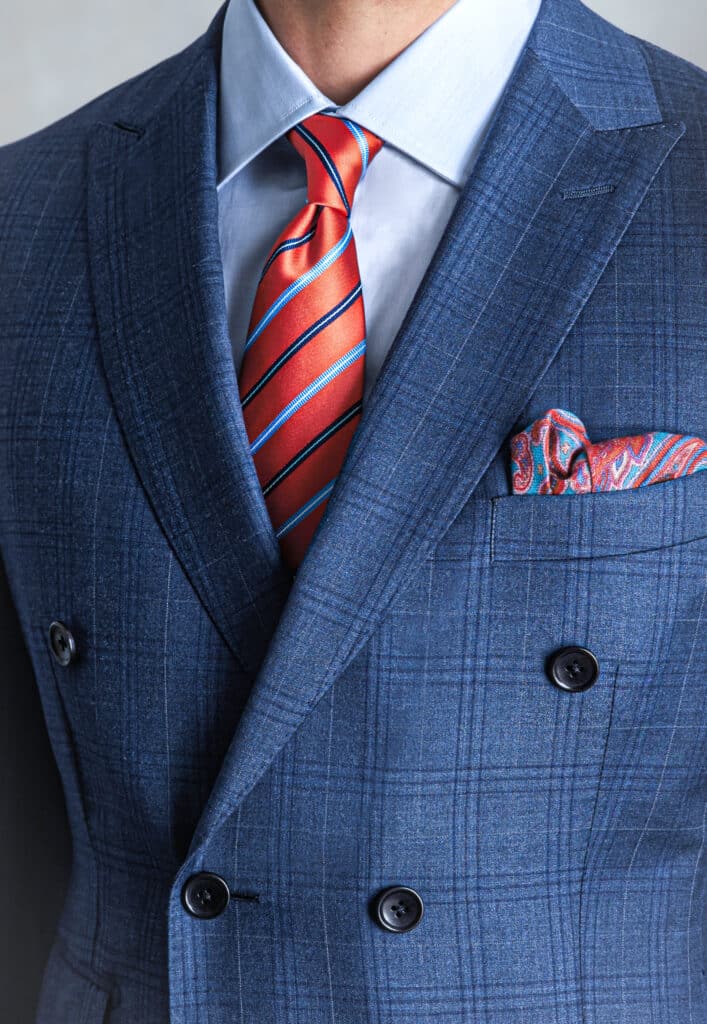
How to Wear a Suit: Rules for Modern Gentlemen
Owning a suit and wearing one well are different skills. Good cloth helps, but proportion and sound judgment matter more.
You can often tell when a man feels comfortable in his suit. The jacket sits cleanly. His trousers fall as they should. Nothing looks forced or needs constant adjustment. Price alone cannot create that effect. The suit must suit your build, and you need to know how each part should be worn.
This guide covers fit and buttoning, explains shirt-and-tie pairing, and closes with accessories and dressing for the occasion.
Wear a Suit That Fits You
A suit can be made from the finest fabric available, but if it doesn’t fit your body, it rarely looks good. No styling choice can rescue a suit that fits poorly.
Check the Shoulders First
The jacket’s shoulder seam should end where your natural shoulder ends. It should not extend past the edge or stop short of it.
The sleeve head should sit cleanly. There shouldn’t be:
- Dimples or dents
- Pulling
- Excess cloth beyond the shoulder
It’s important to get the suit’s shoulders right because they are the hardest part of a jacket to alter. Major changes can affect the chest and sleeve position.
Custom suits are made based on your measurements, so you won’t have that issue. But if you’re buying an off-the-rack suit, always check the shoulders. A skilled alterations professional can adjust much of the remaining garment, but poor shoulders rarely justify the work.
Inspect the Sleeves
Look at the sleeves from both the front and the side. They should hang evenly from your shoulders to your wrists without pulling or leaning in one direction.
If you notice wrinkles across the upper arm or the fabric twists around your arm, the sleeve pitch may be off, or the bicep could be too tight.
Your jacket sleeve should also leave about half an inch of your shirt cuff showing. This narrow line confirms that the shirt and jacket lengths work together.
Examine the Jacket
The jacket collar should rest against the shirt collar without a gap. The lapels should lie flat against your chest. An X-shaped pull around the closed button shows that the waist is too tight.
The top button should close at the fullest part of your stomach. If it sits too high, it can make your middle look larger. If it sits too low, it exposes too much of the shirt and disrupts the jacket’s proportions.
A classic jacket should cover the seat. With your arms resting naturally, the hem will usually fall near your knuckles. Body proportions vary. Use knuckle length as a helpful check, not an exact formula.
Check the Trousers
Your trousers should sit comfortably at the waist without needing a belt to hold them up. The seat should lie smoothly. If you see tight horizontal lines or extra fabric bunching up, the fit needs adjusting.
Through 2026, many men prefer a cleaner hem with a slight break or almost no break. The trousers should still reach your shoes and cover your socks when you stand.
How to Wear the Right Shirt Under a Suit
The jacket gets visual credit from across a room. Up close, people notice the shirt. Its collar frames your face, while its cuffs finish the sleeves. Small errors are easy to notice. A custom shirt that is properly fitted improves comfort as much as appearance.
Check the Collar and Cuffs
A closed collar should allow two fingers between the band and your neck. Fasten the top button with a tie, and make sure the knot sits neatly between the collar points.
Show about half an inch of shirt collar above the jacket and half an inch of cuff below each sleeve.
Match the Collar and Tie
A moderate spread collar works with most jackets and tie knots. Narrow collars suit smaller knots, while wider spreads need a fuller knot.
Choose a Shirt Color
White and pale blue work with most suits. Fine stripes suit many offices, but keep the shirt simple if the suit or tie already has a strong pattern.
Suit Buttoning Rules Every Man Should Know
Suit buttoning rules depend on how a jacket is cut. The fronts, lapels, and waist are shaped to sit in a set position. Closing the wrong button works against that shape.
Two-Button Jackets
Fasten the top button while standing. Never fasten the bottom button. This allows the jacket to open naturally over the hips.
Three-Button Jackets
Follow these rules while standing:
- The middle button stays fastened.
- The top button is optional, depending on the lapel roll.
- The bottom button always remains open.
Double-Breasted Jackets
Keep a double-breasted jacket closed while standing. Its overlapping front forms part of the jacket’s structure. You may unfasten it while seated if it is necessary for comfort.
Check the Button Position
These rules assume the jacket fits and has a suitable button position. The working button should be near the fullest part of your stomach. If it sits too high or too low, correct buttoning will not restore the proper balance.
Never force the jacket closed. The button should fasten without effort, and the lapels should remain flat. If the fronts strain or pull near the button, the jacket needs an alteration or a different size.
Unbutton Before Sitting
Always unbutton your jacket before sitting. A closed jacket will pull across the stomach and lap. It can also crease the front panels. Fasten the jacket again after you stand.
How to Choose and Wear a Tie With a Suit
Your tie should complement your suit. Match its width to the lapels, and avoid very wide or narrow styles.
The tip of the tie should end right around your belt buckle. When you tighten the knot, pinch the fabric slightly to create a small dimple just below it. A four-in-hand knot works well with point and moderate-spread collars. A half-Windsor is a better match for wider spread collars.
Choose the Right Tie Color
Keep the tie darker than the shirt. Reliable pairings include:
- Burgundy or forest green with a navy suit
- Burgundy or navy with a charcoal suit
If the shirt has narrow stripes, choose a solid tie or a larger pattern. A plain tie works best with a strongly patterned suit.
A tie bar is optional. Place it between the third and fourth shirt buttons, and make sure it does not extend past the tie.
How to Choose Suit Accessories?
Accessories should finish the outfit without taking control of it. Use the rule of three as a limit. About three visible accessories, such as a tie with a pocket square and a watch, will usually be enough.
| Accessory | Standard |
| Belt | Choose smooth dress leather about 1 to 1¼ inches wide. Match its color and tone to the shoes. |
| Watch | Keep the case restrained. A leather strap should relate closely to the belt and shoes. Black goes with black, while dark brown works with a similar brown tone. Metal watch bracelets pair with either. |
| Pocket square | Contrast with the tie rather than copying it. A white linen square works with nearly any dark suit. |
| Cufflinks | Wear them only with French cuff shirts. Silver suits most business clothing, while black or mother-of-pearl works well for formal evening wear |
| Lapel pin | Treat it as optional. Choose one small pin and leave the other decorative pieces at home. |
| Tie bar | Keep it shorter than the tie’s width. Place it at mid-chest rather than near the knot. |
How to Wear Suit Trousers, Socks, and Shoes?
A matched suit uses the same fabric for the jacket and trousers. The fabric, color, and surface should be the same. Do not replace one half with a similar piece from another suit. Small differences become obvious under natural light.
Intentional separates belong to another category. A navy jacket with gray trousers can work as smart-casual clothing, but it is not a matched suit. The jacket should have the softer structure and surface expected of a separate.
Match Socks to Your Trousers
Match socks to the trousers rather than the shoes. Navy trousers call for navy socks. Charcoal trousers need charcoal or another close dark gray. This choice extends the leg line and prevents a sharp block of color at the ankle.
Socks should cover the calf so bare skin does not show when you sit. Over-the-calf dress socks stay in place better than short pairs. Fine wool works through much of the year because it regulates temperature and fits comfortably inside a dress shoe.
Your trouser hem should rest cleanly over the shoe. A slight break remains a sound choice for conservative business clothing. A no-break hem can look crisp, but it demands exact length and a narrower trouser opening.
Wearing the Right Suit to Any Event
Let the setting guide your choice before you consider suit color or accessories. Read the invitation, then consider the time of day and venue. If the dress code is unclear, choose the more refined option.
Weddings and Formal Events
Read the wedding invitation closely. A dark navy or charcoal suit works for many daytime and evening ceremonies. Refined wool and a crisp white shirt provide the right level of formality without imitating the wedding party.
Black tie means wearing a tuxedo, not a dark business suit. Wear:
- A dinner jacket with matching trousers
- A formal shirt
- A black bow tie
The jacket’s button position matters. Poor placement can expose too much shirt and make the front look unbalanced.
Avoid clothing that competes with the groom or the wedding party. Choose quiet refinement. For more guidance, visit our wedding suits page.
Business and Office Settings
Navy and charcoal remain dependable choices. Both work with white or pale blue shirts and dark leather shoes.
When it comes to patterns, less is usually more. Small, subtle designs keep the outfit looking polished without drawing too much attention. A simple tie and a plain pocket square are often all you need.
A medium-gray suit can work in a less formal workplace. Brown shoes pair well with medium gray or navy, though more conservative offices may favor black. The fit should remain clean even when the dress code allows more personal choice.
Smart-Casual Events
Smart-casual settings allow lighter fabrics and more texture. You may replace the tie with an open-neck shirt. Loafers can replace lace-up shoes if the trouser length suits them.
Even without a tie, the shirt collar should be firm enough to sit cleanly under the jacket. In warmer months, linen and open-weave wool feel light and breathable. When the weather cools, flannel and brushed wool add warmth and texture. These fabrics create interest naturally, so there’s no need to rely on bold colors.
Fit still sets the standard. An open collar does not excuse a loose neck, and soft construction does not excuse collapsed shoulders. A more relaxed dress code gives you flexibility, not an excuse for a suit that doesn’t fit well.
Wearing a Suit Well Starts With the Fit
Rules give you a sound place to start. But a good suit should never feel ruled by them. When the shoulders sit cleanly, and the jacket follows your shape, the rest becomes far easier. You should be able to stand, walk, and sit without pulling at your clothes. A proper fitting makes that possible.
If you are in New York, book an appointment at our Madison Avenue showroom. Every measurement is taken into account, especially in the shoulder and posture. Experience the care that comes from five generations of suitmaking at Alan David Custom.