How to Style a Men’s Suit?
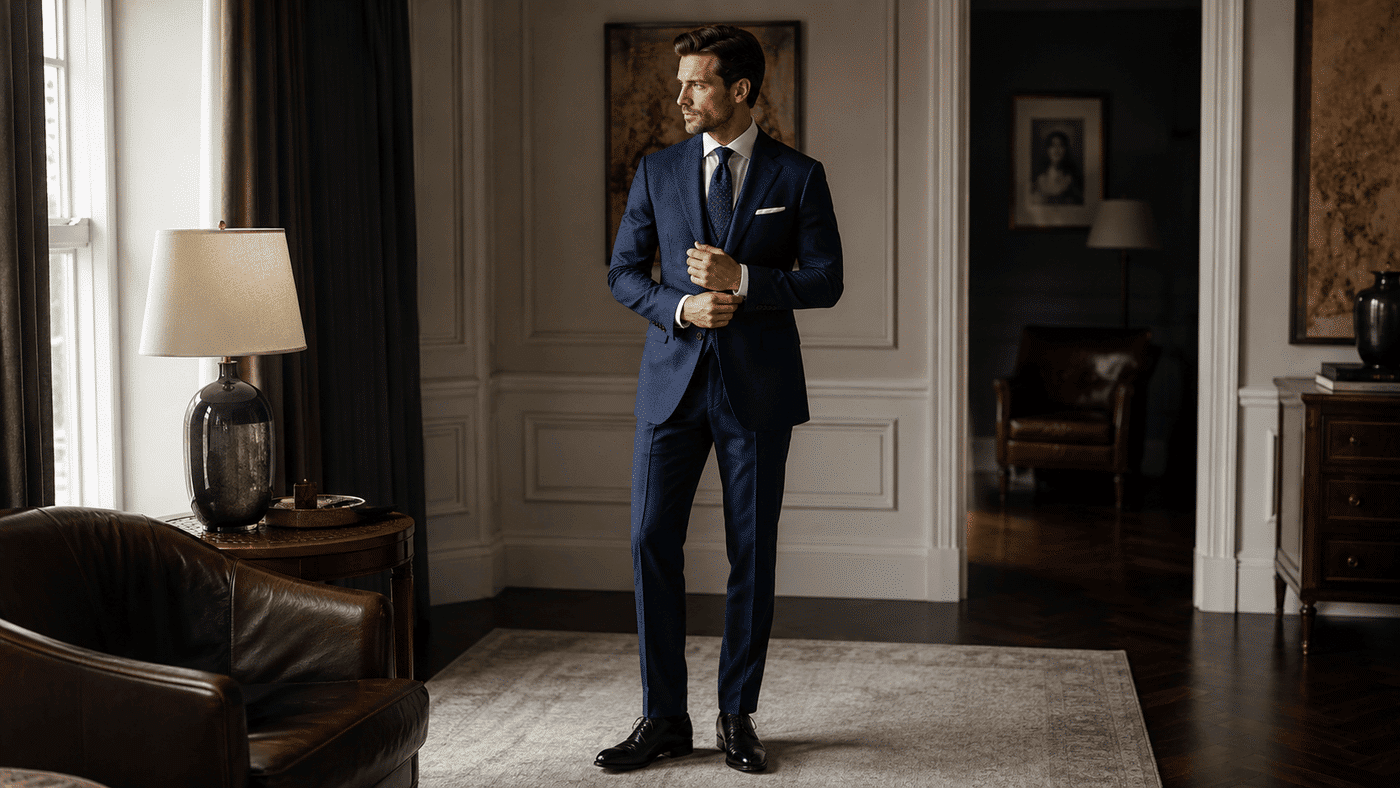
The first time a man puts on a suit that fits him well, he stands a little taller and with a straight posture. His shoulders settle. His hands stop tugging at the jacket. He looks in the mirror and sees confidence. That feeling is what most men want, even if they don’t often know how to get there.
Social media relies on tricks and noise for suit styles. Real style is quieter than that. If you want to learn how to style a men’s suit, start with standards that hold up to the changes of time.
In this guide, we walk through the parts that matter most, starting with fit, then color and fabric, and finally the shirt, tie, shoes, and smaller details that shape the final result.
The Three Zones of Fit
A good fit is judged in a few main areas, and each one affects how the whole suit looks on the body.
Shoulders and Sleeves
The suit’s shoulders tell you most of what you need to know. The jacket seam should sit right at the edge of your shoulder. If the shoulder is too wide, the jacket looks borrowed. If it pulls, then the coat is too small. This is hard to correct later, so it needs to be right from the start.
Sleeve length matters too. You want about a quarter inch of shirt cuff below the jacket sleeve. That small line is one of the marks of a finished look. Both sleeves should hang the same and fall clean from shoulder to wrist without twisting or pulling around the arm.
Chest and Torso
Next comes the chest and torso. When you button the jacket, it should close without strain. You should be able to slide one finger between the buttoned coat and your body.
The top button should close at the fullest part of your stomach. If it’s too high, it makes the body look heavier. Too low, and the shirt looks off balance. On a tuxedo, it stands out even more.
Trousers
Then look at the trousers. The break is the point where the trouser meets the shoe:
- No break looks more fashion-forward.
- A half-break gives the cloth a slight bend and suits most men well.
- A full break creates more drape and looks more traditional.
If you want the safest modern option, choose a half break.
Ready-to-Wear vs. Custom
Off-the-rack suits can work for some men. Most of the time, they need some adjustment. Trouser hems often need work. Jacket sleeves usually need shortening. The waist of the coat may need to be shaped to fit the proportions.
A custom suit removes much of that guesswork. A true made garment accounts for your posture, your shoulder balance, your chest, and the way you naturally stand. That is why the result looks better.
The measurement process matters as much as the cloth. That is where shape, balance, and sleeve hang are precisely corrected. It is the difference between a suit that merely fits and one that looks correct from every angle.
The Core Color Wardrobe
A smart wardrobe does not need ten suits. It needs the right ones.
- Navy is still the most practical suit color a man can own. It looks right during the day, at dinner, and in both business and social settings. If you are buying your first suit, this color is usually the right choice.
- Charcoal gray brings more authority in the office and in formal daytime events. If navy feels open and versatile, charcoal feels a bit firmer. It belongs in any serious rotation.
- Mid-gray softens the mood. It is excellent for interviews, daytime events, and offices that do not require the weight of charcoal. It is easy to pair with other colors.
- Medium blue has become a common choice for men who want a fresher look without stepping too far away from tradition. It feels approachable.
- Brown and other earth tones are more common now. They feel right in spring and summer, and they sit well in offices without a strict dress code. Still, they don’t fit every setting. A brown suit can look sharp at a daytime event, then feel wrong the moment you walk into a formal finance office.
- Black suits need restraint. In daytime business settings, true black often reads too formal. It can also feel close to a funeral dress. Black is best kept for evening events, formal gatherings, or black tie events.
One style seen more often in 2026 is tonal dressing. That means staying within one color family. A navy suit, a pale blue shirt, and a deeper blue tie combination is an easy example. The result feels clean and current.
Best Suit Fabric by Season and Occasion
The fabric changes the whole mood of a suit. For year-round use, wool in the Super 100s to 130s range is a practical choice. If you need one suit for the office, dinner, and the occasional wedding, this fabric usually does the job well.
For spring and summer, lighter wool works well. Linen blends feel cooler and softer in warm weather. Cotton is another good choice when temperatures rise. Both work especially well for outdoor events and look very natural in daylight.
Fall and winter call for more comfort and warmth. Medium-weight wool gives that. Flannel feels softer and richer. Tweed is more casual and textured, with a country note that suits colder months.
More men also ask for stretch wool and other performance blends. That makes sense for long office days and travel. You keep the line of a proper suit and gain a little ease of movement. The cloth should still look like a dress fabric, not activewear.
How to Match a Shirt and Tie With a Suit?
Once the suit is right, the shirt and tie set the tone.
Choosing the Shirt
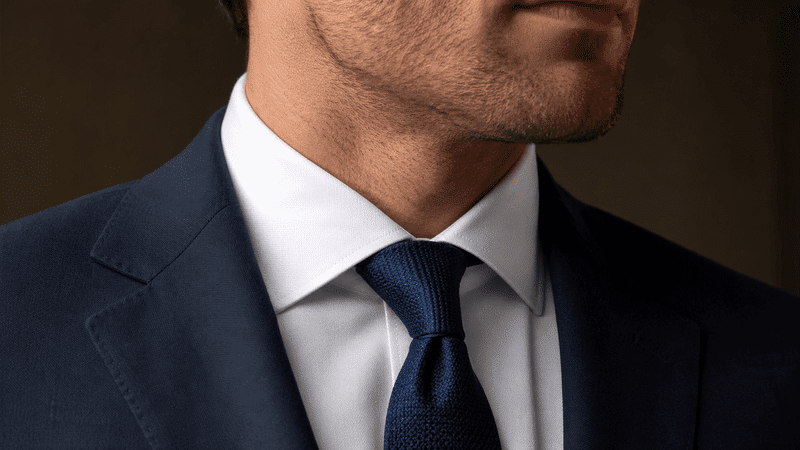
The collar of your shirt should sit cleanly on the neck. Once it is buttoned, you should be able to fit two fingers inside without strain. A custom dress shirt helps because the collar is cut to your neck, not to a generic size.
Shirt color options:
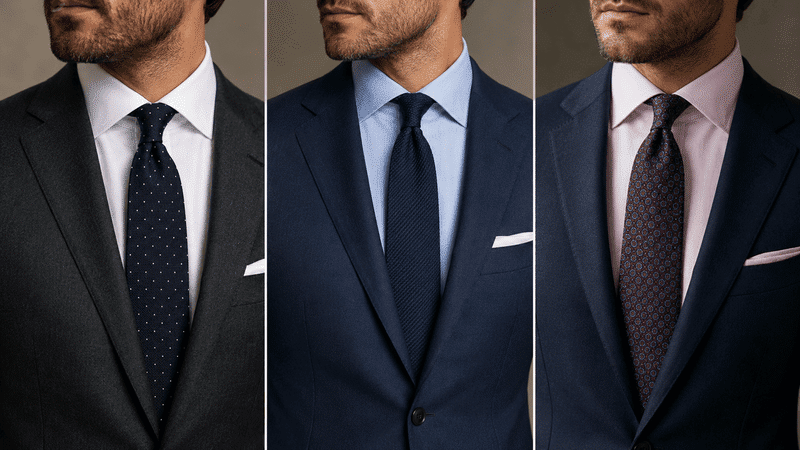
- A white dress shirt is the standard for a reason. It works with every suit color. It belongs at business meetings, formal events, and weddings. If a man is unsure what to wear with a suit, white is the cleanest answer.
- Light blue is softer than white and still very easy to pair. It looks excellent with navy and gray. It also looks natural in business settings.
- Pale pink, lilac, and soft yellow can work very well in social settings. They add some character without taking control of the outfit. If the suit already has a stripe or check, skip these colors.
Cuffs matter too. You want about a quarter inch showing below the jacket sleeve. Barrel cuffs are the daily standard. French cuffs and cufflinks push the outfit into a more formal style.
How to Wear a Tie, and When to Skip It
The four-in-hand knot is still the best all-around choice for a tie. It has a bit of shape and a slight asymmetry that feels natural. A Windsor knot is fuller and more formal. It works well with spread collars and dressier settings.
Color pairing should follow logic, not matching. The tie does not need to be the same color as the shirt or suit. It should relate to them. A navy suit with a white shirt and burgundy tie works because the colors sit well together. A solid tie is usually the safest choice. If the outfit needs a little more character, add a fine stripe or a quiet texture.
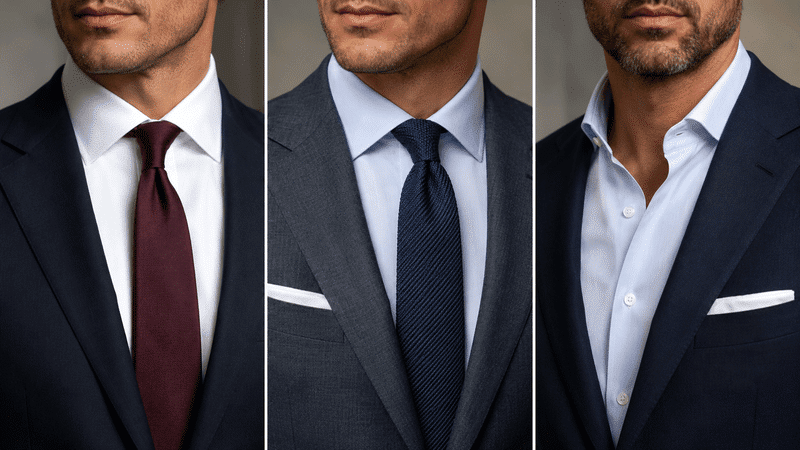
A suit without a tie can look very good if the shirt and fit are right. You can skip the tie for business casual, evening dinners, and less formal weddings. You can add a pocket square here. Even with no tie, a white linen square in a flat fold gives the jacket some finish.
What Shoes to Wear With a Suit
Many men get the suit right and choose the wrong shoes. Here’s what to wear with a suit.
Shoe Styles by Formality
- Oxfords are the dress standard. A cap-toe or plain Oxford works for interviews, formal business settings, and evening wear. Black Oxfords with a dark suit give the strongest, most formal impression.
- Derby shoes are less formal. They still work well with suits.
- The perforated detailing of brogues makes them less formal, but it also gives them personality. They pair well with navy, gray, and brown suits.
- Loafers work well in business-casual attire and at social events. Penny loafers and tassel loafers look best with trousers that have little or no break.
- Chelsea boots can work with a suit too, mainly in cooler weather or evening settings.
No-show socks with loafers can work in summer or at casual events. In dressier situations, socks should usually match the trousers, not the shoes. A burgundy or patterned sock can be a nice touch at a dinner or party. In a conservative office, keep it quiet.
The Belt Rule
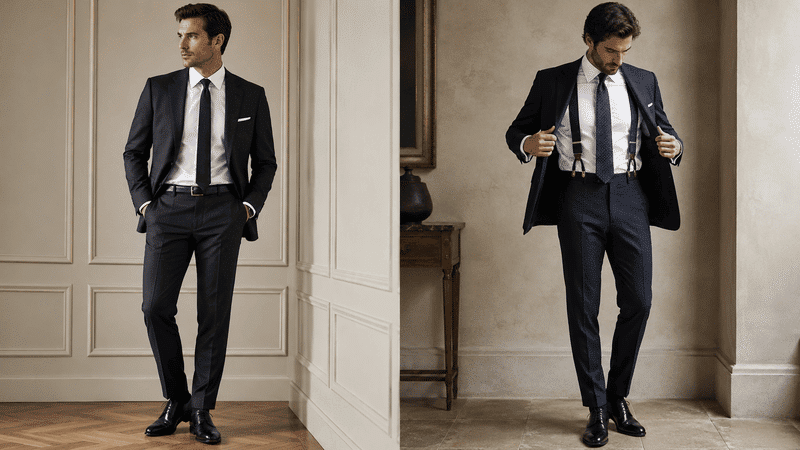
Match the belt to the shoes in both color and formality. Black leather belt with black leather shoes. Brown belt with brown shoes. It’s an old rule but people still follow it.
If you wear braces, skip the belt. Wearing both looks confused. Braces also signal a more intentional approach to dress.
Men’s Suit Accessories
Accessories are an important part of your style that finish the look:
- A dress watch is usually the right watch with a suit. Keep it thin, with a simple dial. Leather works well, though a clean metal bracelet can also fit. Avoid big sports watches.
- A pocket square is useful, though it does not need to appear every day. It should complement the tie, not copy it exactly. A flat fold feels classic and restrained. A TV fold feels neat and modern. A puff fold has more personality and belongs more often at social events.
- A tie bar keeps the tie in place and adds a small line of metal to the shirt front. Place it between the third and fourth shirt buttons. It should never be wider than the tie itself.
- Cufflinks belong with French cuffs. In business settings, keep them simple. For weddings and evening events, you can show a little more character. A monogram or small emblem can work well.
- Lapel pins and boutonnières are best saved for special occasions. A single flower or small pin is enough.
Three accessories are enough. A watch, a tie bar, and a pocket square already give the suit presence. Go past that, and the suit’s authority starts to fade.
How to Wear a Suit for Different Occasions
Black Tie or Formal Event
For black tie, a tuxedo is the correct choice. If the event dress code allows a dark suit instead, wear navy or black with a white shirt and black tie or bow tie. Keep the shoes formal. Skip brogues. Oxfords are right here. Patent leather is also appropriate.
Business Casual
For business casual, you can wear a suit without a tie. You can also split the suit and wear the jacket with different trousers. Texture becomes more useful too, so soft wools and open-weave shirts can enter the mix. Loafers and clean leather boots fit well here.
Wedding Guest
For weddings, if the dress code says cocktail attire, wear a proper suit with a dress shirt, tie, and leather shoes. If the event is more casual, you can dress the suit down slightly. Lighter colors work well for outdoor and summer settings. Darker tones belong more naturally in evening weddings.
The Office / Business Professional
For the office, stay close to the classics. A navy or charcoal suit works best. Add a white or light blue shirt and wear a conservative tie. Choose Oxford shoes. Keep accessories spare. This is the uniform of credibility because it removes distraction.
Casual / Social
For casual settings, you can dress down a suit. Wear the jacket with an open-collar shirt or a fine-gauge knit. That removes some formality while keeping the line of the outfit intact. Loafers work well. Chelsea boots can also work.
Next Steps: Bespoke Suits in NYC
A well-styled suit starts with fit. Then the details like shirts, shoes, and accessories bring the outfit into focus. Each layer matters, but none of them can rescue a suit that was wrong from the start.
Most rules become easier to follow once the suit is made for you. Men who dress well with the least effort usually stop second-guessing because the jacket sits where it should, the trousers fall cleanly, and the shirt works with the coat. That is the quiet advantage of a true bespoke fit.
At Alan David, five generations have gone into refining that standard. A garment should begin with a proper fitting, measured by a master fitter, and checked through each stage of how a custom suit is made.
If you are ready to experience what a bespoke garment feels like, we invite you to visit us on Madison Avenue. Book an appointment today, and our team will take care of the fit. You can take care of the rest.